
A family on a reliable grid wants lower bills plus lights and fridge through short outages, keeps a small utility link, and can house a battery in the garage. Budget allows one inverter and storage. Which system type fits this backup-plus-savings customer scenario?
Select an answer to reveal the explanation.
Short Explanation
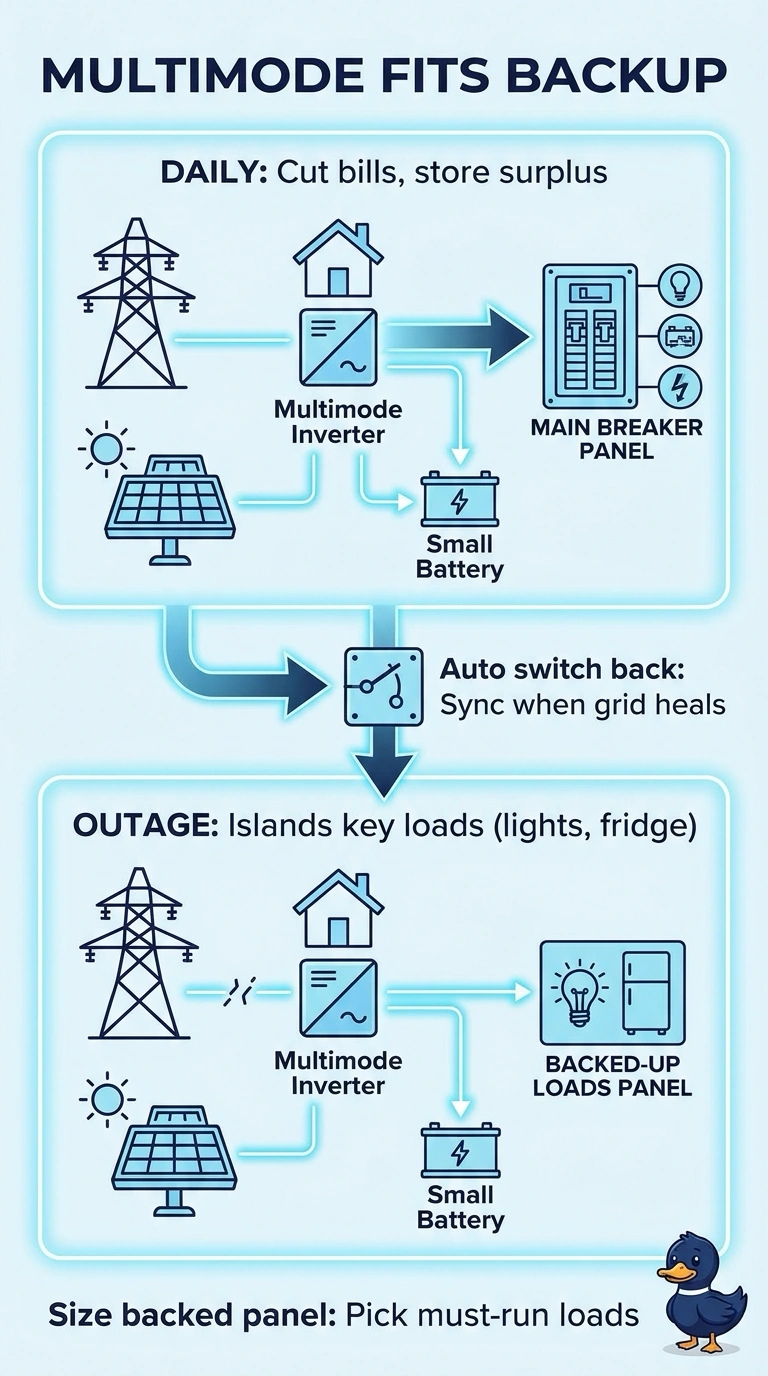
You want lower bills day to day and lights and a fridge during short outages, so you need a system that can do both. Multimode operation lets you use grid power and storage normally, then island backed-up loads when the grid fails.
Full Explanation
A multimode backup inverter fits because it operates both while connected to the grid and while islanded. During normal operation, it can coordinate grid power, solar generation, and battery storage to reduce purchased energy and lower bills. If the utility supply fails, it disconnects backed-up circuits from the grid and supplies them from available battery and solar power, providing short-outage coverage while retaining the utility link. A grid-following battery inverter can shift energy to evenings for savings, but cannot island loads, so it cannot keep the lights and fridge running during an outage. A grid-connected backup inverter that reserves its garage battery for outages can serve backed-up loads but does not use stored energy for daily bill savings. A standby inverter and garage battery can back up lights and the fridge, but provide no daily savings, missing the other goal. Exam caveat: a multimode label alone does not guarantee every circuit is backed up or that the system will island automatically; capability depends on the model, wiring, and configuration. Practical check: confirm islanding and transfer ratings, backed-up load capacity, battery compatibility and garage installation requirements, and the utility’s interconnection rules.