
A PV service technician opens the van before a rooftop inspection and finds three issues: a fiberglass extension ladder with a deep gouge exposing fibers in one side rail, a fall-arrest lanyard with no legible inspection tag even though the employer's procedure requires one, and a GFCI extension cord whose strain relief is cracked near the plug. The customer is waiting and usable spares are already on the truck. Which pre-use inspection decision does this equipment condition require before work begins?
Select an answer to reveal the explanation.
Short Explanation
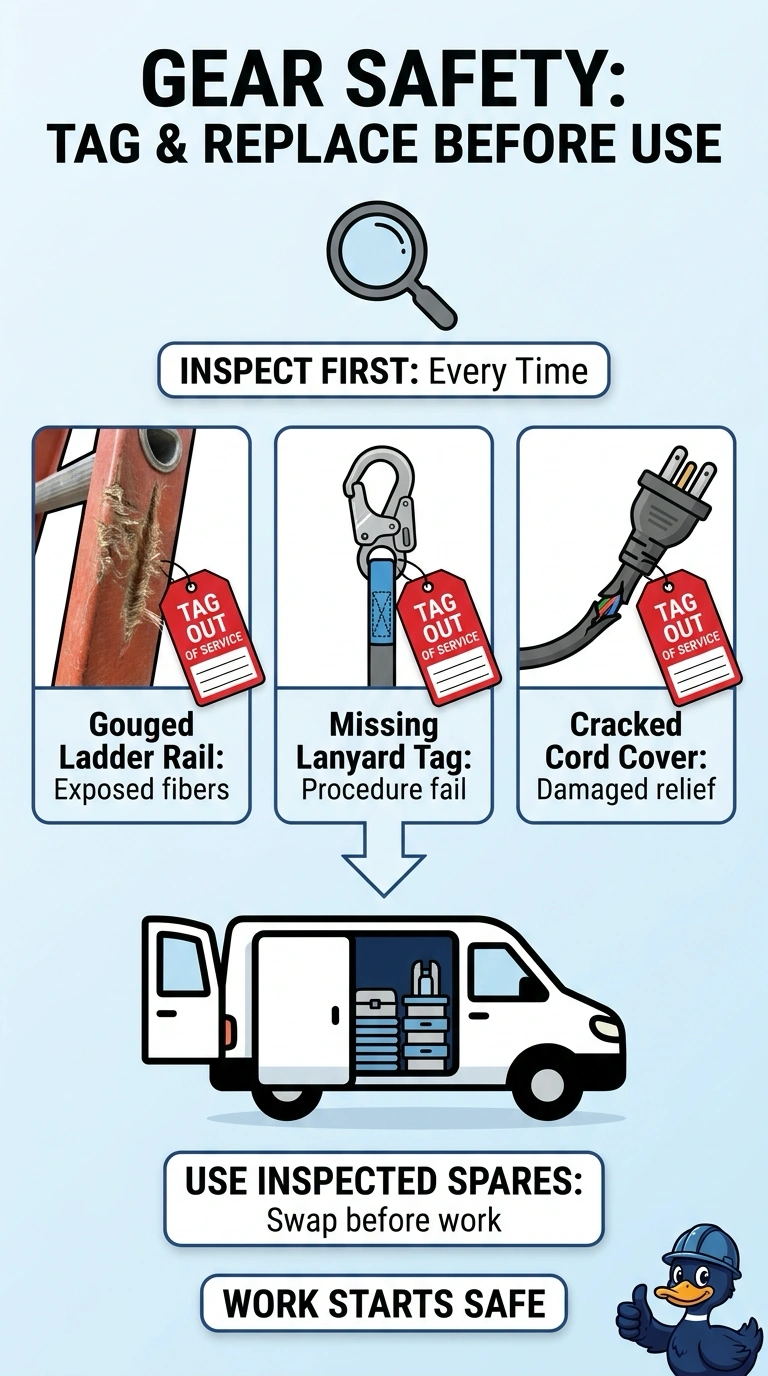
You should tag all three items out of service: the damaged ladder rail and cracked cord strain relief make them unsuitable for use, and the lanyard cannot be verified under your employer’s procedure. Use the inspected replacements already on the truck rather than relying on defective equipment. Make this decision before work begins.
Full Explanation
The required decision is to tag all three items out of service and use the inspected replacements from the van before work begins. The ladder’s deep gouge exposes structural fibers, the lanyard has no legible inspection tag as the employer’s procedure requires, and the cracked cord strain relief may compromise protection at the plug. A closer look, hands-on check, or improvised repair does not resolve these stated conditions. Tagging the lanyard and cord while placing the ladder in a locked rack safely segregates the damaged ladder, but it omits the required out-of-service tag. Tagging the ladder and cord while holding the lanyard for record verification does not satisfy the explicit requirement for a legible inspection tag before work; checking records cannot substitute for that tag. Tagging the ladder and lanyard while holding the cord for controlled repair is a prudent way to manage the cord, but it still omits the required out-of-service tag for that item. Each of these approaches falls short of the specific decision needed for all three pieces of equipment. Exam caveat: distinguish a safe quarantine or administrative hold from formally tagging equipment out when the scenario or employer procedure explicitly requires a tag. Practical check: before starting, confirm each defective item is identified and segregated from usable gear, and verify the condition and inspection status of each replacement.