
You arrive to commission a 10-kW home system with a new inverter, monitoring gateway, AC disconnect, and labeled rapid shutdown switch. The array tests clear and the roof work is done. Which commissioning sequence verifies inverter operation, communications, and disconnects before handoff?
Select an answer to reveal the explanation.
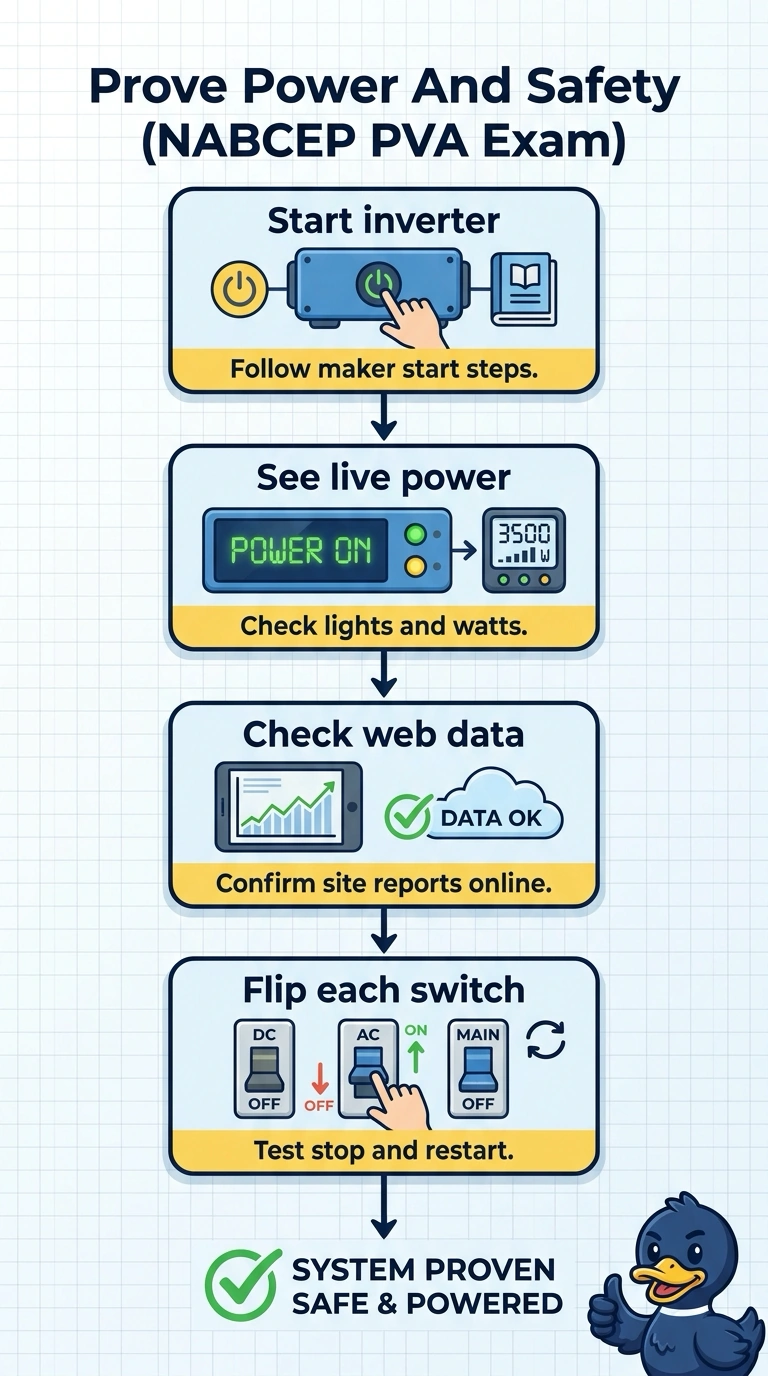
Short Explanation
You're proving the system both makes power and can be silenced safely. Think of commissioning checks as a test drive plus brakes and dashboard lights.
Full Explanation
The stated sequence is the most complete because it confirms the inverter powers up, the gateway successfully reports over the network, and each disconnect functions under load before handoff. These checks cover the system’s operating state, communications path, and protective controls rather than relying on a visual inspection or a partial test. Starting the inverter and testing each disconnect under load is a reasonable field sequence, but without checking gateway reporting it does not establish that monitoring data reaches its intended destination. Confirming inverter startup and gateway reporting is also useful, but checking disconnect operation with no load does not demonstrate how the disconnects perform under the specified operating condition; unloaded checks can miss behavior that appears only when current is flowing. Testing network reporting and the AC and rapid-shutdown disconnects under load still leaves inverter operation unverified: successful reporting does not, by itself, establish that the inverter starts and operates correctly. Exam caveat: use the manufacturer’s commissioning procedure and applicable code requirements; a rapid-shutdown test may require a prescribed safe method rather than an improvised loaded test. In practice, record inverter status, confirm a fresh monitoring update at the portal or gateway, and verify each disconnect’s expected response using the approved test procedure before releasing the system to the owner.