
A homeowner calls three months after install because a 6-kW rooftop system shows 12% lower monthly energy, with pollen season, nearby tree growth, pigeon nesting under edge modules, and no breaker trips reported. Which loss explanation best accounts for this deviation from expected performance?
Select an answer to reveal the explanation.
Short Explanation
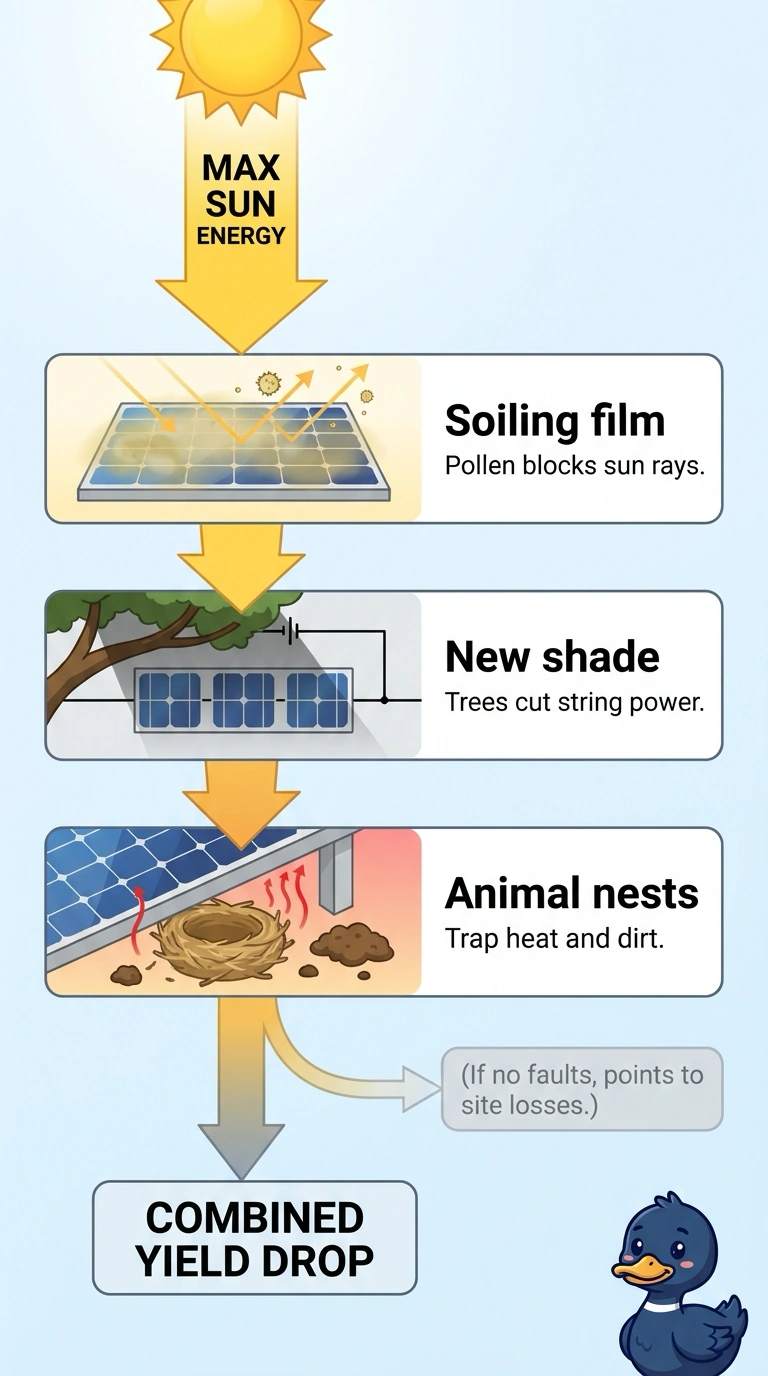
You read systems like a detective when output dips with no faults. Seasonal grime plus new shade plus blocked airflow create stacked losses that add up fast.
Full Explanation
The combined review is strongest because it accounts for all three site-specific loss mechanisms: pollen can reduce irradiance reaching the modules, growing trees can create new or longer-lasting shade, and pigeon nesting can cause localized obstruction or related module-level effects. Their combined impact can plausibly produce a noticeable energy shortfall without a breaker trip. A review of soiling, shade, and inverter logs is a standard performance-troubleshooting approach, but it does not assess the reported nesting; animal-related obstruction or damage could therefore remain undiscovered. A soiling, nesting, and inverter review is also sensible, yet omitting tree shade leaves a potentially substantial, changing source of mismatch and energy loss unexamined. Likewise, assessing shade, nesting, and inverter behavior without checking pollen accumulation misses a common seasonal cause that may be readily reversible. These approaches are incomplete for this case because each leaves one specifically reported condition outside the investigation, not because the included checks are inherently unsound. Exam caveat: a 12% monthly difference alone does not establish the cause; weather, irradiance, and the comparison baseline can also affect measured output. Practical check: compare monitoring data with weather-adjusted production expectations, then inspect module surfaces, shade timing, and the array edge for nesting or obstruction.