
A homeowner with good tax liability, a neighbor with little taxable income, and a third buyer short on cash all ask about a 6-kW quote. The state offers an upfront rebate, a tax credit that offsets only tax owed, and a low-rate loan program. Which economic comparison explains tax credits, rebates, and low-interest loans for each buyer?
Select an answer to reveal the explanation.
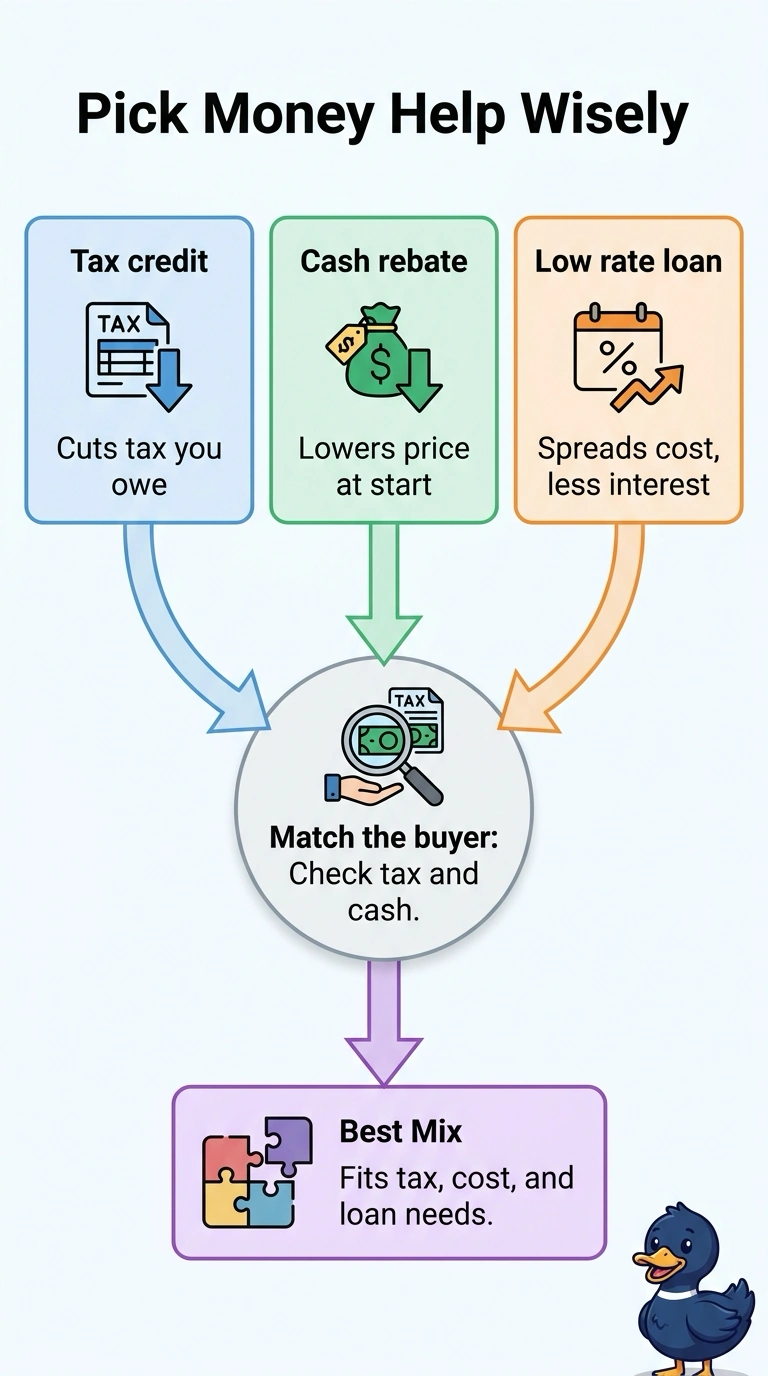
Short Explanation
You’re matching money tools to different wallets, not just comparing panels. Incentive fit is like keys for different locks: credits need tax to offset, rebates can help upfront, and loans depend on total interest.
Full Explanation
The sound comparison matches each incentive to the buyer’s circumstances: a tax credit offsets tax owed, so its value depends on the homeowner’s tax liability; an upfront rebate can reduce the amount due at installation; and a low-rate loan should be assessed by the total interest paid over its term. Comparing a tax credit with tax liability alone recognizes that the neighbor’s low taxable income may limit its usefulness, but ignoring the state rebate leaves out a stated incentive and its immediate effect on project cost. Comparing incentives by net cost is useful, but ignoring the cash-strapped buyer’s need for pre-installation funds fails to show whether that buyer can cover the amount due when needed. Comparing loans by payment and advertised rate uses relevant measures, but ignoring total interest over the full term can hide the actual borrowing cost. Exam caveat: tax-credit eligibility, limits, and carryforward rules depend on current law and the buyer’s circumstances; a credit is not an automatic upfront discount, and not every buyer can use it fully. For example, the federal residential solar credit (Section 25D) ended for systems installed after December 31, 2025. Practical check: compare written estimates that state rebate timing, credit assumptions, cash required at signing, and total scheduled loan interest, using the same system price and financing term.