
A new residential PV owner reports high bills despite a working inverter display showing power today. The O&M tech needs remote history of energy, alerts, and string trends to diagnose without a site visit. Which description best states the role of monitoring equipment in this system?
Select an answer to reveal the explanation.
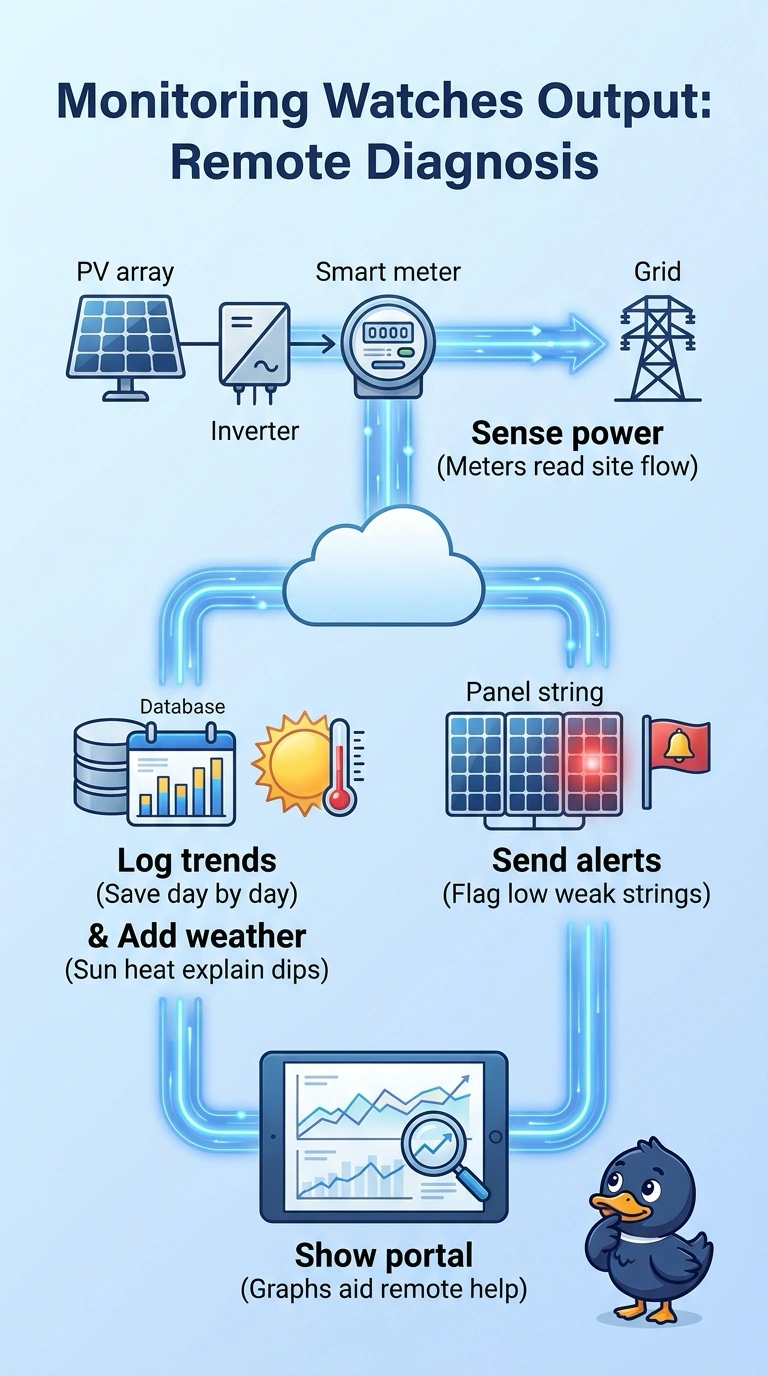
Short Explanation
Your eyes on site are the data stream, not the control. Solid monitoring works like a fitness watch, tracking trends and flagging odd dips for you.
Full Explanation
The correct description covers all of the monitoring functions needed here: retaining site energy history, communicating fault alerts, and exposing string-level trends remotely. Together, these let the O&M technician compare production over time, identify abnormal strings, and investigate alerts without first visiting the home. An inverter portal that reports history and alerts only for the array is a common arrangement, but aggregate production can conceal an underperforming string; it therefore lacks the string trends specifically needed for this diagnosis. A local data logger can collect history, alerts, and string measurements, but if technicians must retrieve its records onsite, it does not provide the remote access required by the scenario. A remote string-monitoring portal can reveal energy history and string behavior, yet without routing fault alerts to the O&M team it misses a stated monitoring function. Exam caveat: monitoring resolution varies by inverter, logger, and sensor configuration, so a portal’s existence alone does not guarantee string-level data or alert delivery. Practical check: verify that the installed system actually exposes historical energy, per-string trends, and configured fault notifications through remote access, and confirm that the O&M team receives the alerts.