
A homeowner with a 6-kW rooftop system wants phone alerts for low production and a monthly energy report, while the installer wants remote fault codes without a site visit. The site has Wi-Fi and a revenue-grade meter on the inverter. Which monitoring equipment function best meets both needs for this home?
Select an answer to reveal the explanation.
Short Explanation
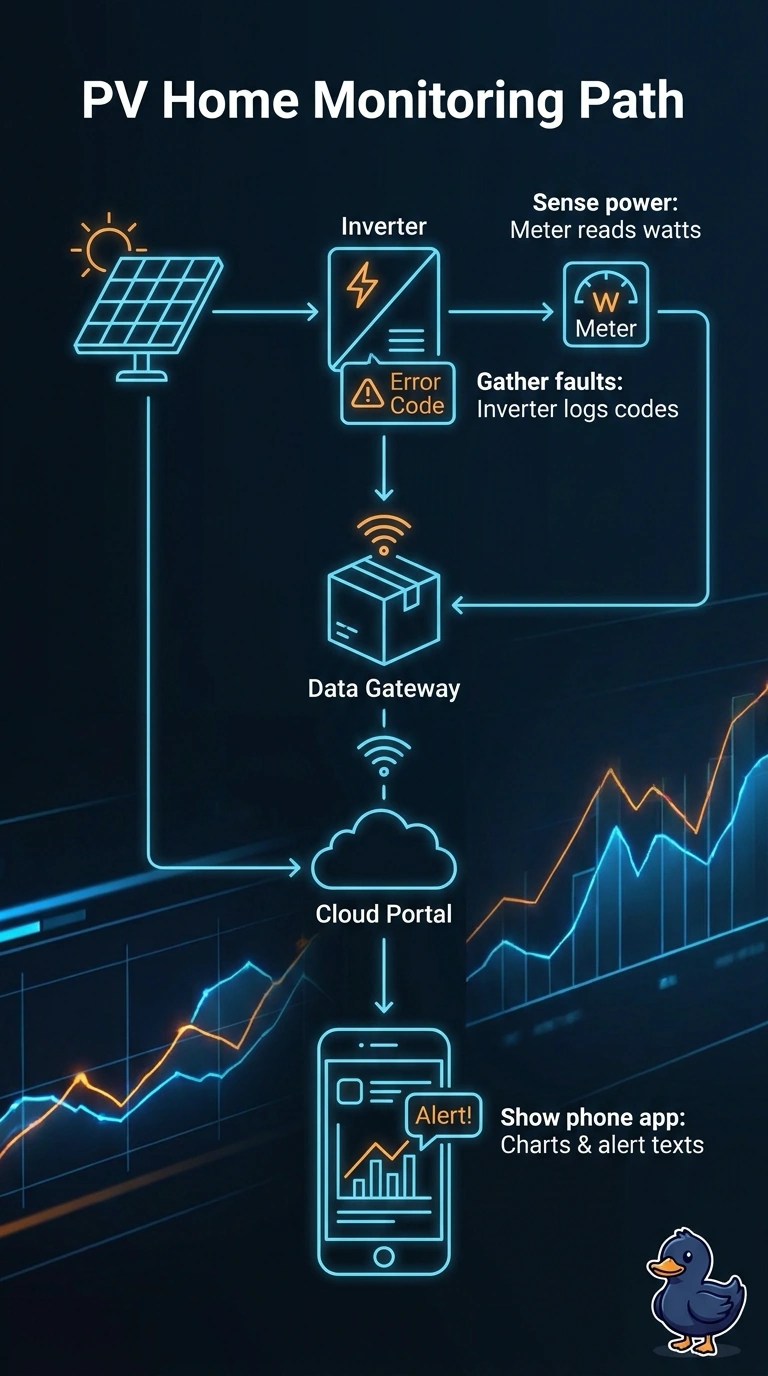
You're linking two users with one path from roof to phone, and that's the win. A gateway bridges local inverter data to cloud charts, alerts, and service codes.
Full Explanation
The inverter data gateway is the best fit because it collects the inverter’s production and diagnostic data, then makes both available through a cloud portal and phone app. That supports homeowner alerts for low production and monthly energy reporting, while allowing the installer to review fault codes remotely rather than arranging a site visit. A revenue-grade meter’s portal can provide useful energy totals, trends, and alerts, but meter data alone generally does not expose the inverter’s diagnostic fault codes. Optimizer monitoring can add module-level production visibility and app-based alerts, yet it does not necessarily provide the inverter’s fault-code stream; module data is not a substitute for inverter diagnostics. An inverter logger may provide remote diagnostics and monthly reports, but an email-only alert setup does not meet the stated need for phone alerts. Exam caveat: monitoring features vary by manufacturer and configuration, so a gateway’s presence alone does not guarantee that alerts, reporting, or remote diagnostics are enabled. Practical check: confirm the gateway is online over the site Wi-Fi, paired with the inverter, and configured to deliver low-production phone notifications and installer-accessible fault codes in the portal.