
A two-person crew is pulling PV source conductors into EMT on a hot commercial roof with several 90-degree bends, plus a short flexible whip into an inverter with vibration. The foreman wants neat, code-typical protection at entries and joints. Which fitting selection best meets strain relief and bushing needs for this run?
Select an answer to reveal the explanation.
Short Explanation
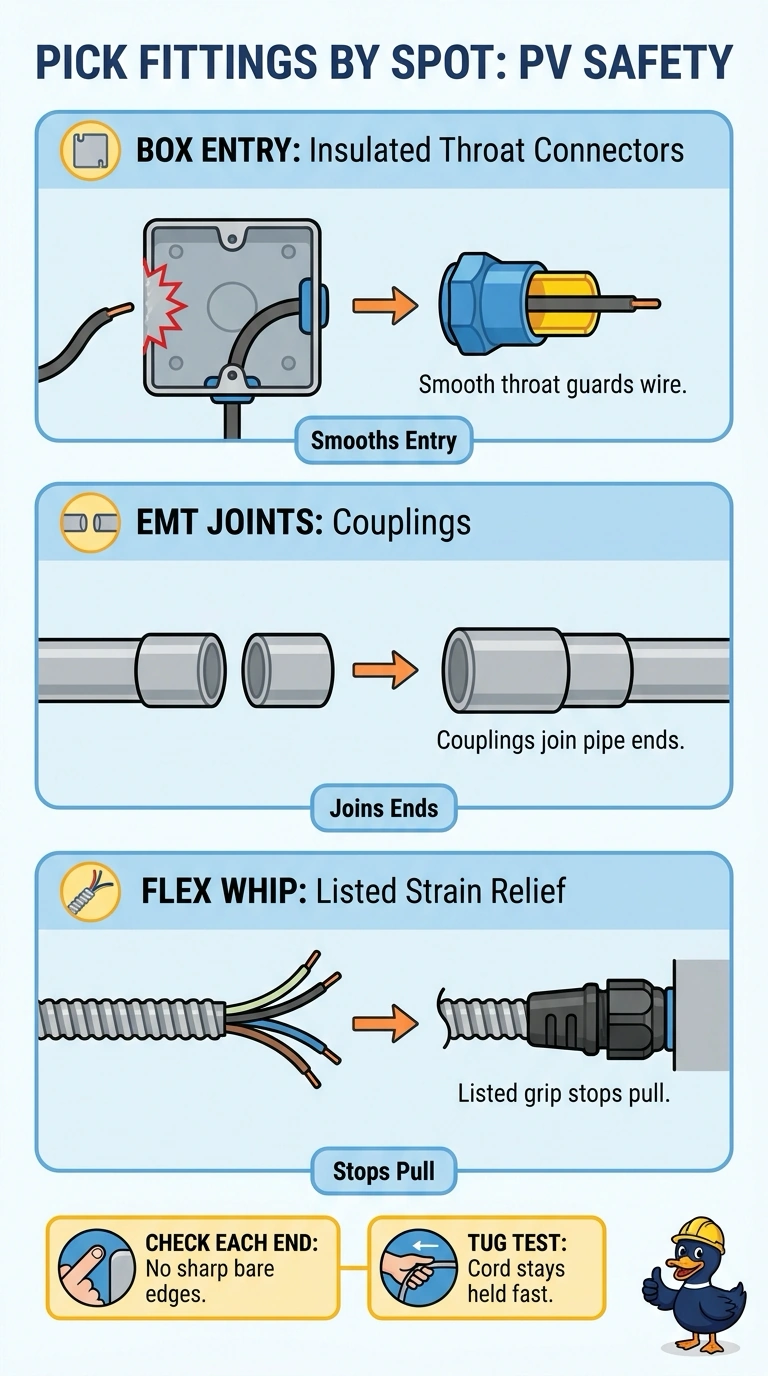
You protect conductors where metal edges and movement can cause damage. Insulated throats guard the entries, and strain relief helps secure the flexible whip against pulls and vibration.
Full Explanation
Insulated-throat connectors at boxes protect conductor insulation where EMT enters, couplings join EMT sections, and a listed strain-relief fitting secures the flexible whip at the vibrating inverter. Standard EMT connectors at the boxes can terminate EMT, but without insulated throats they do not provide the stated bushing protection for conductors pulled through those entries. EMT set-screw connectors used as inline joint fittings are intended to terminate conduit at enclosures, not to join two EMT sections; couplings make those specified joints. A standard flex connector at the inverter can attach flexible conduit, but that alone does not meet the requirement for a listed strain-relief fitting at the whip, where vibration makes secure strain relief particularly important. Exam caveat: a fitting listed for one purpose or conduit type is not automatically suitable for another function; local code requirements and the fitting’s listing govern. Practical check: before pulling conductors, verify each fitting’s markings and listing, confirm insulated throats at box entries, and check that the whip fitting secures the assembly against movement without damaging conductors.