
A homeowner in a time-of-use area uses 6 kWh overnight for fridge, lights, Wi-Fi and phone charging and wants that load covered plus next-day cloudy backup for the same loads. The sales rep has meter data and a critical-load list. Which storage estimating method best sizes usable capacity for self-consumption and load shifting?
Select an answer to reveal the explanation.
Short Explanation
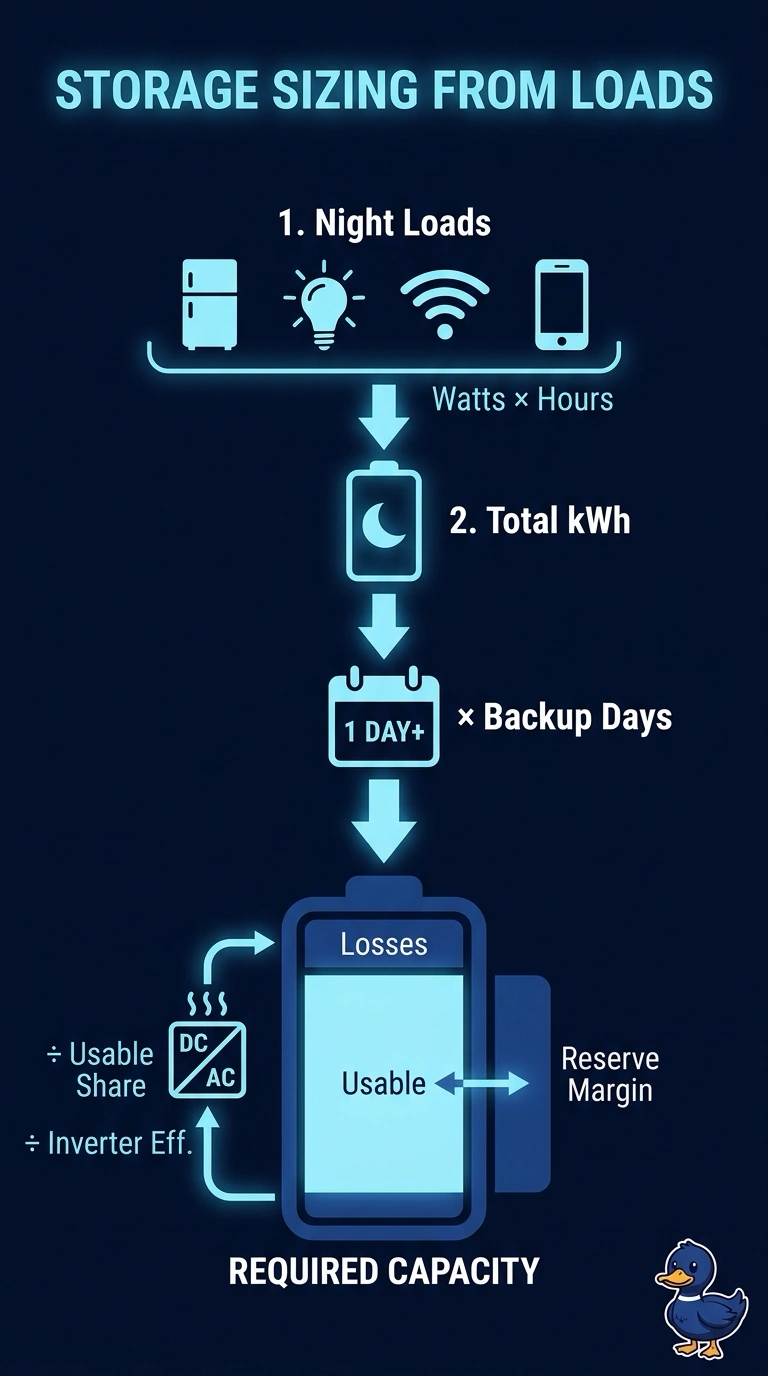
You’re on the right track when you total the specified critical loads and allow for one day of autonomy. Your usable capacity must also account for depth limits and inverter losses, like a cooler where ice takes up space.
Full Explanation
The method that totals the specified critical loads and scales them for one day of autonomy is correct: it covers the requested cloudy-day backup, while usable-depth and inverter-loss allowances translate the loads’ energy need into the nominal battery capacity required in practice. Sizing from average daily metered consumption can suit whole-home backup, but it does not isolate the listed fridge, lights, Wi-Fi, and phone-charging loads, so unrelated household use may distort the estimate. Using the critical-load total for a cloudy day but omitting inverter losses underestimates the battery energy needed to deliver the required AC power. Adjusting for usable depth and inverter losses but sizing only for overnight coverage may support time-of-use shifting, yet it does not provide for those same loads through the next cloudy day. Exam caveat: distinguish usable from nominal capacity, and check whether depth-of-discharge and efficiency assumptions are already included in a product’s rating to avoid double-counting. In practice, validate the load estimate against interval-meter data and confirm the battery’s continuous power rating can run the loads simultaneously, not merely that its energy capacity is sufficient.