
While auditing Life Safety Code documentation for a 110-bed skilled nursing facility, an administrator reviews records for battery-powered emergency lighting units in exit corridors and stairwells. Which testing schedule satisfies federal NFPA 101 requirements?
Select an answer to reveal the explanation.
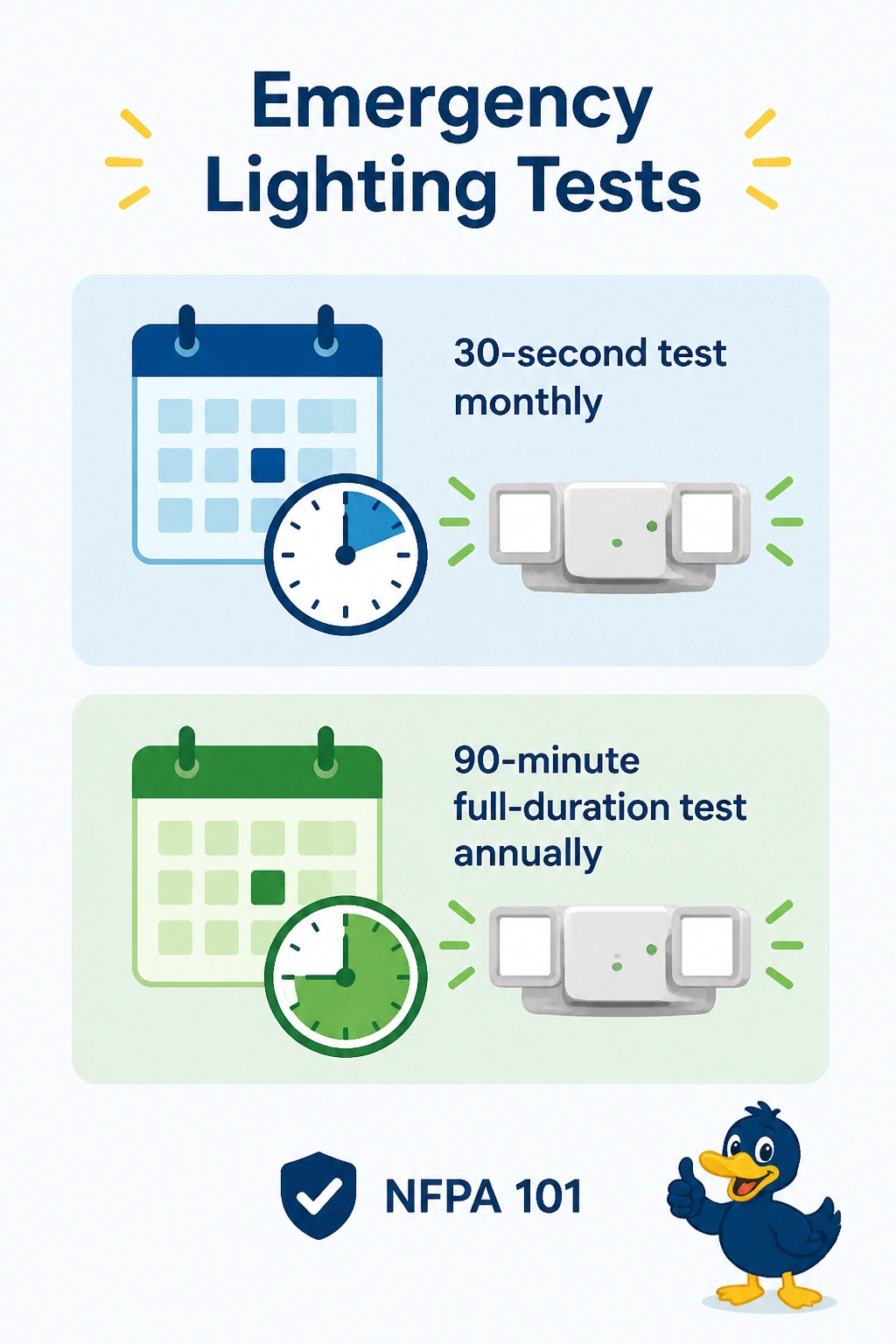
Short Explanation
Emergency lights prove their worth when normal power fails, so a green indicator alone is not enough. You need both a monthly 30-second test and an annual 90-minute test to verify backup performance. Weekly 15-second testing, an annual fire marshal inspection, or a quarterly visual bulb check does not replace that schedule.
Full Explanation
Under CMS physical environment rules in 42 CFR 483.90 and NFPA 101, battery-powered emergency lighting must remain reliable during an extended power outage. The required schedule is a 30-second test monthly and a 90-minute full-duration test annually, with written records of both. Weekly 15-second testing and replacing all batteries every six months do not follow the required test intervals and omit the 90-minute discharge test that verifies battery capacity. Testing only during the annual fire marshal inspection leaves the lights unchecked between inspections, so battery failure could go unnoticed. A quarterly visual inspection of exit sign bulbs without disconnecting building power cannot establish that emergency lighting transfers to battery power and stays illuminated when normal power is lost. As an exam caveat, any unit that dims or fails during either required test should be repaired or replaced promptly, not left until the next scheduled test. For a practical check, maintain an asset-tagged log for corridor and stairwell fixtures, recording each monthly 30-second test and annual 90-minute load test so staff can confirm every unit was tested.
Prefer to study offline? Printable PDF study book + test engine ($7.50, unofficial). These questions stay free here.