
During winter rounds, an administrator finds a resident's family has brought in a personal portable electric space heater because the bedroom feels drafty. What action must the facility take to maintain Life Safety Code compliance?
Select an answer to reveal the explanation.
Short Explanation
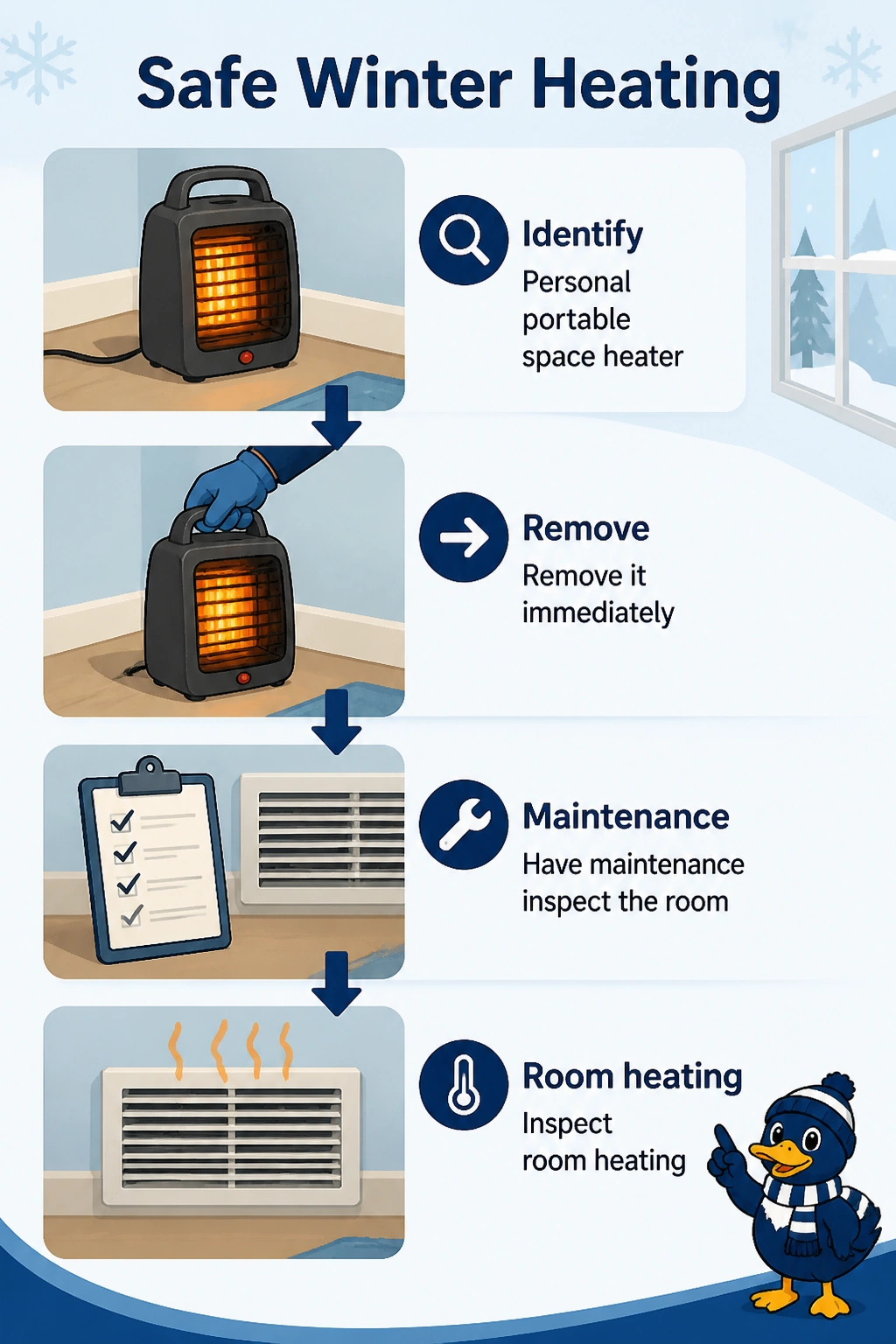
A cozy space heater looks harmless, yet in a nursing home it is a fire and burn hazard waiting to happen. The trap is thinking a tip-over switch or daytime monitoring makes a personal heater safe in a resident bedroom. You must remove the portable heater right away and have maintenance fix the underlying room heating issue.
Full Explanation
Under NFPA 101 Life Safety Code standards for health care occupancies, facilities must Remove the portable space heater immediately and have maintenance inspect the room heating to eliminate ignition and contact-burn risks. Portable electric heaters introduce high-wattage heating elements near bedding, oxygen equipment, and residents who may have impaired sensation or cognition. Choosing to Permit the portable electric heater only during daytime hours when nursing staff can inspect it hourly leaves an unauthorized ignition source in a resident care area and relies on staff vigilance rather than engineering safety. Choosing to Allow the heater if it has a tip-over shutoff switch and plugs directly into a wall outlet fails because tip-over switches do not prevent drapes, clothing, or residents from contacting hot surfaces. Choosing to Move the heater across the room away from the bed curtains and log it on the monthly checklist still leaves a prohibited hazard in the room and creates a trip and fire risk. Caveat: some jurisdictions or specific non-sleeping administrative offices may follow separate rules, but resident sleeping and care areas require fixed, code-compliant heating. Operational check: inspect window seals, radiator valves, and thermostat calibration in the bedroom, and document the heater removal and family education.
Prefer to study offline? Printable PDF study book + test engine ($7.50, unofficial). These questions stay free here.