
During a winter safety inspection, an administrator finds that snowplows piled three-foot snowbanks directly outside a nursing wing's rear emergency exit door, blocking the paved walkway to the street. Why must maintenance clear this area immediately?
Select an answer to reveal the explanation.
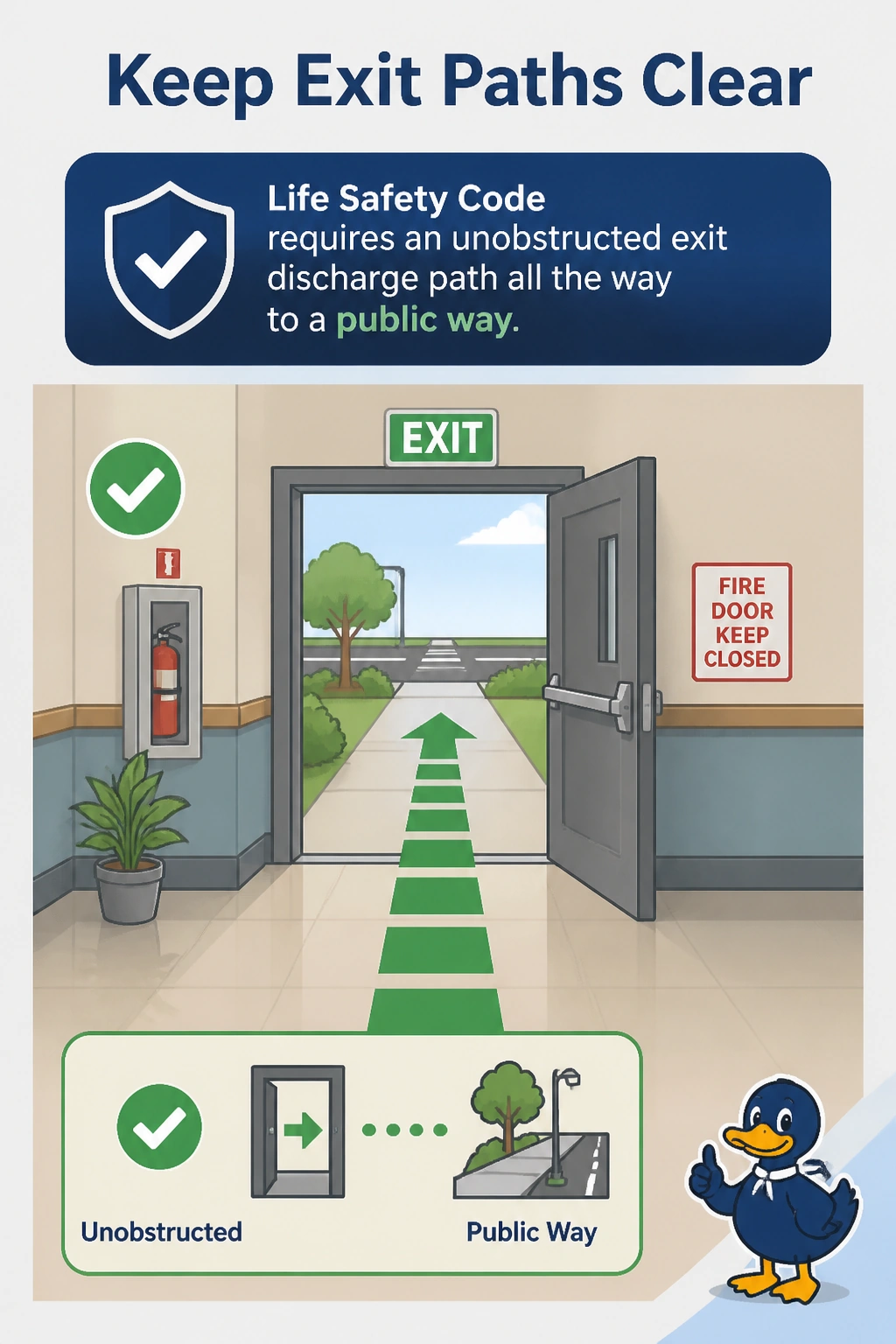
Short Explanation
An emergency exit that opens into a wall of snow is just a door to nowhere. You have to keep the outside path clear all the way to the street or safe assembly area, because a blocked exterior discharge defeats the entire evacuation route.
Full Explanation
Under the NFPA 101 Life Safety Code, means of egress consist of three continuous parts: the exit access, the exit, and the exit discharge leading safely to a public way. Because snowbanks outside the door trap residents and staff, Life Safety Code requires an unobstructed exit discharge path all the way to a public way at all times. Claiming OSHA requires all exterior sidewalks to be cleared only before the morning shift arrives misses the continuous 24-hour life-safety requirement for resident evacuation. Claiming CMS rules require rear exit doors to remain clear solely for ambulance stretcher access ignores the primary egress purpose for all occupants during a fire. Claiming NFPA standards allow blocked rear exits if the front lobby entrance remains fully accessible is false because every required exit must remain usable and unobstructed. As an exam caveat, locked perimeter courtyard gates or parked delivery trucks can create the same exit-discharge violation as snow. As an operational check, add exterior exit-discharge inspection to the facility's snow-removal checklist and daily maintenance rounds.
Prefer to study offline? Printable PDF study book + test engine ($7.50, unofficial). These questions stay free here.