
A long-stay resident with a chronic sacral pressure injury and a suprapubic catheter lives on a general nursing unit and has no acute diarrhea or respiratory symptoms. Which infection prevention approach should staff apply during morning bathing and dressing changes while still supporting the resident's social life?
Select an answer to reveal the explanation.
Short Explanation
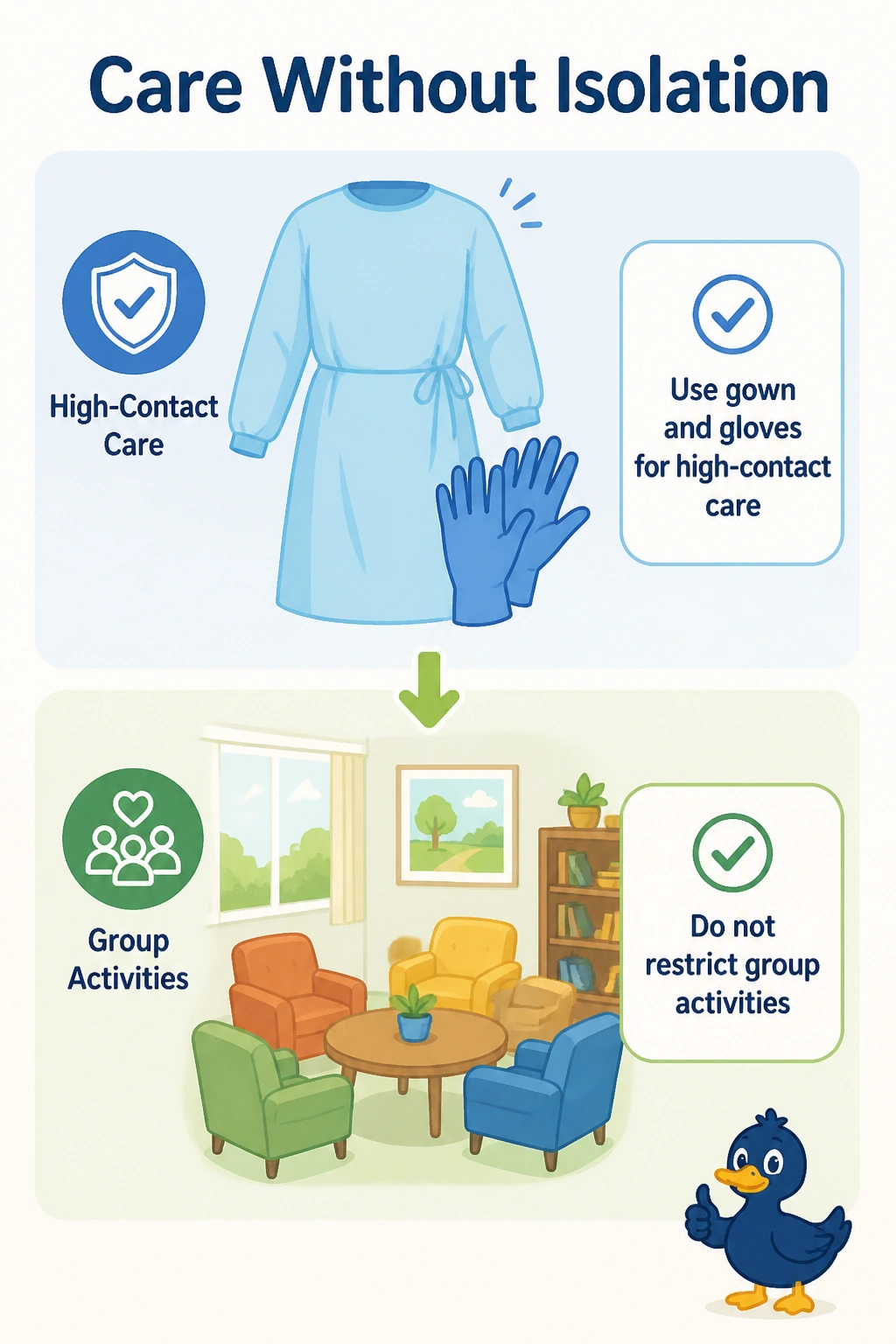
Think of Enhanced Barrier Precautions like wearing an apron in a busy kitchen: you protect against hidden splashes during messy tasks without locking yourself out of the dining room. You wear a gown and gloves for high-contact care, while the resident still joins group life. The trap is confusing targeted barrier use with full room isolation.
Full Explanation
Enhanced Barrier Precautions are designed to reduce the transmission of multidrug-resistant organisms in nursing homes for residents with chronic wounds or indwelling medical devices even when no active infection is present. Staff must use gown and gloves for high-contact care without restricting group activities, because dressing changes, bathing, transferring, and device care carry the highest risk of contaminating staff clothing and hands. Choosing to confine the resident to a private room and cancel group dining unnecessarily applies strict Contact Precautions, which are reserved for active infections such as acute diarrhea or draining wounds that cannot be contained and harm resident psychosocial well-being. Relying on staff to apply standard gloves only while allowing unrestricted hallway and dining access leaves staff uniforms exposed to colonization during close-contact care and facilitates cross-transmission to other residents. Requiring staff to wear a fit-tested respirator and eye protection for every room entry misapplies airborne or droplet-type respiratory gear to a contact-transmission risk. As a caveat, Enhanced Barrier Precautions require clear door or chart signage that protects resident privacy while alerting staff before high-contact tasks. As an operational check, audit gown and glove availability outside affected rooms and observe morning care rounds weekly for adherence.
Prefer to study offline? Printable PDF study book + test engine ($7.50, unofficial). These questions stay free here.