
Before the breakfast shift begins, a dietary cook reports experiencing acute vomiting and diarrhea overnight, though she says she feels well enough to wear gloves and work on the tray line. What action must the dietary manager take to protect residents and comply with federal food safety standards?
Select an answer to reveal the explanation.
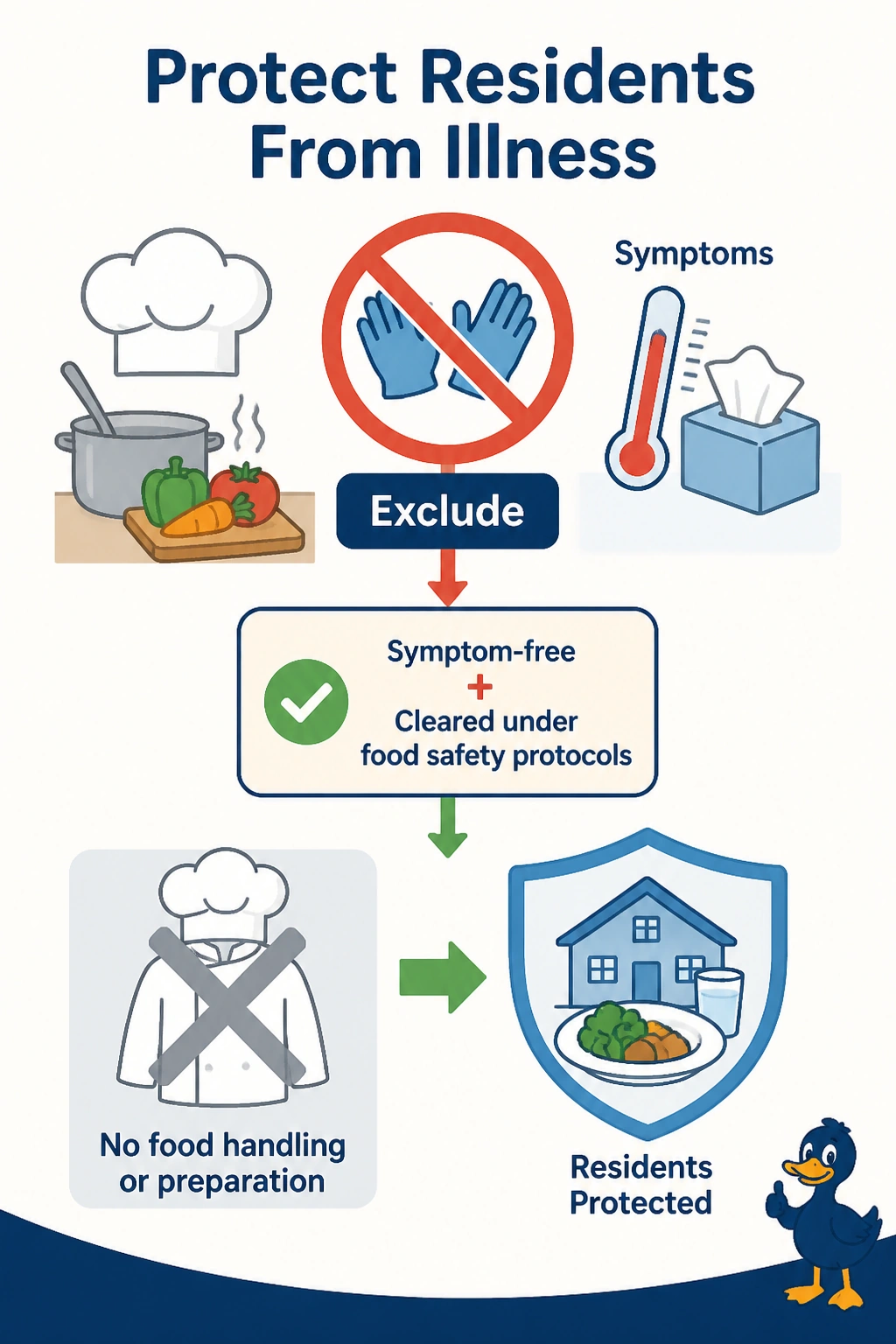
Short Explanation
Letting a sick food worker near resident trays—even with gloves on—is like putting a leaky umbrella over a banquet table. The trap is thinking gloves, masks, or a normal temperature make it safe for someone with active gastrointestinal symptoms to stay in the kitchen. You must exclude any food handler with vomiting or diarrhea from food operations immediately.
Full Explanation
Under federal dietary sanitary requirements at 42 CFR 483.60(i) and public health food codes, the manager must Exclude the cook from food handling and preparation duties until symptom-free and cleared under food safety protocols. Gastrointestinal pathogens such as norovirus spread rapidly through ready-to-eat foods and food-contact surfaces, posing severe dehydration and mortality risks to frail nursing home residents. Choosing to Allow the cook to portion cold salads and desserts as long as she wears double disposable gloves and a surgical mask is dangerous because gloves do not eliminate viral shedding or cross-contamination on high-risk cold foods. Deciding to Assign the cook to wash and sanitize resident dining utensils in the dish room instead of handling raw ingredients directly still places an infectious worker in the kitchen handling clean dishes and shared surfaces. Opting to Permit the cook to work the morning tray line if her oral temperature is below 100.4 degrees Fahrenheit at shift start overlooks that many foodborne illnesses present with vomiting and diarrhea without fever. As a caveat, staff with jaundice or diagnosed reportable enteric infections also require medical clearance before returning to food service. Operationally, maintain a confidential employee illness log and conduct daily pre-shift symptom checks in the dietary department.
Prefer to study offline? Printable PDF study book + test engine ($7.50, unofficial). These questions stay free here.