
During infection control rounds on a post-acute unit, the infection preventionist sees a housekeeper spray an EPA-registered disinfectant onto resident bedrails and immediately wipe them dry with a paper towel. Which corrective action is essential to ensure effective surface disinfection?
Select an answer to reveal the explanation.
Short Explanation
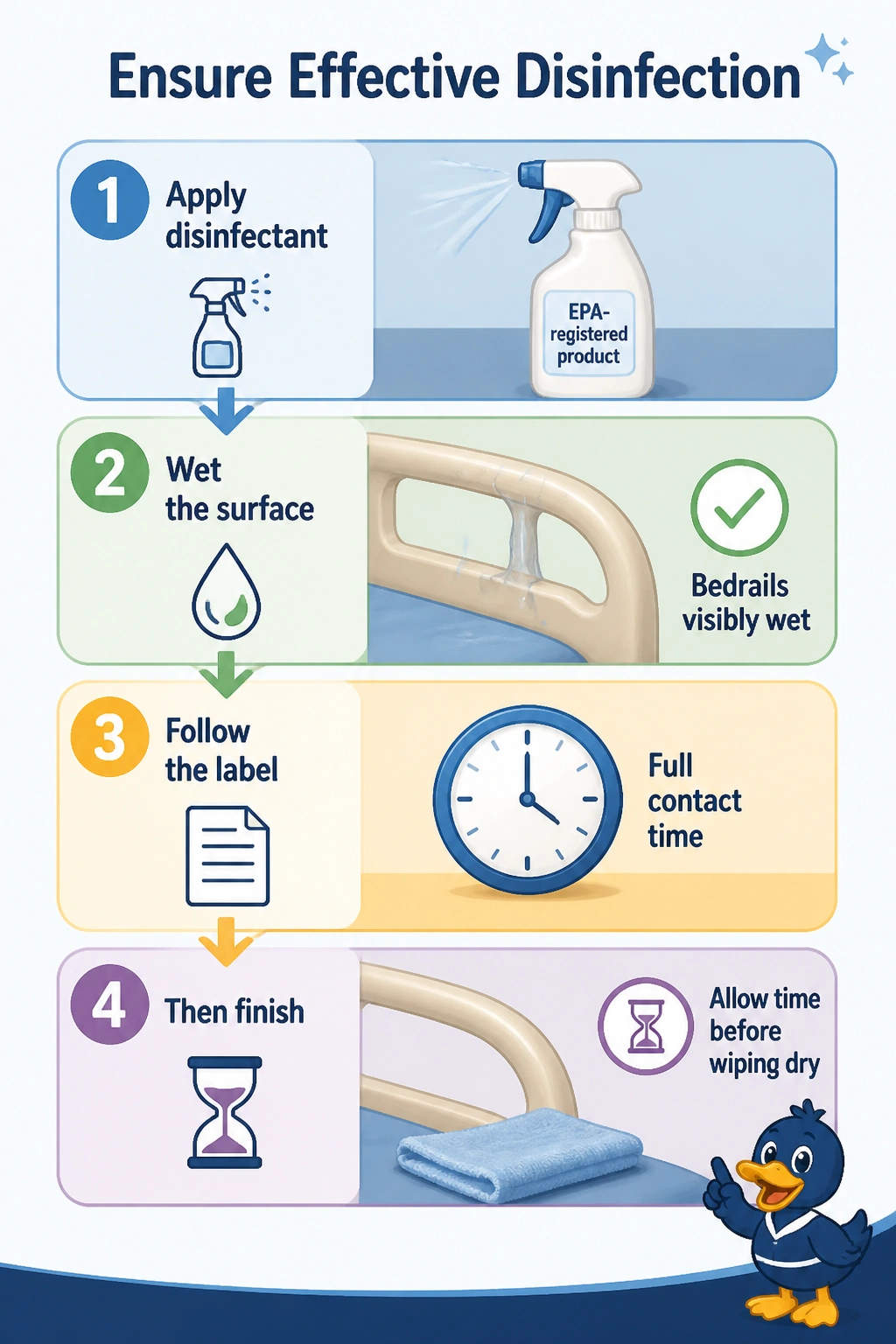
Disinfectant needs time to work, just like soaking a baked-on pan rather than rinsing it in two seconds flat. You must train staff to respect the wet contact time on the product label so pathogens are actually inactivated. The common trap is thinking extra scrubbing or stronger mixing makes up for wiping a surface dry too soon.
Full Explanation
Under federal infection prevention standards at 42 CFR 483.80 and CDC environmental cleaning guidance, chemical disinfectants only kill target organisms when staff Keep surfaces visibly wet for the product label's full contact time. Wiping a surface dry immediately after spraying removes the active agent before it can disrupt microbial cells, leaving high-touch surfaces like bedrails contaminated. Choosing to Double the chemical concentration so wiping dry works immediately violates EPA-registered label directions, damages facility equipment, and creates respiratory or skin hazards without eliminating the need for proper dwell time. Choosing to Switch to alcohol wipes for all bedrails regardless of pathogen type is ineffective against spore-forming organisms such as Clostridioides difficile and ignores manufacturer compatibility requirements. Choosing to Apply a second dry cloth buffing pass to remove any chemical residue further shortens dwell time and can spread remaining microbes across adjacent surfaces. As a caveat, high-touch areas with heavy organic soil must be cleaned with a detergent or pre-wipe step before applying disinfectant so debris does not shield pathogens. As an operational check, verify that housekeeping carts carry laminated quick-reference cards listing exact contact times for each EPA-registered product in use and observe staff return demonstrations monthly.
Prefer to study offline? Printable PDF study book + test engine ($7.50, unofficial). These questions stay free here.