
A nursing facility's QAPI committee designs a new bedside barcode-scanning workflow to reduce medication administration errors across three clinical units. Which implementation step best reflects QAPI performance-improvement methodology before mandating the change facility-wide?
Select an answer to reveal the explanation.
Short Explanation
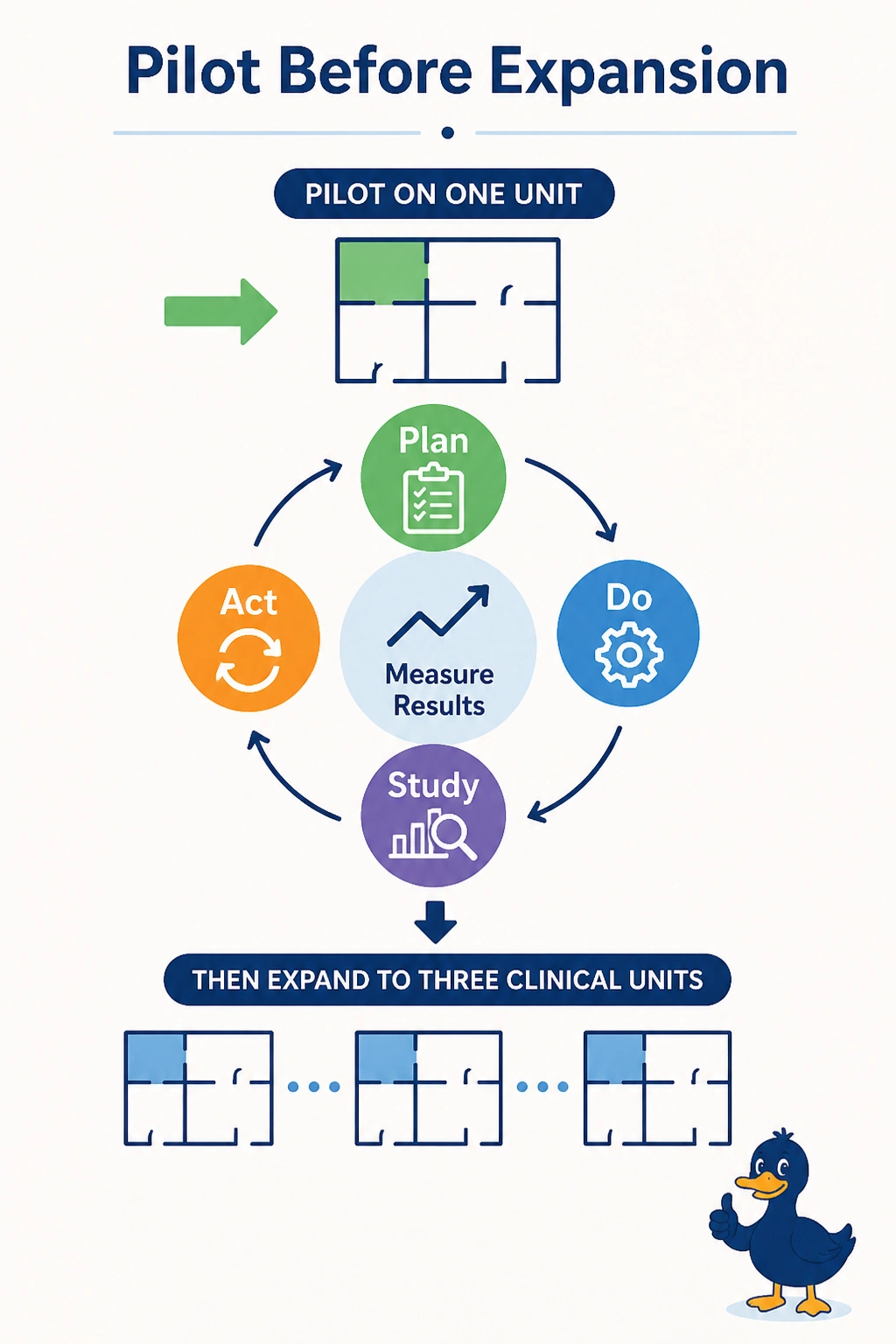
Big operational changes rarely work perfectly on the first try, so test small before you go big. A PDSA pilot on a single unit lets your team catch workflow snags and measure real impact safely. The trap is flipping the switch building-wide on day one or waiting a year to check results, so pilot and refine first.
Full Explanation
Effective QAPI performance-improvement projects rely on iterative testing, so leadership should Pilot the workflow on one unit using a Plan-Do-Study-Act cycle to measure results and refine steps before scaling up. Choosing to Replace the existing electronic medication record immediately on all three units during one night shift creates unnecessary disruption and safety risk if unanticipated workflow bottlenecks appear. Deciding to Send a policy memo requiring compliance and evaluate error rates after twelve months of full use relies on passive directives and delays feedback far too long to correct flawed steps. Opting to Restrict the workflow exclusively to agency nurses until permanent staff request voluntary adoption fragments clinical practice across staff groups and prevents valid measurement of the process. A key caveat is that pilot success must be evaluated with defined baseline and post-test metrics—such as scan-compliance rates and near-miss counts—rather than anecdotal impressions alone. For an operational check, review the pilot unit's scan-compliance data and nurse feedback with the QAPI committee after a short test window before authorizing building-wide rollout.
Prefer to study offline? Printable PDF study book + test engine ($7.50, unofficial). These questions stay free here.