
During rounds on a secured memory care unit, an administrator discovers that a housekeeping utility closet door is propped open and contains open containers of toilet bowl cleaner and floor stripper within reach of wandering residents. What immediate action is required?
Select an answer to reveal the explanation.
Short Explanation
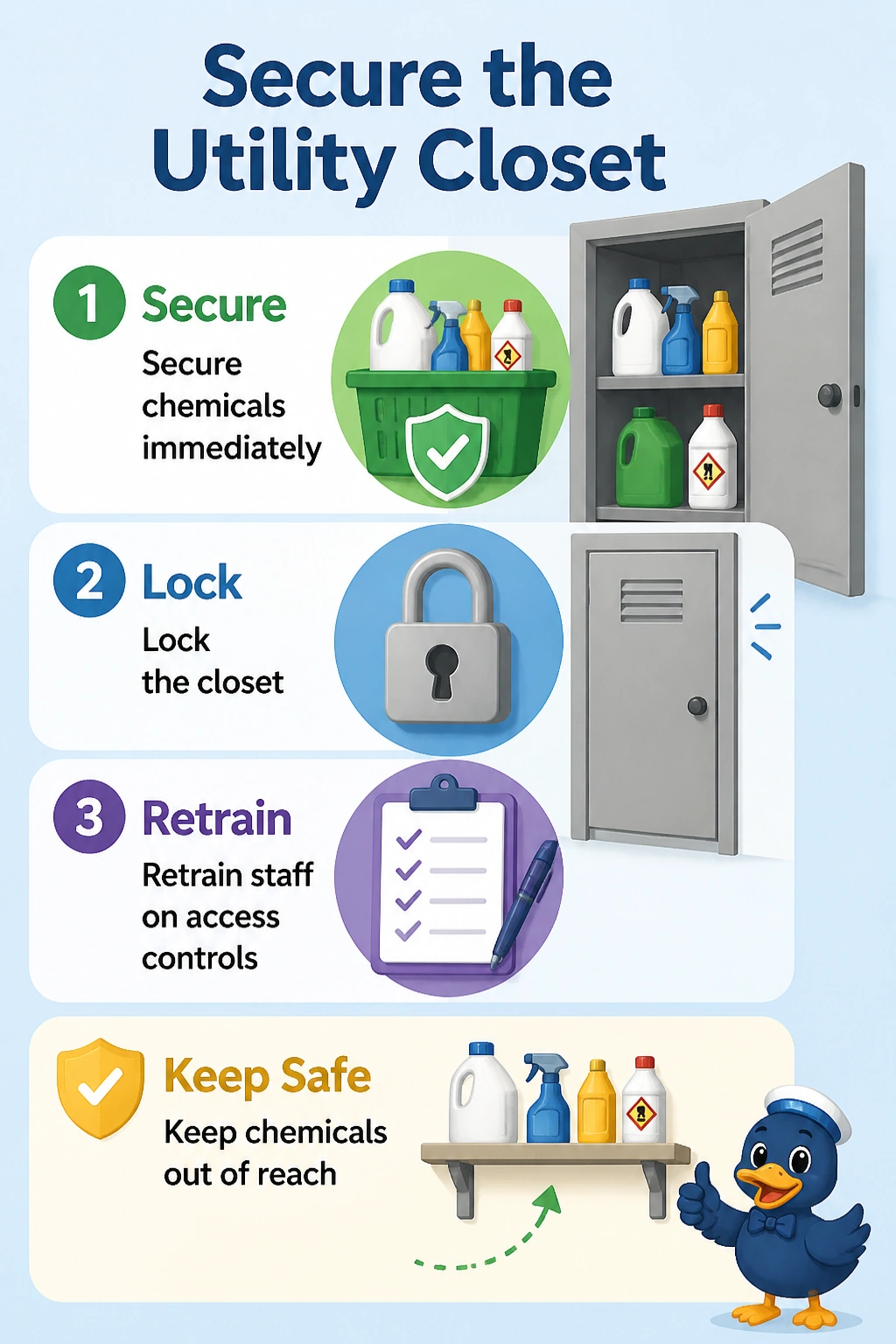
A propped closet door with open cleaning chemicals on a memory care unit is an accident waiting to happen. Signs and high shelves will not protect residents with cognitive impairment; you must lock up those hazards immediately and reinforce staff habits.
Full Explanation
Under 42 CFR 483.25, a nursing facility must ensure the resident environment remains as free of accident hazards as is possible, and toxic cleaning agents pose an immediate ingestion or chemical-burn risk to residents with dementia. Staff must secure the chemicals immediately, lock the closet, and retrain staff on access controls so the hazard is eliminated right away and prevented from recurring. Choosing to place a printed caution sign on the open closet door reminding residents not to enter is ineffective for residents with cognitive impairment who may not read or comprehend warnings. Choosing to move the chemical bottles to the top shelf of the unlocked closet until shift change leaves toxic substances accessible to residents who climb, reach, or explore the room. Choosing to wait for the monthly safety committee meeting to review whether locks are needed on the unit leaves an active, high-severity hazard unaddressed. As a caveat, verify that any automatic door closers or keypad locks on utility closets do not obstruct required egress paths and that all containers remain properly labeled. Operationally, include utility closet latch checks on daily environmental rounding checklists.
Prefer to study offline? Printable PDF study book + test engine ($7.50, unofficial). These questions stay free here.