
During morning transfers, a nursing assistant notices that a floor-based mechanical resident lift makes a grinding noise during elevation and one sling strap has frayed stitching. What is the facility's required immediate action?
Select an answer to reveal the explanation.
Short Explanation
A grinding motor and a frayed sling strap are two ways of saying a resident drop is seconds away. Your trap is trying to limp through the morning shift instead of tagging both pieces out of service on the spot.
Full Explanation
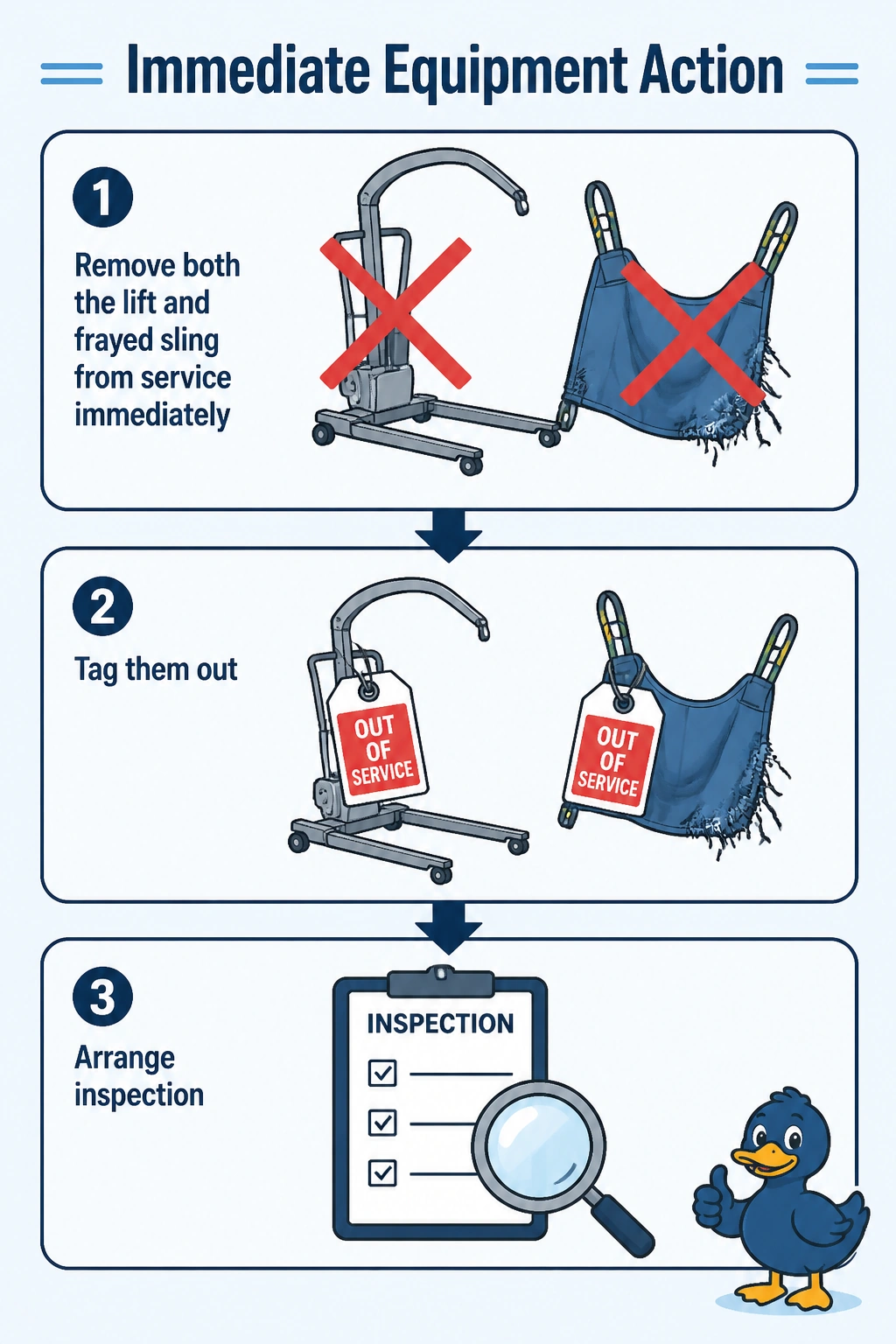
Safe resident handling and equipment maintenance rules require defective transfer devices to be pulled from clinical use before a mechanical failure injures a resident or staff member. Staff must "Remove both the lift and frayed sling from service immediately, tag them out, and arrange inspection" because both the hydraulic or gear mechanism and the load-bearing fabric show active signs of failure. Choosing to "Continue using the lift for lighter residents until maintenance arrives for weekly rounds" gambles with unpredictable strap tearing or mast collapse under any load. Deciding to "Replace only the frayed sling and leave the lift on the unit until the noise worsens" leaves a malfunctioning lift in active care where another shift may use it unaware. Opting to "Log the issue in the maintenance book and instruct staff to support the lift manually" does not stop other staff from using the equipment and creates severe musculoskeletal injury risk. Caveat: even after repairs, a mechanical lift should be load-tested or cleared per manufacturer instructions before returning to the floor. Operational check: include daily pre-use sling stitching checks and monthly lift preventive maintenance sign-offs in environmental safety rounds.
Prefer to study offline? Printable PDF study book + test engine ($7.50, unofficial). These questions stay free here.