
During an environmental tour, an administrator notices nursing assistants placing routine, non-bloody incontinence briefs into red biohazard bags instead of regular trash receptacles. What corrective action should the administrator take?
Select an answer to reveal the explanation.
Short Explanation
You can protect staff and control disposal costs by reserving red bags for waste that meets regulated-waste criteria. Segregation matters: routine, non-bloody briefs belong in regular trash, not red bags.
Full Explanation
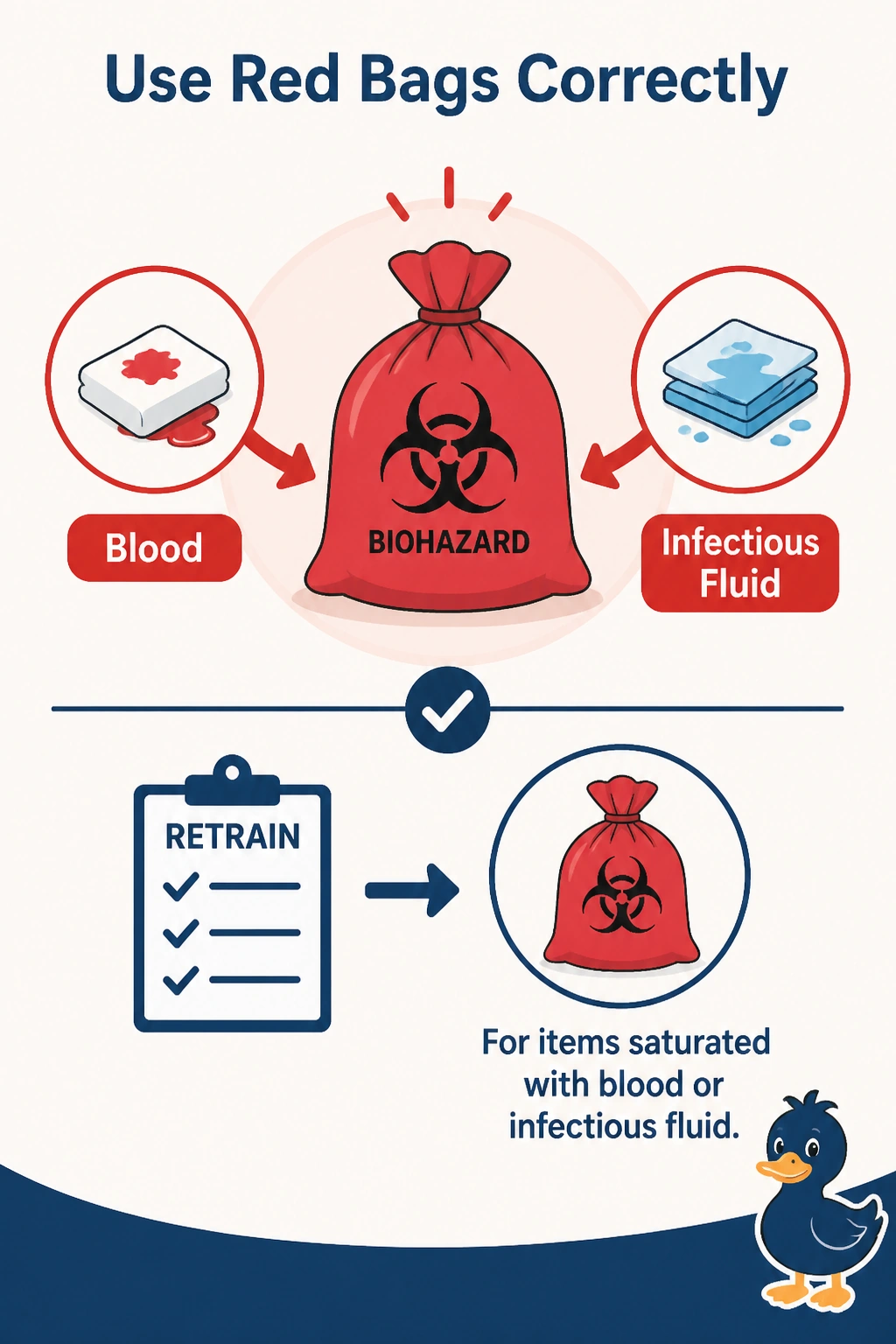
Under federal bloodborne pathogen and environmental waste principles, regulated medical waste includes items dripping, caked, or saturated with blood or other potentially infectious materials, sharps, and microbiological waste. Retraining staff to reserve red biohazard bags for items saturated with blood or infectious fluid corrects the segregation error while supporting infection control and avoiding unnecessary disposal costs. Keeping every incontinence brief in red bags would misclassify routine, non-bloody solid waste as regulated medical waste and increase disposal expenses without adding safety. Autoclaving every resident trash bag before it reaches the exterior compactor is unnecessary for standard non-infectious refuse and operationally impractical. Labeling regular hallway trash cans as biohazard containers would extend the same misclassification to general waste and compound the compliance problem. Exam caveat: verify whether a resident has an active enteric condition or a blood-saturated wound that changes disposal needs. Practical check: inspect soiled utility rooms weekly to confirm red bags contain only regulated medical waste and are properly sealed.
Prefer to study offline? Printable PDF study book + test engine ($7.50, unofficial). These questions stay free here.