
During an early morning kitchen walk-through, the dietary manager spots small droppings behind a dry-goods storage rack near an exterior loading door with a worn rubber sweep. Which environmental action best satisfies federal pest control requirements?
Select an answer to reveal the explanation.
Short Explanation
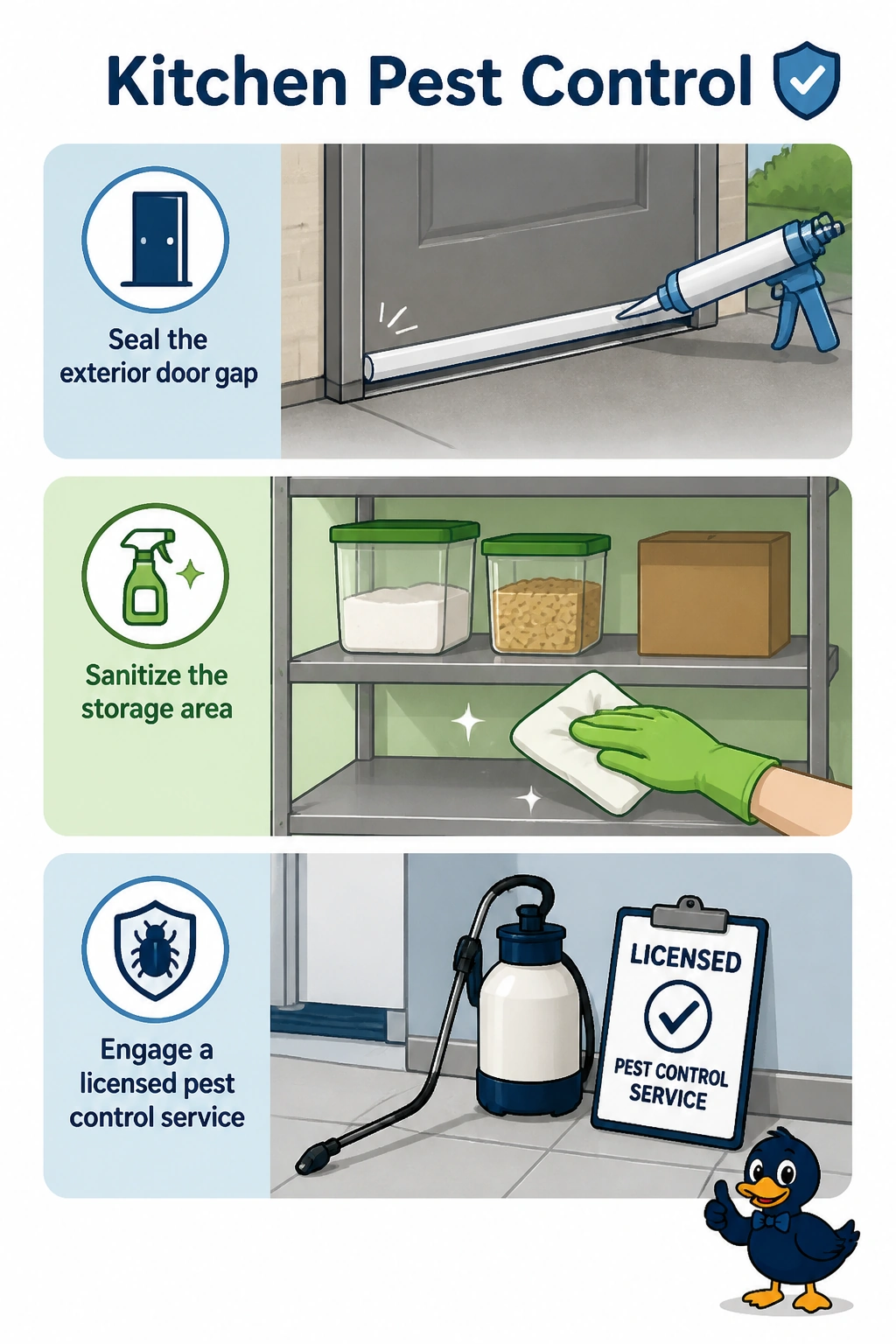
Pests don’t need an engraved invitation—a worn door sweep and a few crumbs are plenty. You stop an infestation by sealing the entry point, sanitizing the area, and bringing in a licensed professional for targeted treatment. The trap is relying on covered bait stations while the gap remains open or on residual spray recorded on the sanitation log.
Full Explanation
Under 42 CFR 483.90(i)(4), facilities must maintain an effective pest control program. Sealing the exterior door gap, sanitizing the storage area, and engaging a licensed pest control service for targeted treatment addresses the entry point, removes conditions that attract pests, and ensures treatment is handled by qualified personnel. Effective pest management combines physical exclusion, sanitation, and safe, documented application to eliminate pests without contaminating food or resident spaces. Placing covered bait stations in the dry-storage room while leaving the worn door sweep until the next quarterly vendor visit fails to exclude pests and delays repair, allowing continued entry. Sweeping droppings before breakfast service and monitoring for another month before calling a vendor delays corrective action and may allow a minor sighting to grow into an active infestation. Having the contractor apply residual spray along closed-container baseboards after dinner and record it on the sanitation log relies on chemical treatment alone: it neither seals the gap nor sanitizes the area, and the sanitation log is not the appropriate pest control documentation. A pest control program should document routine preventive visits and corrective follow-up when sightings occur. As a practical check, inspect exterior door sweeps and dry-storage baseboards during weekly dietary and maintenance rounds.
Prefer to study offline? Printable PDF study book + test engine ($7.50, unofficial). These questions stay free here.