
During an afternoon environmental round, a nursing home administrator notices several corridor smoke-barrier doors wedged open with rubber doorstops so dietary carts can pass through more easily. What must the administrator require immediately?
Select an answer to reveal the explanation.
Short Explanation
Smoke-barrier doors are your building's invisible shield, and a single rubber wedge turns that shield into an open chimney. The trap is thinking a temporary meal-time prop is harmless, when Life Safety Code rules require doors to close and latch automatically without manual interference.
Full Explanation
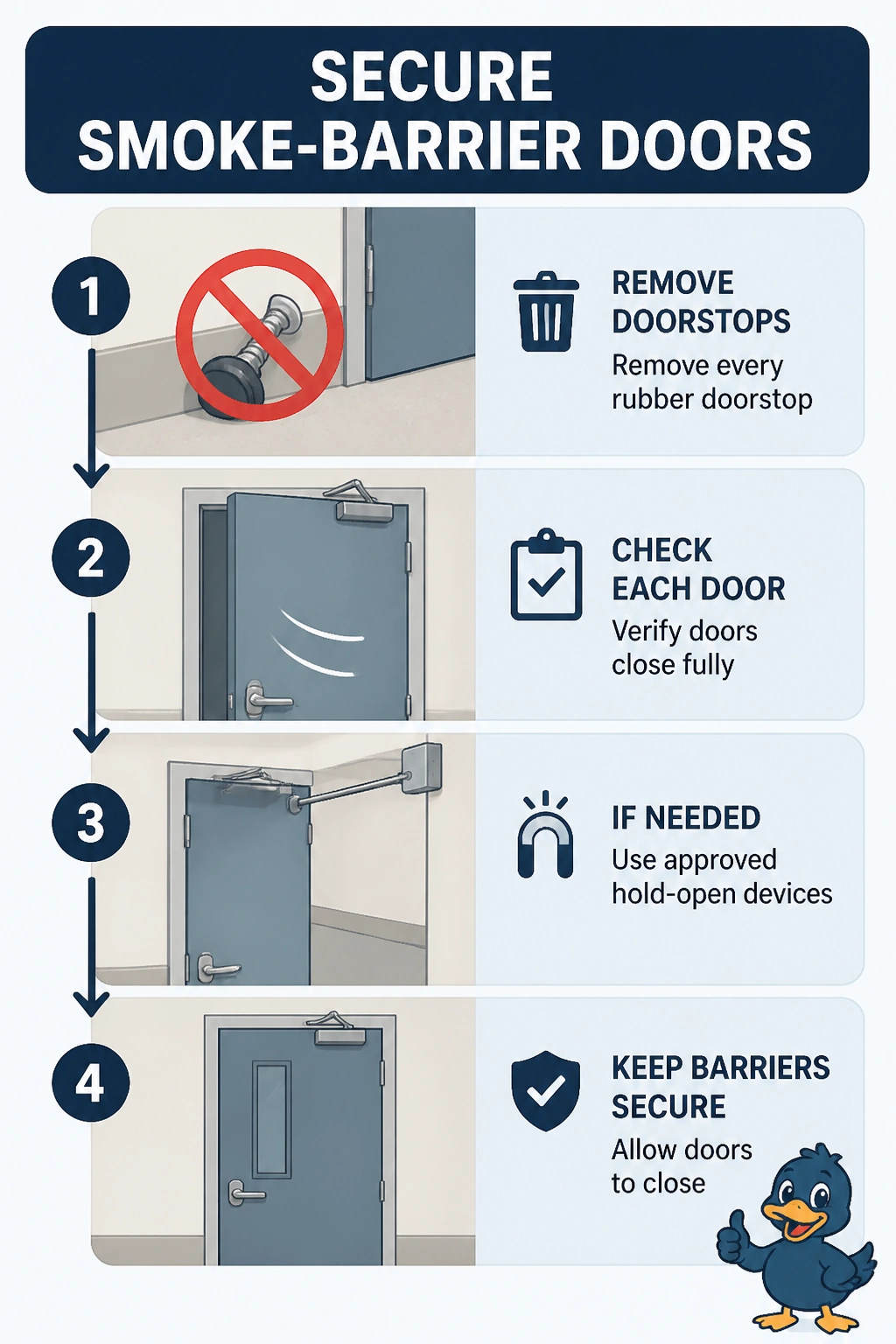
Under NFPA 101 Life Safety Code requirements adopted by CMS, smoke-barrier and fire-rated corridor doors must self-close and latch to contain smoke and fire, so the administrator must immediately remove all doorstops and verify doors close or use approved hold-open devices. Unapproved wedges prevent compartmentation during an actual fire and compromise resident defend-in-place protection. Choosing to leave the doorstops in place during daytime meal service and remove them at bedtime leaves residents unprotected during active daytime hours when kitchen and facility fires can occur. Trying to replace the rubber wedges with heavier wooden blocks that will not slip on tile still violates the code because any unapproved mechanical obstruction blocks automatic closure. Deciding to post signs on the corridor doors reminding staff to kick wedges out during alarms fails because Life Safety Code compliance cannot depend on staff remembering to clear obstructions in an emergency. Caveat: magnetic hold-open devices wired to release automatically upon fire alarm activation are permitted when properly inspected and tested. As an operational check, include door-latching and wedge-free checks on daily maintenance and leadership rounding checklists.
Prefer to study offline? Printable PDF study book + test engine ($7.50, unofficial). These questions stay free here.