
During an environmental safety walk-through, an administrator finds twelve full E-size oxygen cylinders leaning upright against a wall next to a cardboard supply rack in an unlocked storage closet. What corrective action must the facility take immediately?
Select an answer to reveal the explanation.
Short Explanation
An unsecured oxygen cylinder is a pressurized rocket waiting for a bump, and cardboard next to it adds fuel to the fire. Your trap here is thinking a tidy floor or laying tanks flat solves the hazard when life safety rules demand upright restraint and separation.
Full Explanation
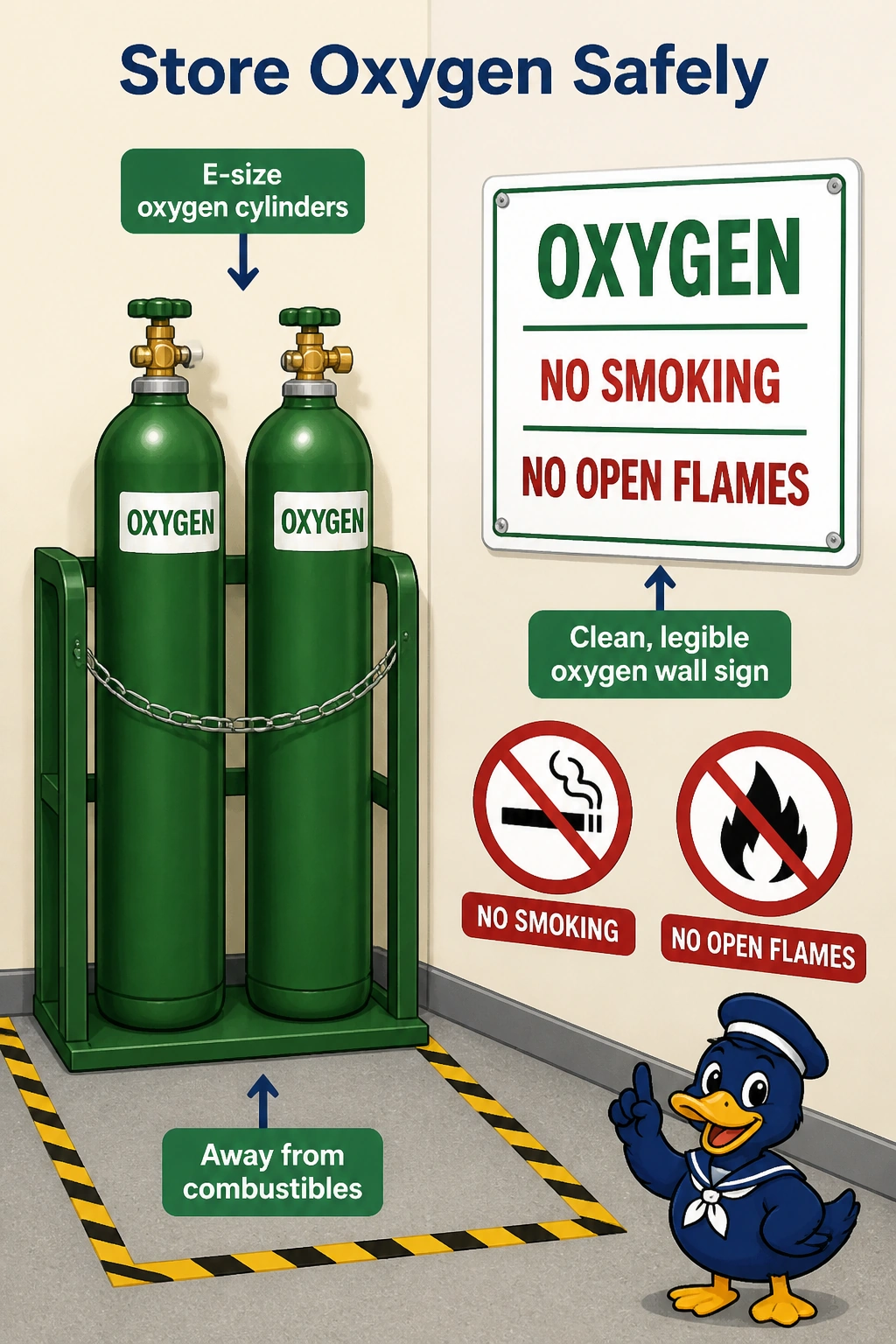
Compressed oxygen accelerates combustion violently, and falling cylinders can shear their valves and turn into projectiles. To meet Life Safety Code and health care facility standards, staff must "Secure the cylinders upright in approved racks away from combustibles with clear signage" so tanks cannot tip and flammable materials stay separated. Choosing to "Lay the cylinders flat on wooden pallets inside the closet to prevent them from tipping over" places pressurized oxygen on combustible wood and violates upright storage requirements for high-pressure cylinders. Moving to "Move the full cylinders into the resident medication room beside the automated dispensing cabinet" relocates the hazard into an active clinical workspace not designed for bulk medical gas storage. Simply deciding to "Keep the cylinders upright in the closet after removing the cardboard boxes from the floor" leaves unsecured tanks free to fall and lacks required hazard identification. Caveat: empty and full oxygen cylinders must also be clearly segregated and labeled so staff never grab an empty tank during an emergency. Operational check: inspect every medical gas storage alcove weekly to verify chained or racked upright restraint, separation from combustibles, and intact signage.
Prefer to study offline? Printable PDF study book + test engine ($7.50, unofficial). These questions stay free here.