
During environmental rounds, an infection preventionist observes housekeeping staff sorting soiled resident bed linens on the floor of a resident's room and carrying them unbagged down the main hallway to the laundry chute. Which corrective practice is required?
Select an answer to reveal the explanation.
Short Explanation
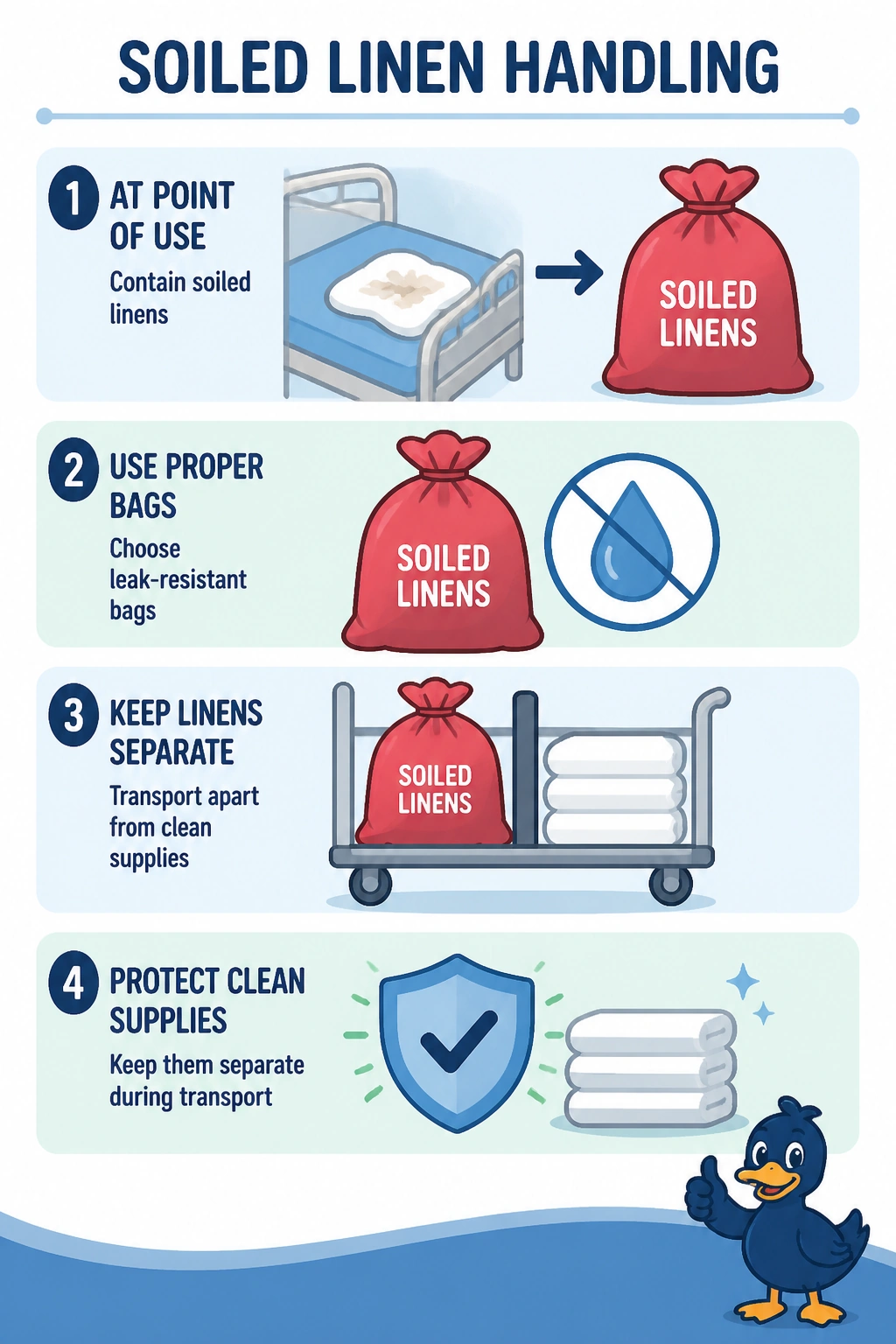
You can help prevent contamination from spreading by containing soiled linens where they are used and keeping them apart from clean supplies. Leak-resistant bags at the point of use protect residents, staff, and shared areas. Nighttime transport or hallway deodorizer may change timing or odor, but neither replaces proper containment.
Full Explanation
Under 42 CFR 483.80(e), facilities must handle, store, process, and transport linens in a manner that prevents the spread of infection. Containing soiled linens in leak-resistant bags at the point of use and transporting them separately from clean supplies limits contamination. Carrying unbagged soiled linens directly to the laundry room only during night shift hours still risks contaminating corridor surfaces, staff uniforms, and air, regardless of the time. Spraying soiled linens with room deodorizer in the hallway before placing them into open hampers masks odor without killing pathogens and leaves contaminated textiles exposed in public areas. Storing soiled and clean linen carts together in the same alcove to save corridor space creates direct cross-contamination between dirty laundry and freshly laundered supplies. Exam caveat: Double-bagging is generally reserved for cases where the outside of the primary bag is visibly soiled or likely to leak; it does not replace routine point-of-use containment. Practical check: Observe bed-making rounds on each unit to confirm leak-resistant bags are stocked on housekeeping carts and clean linen closets remain physically separated from soiled utility rooms.
Prefer to study offline? Printable PDF study book + test engine ($7.50, unofficial). These questions stay free here.