
During a busy morning medication pass and linen exchange, a surveyor observes wheeled laundry carts, a portable vital-signs stand, and two unoccupied wheelchairs parked along both sides of a resident wing corridor for over an hour. Why does this condition violate federal Life Safety Code requirements?
Select an answer to reveal the explanation.
Short Explanation
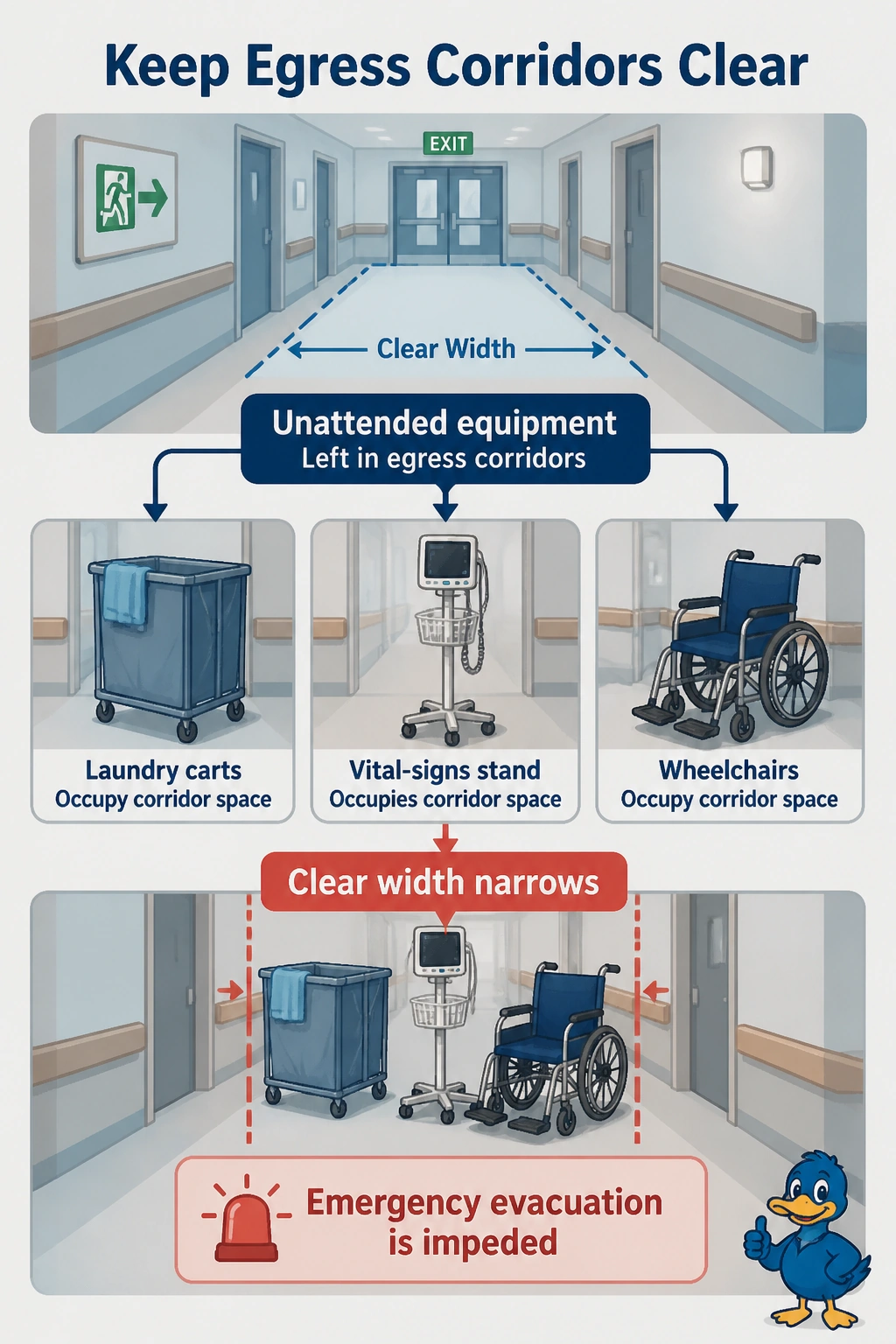
Your hallways are lifelines during a fire, not overflow storage closets. Even though equipment on wheels looks easy to push aside, leaving it parked on both sides traps residents and staff when you only have seconds to evacuate.
Full Explanation
Under 42 CFR 483.90 and the NFPA 101 Life Safety Code, Unattended equipment left in egress corridors narrows the required clear width and impedes emergency evacuation, creating an immediate obstacle for wheelchairs, beds, and emergency responders during smoke or fire events. Claiming that Corridor equipment is permitted only if staff attach reflective tape to each cart handle is incorrect because visibility markings do not restore obstructed egress width. Assuming that Wheeled carts may remain in hallways indefinitely when facility sprinkler systems are active misunderstands NFPA 101, which allows only limited, strictly defined wheeled equipment in use on one side of wide corridors—never unattended clutter on both sides for extended periods. Stating that The Life Safety Code prohibits moving any wheeled equipment through resident corridors is also wrong, because active transport of linen, meal, and medication carts is essential to daily care when carts are attended and do not block egress. As a caveat, temporary parking rules under NFPA 101 require strict width clearance and immediate removal when not actively in use. Operational check: conduct unannounced corridor walkthroughs across all shifts and designate recessed alcoves or storage rooms for idle wheelchairs and carts.
Prefer to study offline? Printable PDF study book + test engine ($7.50, unofficial). These questions stay free here.