
During a facility-wide environmental risk review, an administrator learns that a wing with low occupancy has several unused showers and sink faucets where water stagnates in the pipes for weeks at a time. Which environmental safety measure should the facility implement to reduce the risk of waterborne pathogens such as Legionella?
Select an answer to reveal the explanation.
Short Explanation
Stagnant water sitting in warm pipes is like a welcome mat for Legionella, so your job is to keep water moving and temperatures controlled. The trap is assuming a quick chemical pour down the drain or turning off pumps will protect residents from aerosolized droplets.
Full Explanation
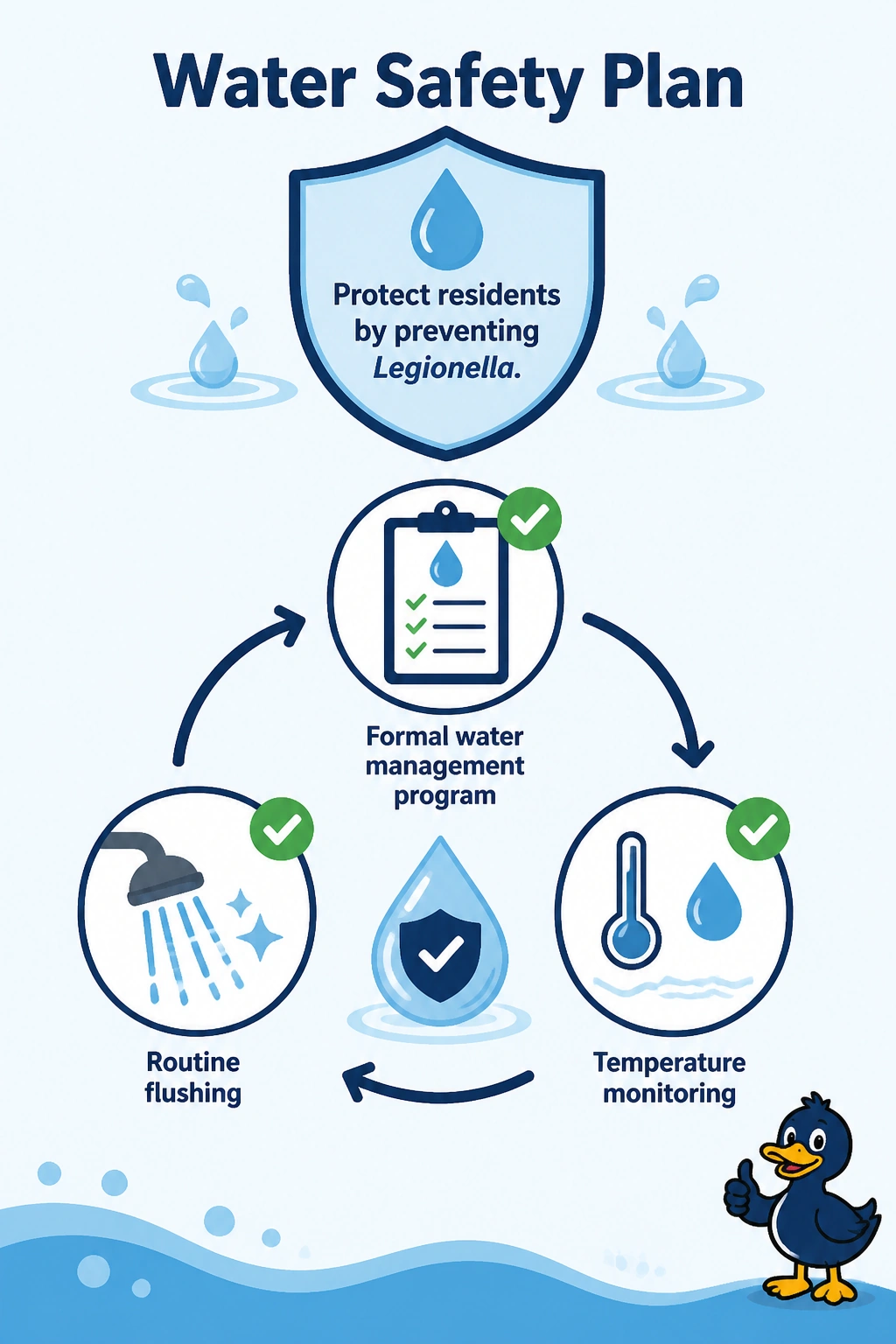
Federal nursing home infection prevention standards require facilities to maintain a water management program that identifies hazardous conditions where opportunistic pathogens like Legionella can grow and spread. Choosing to "Establish a formal water management program with routine flushing and temperature monitoring" directly eliminates stagnation in unused outlets and verifies that hot and cold water remain outside bacterial growth ranges. The alternative choices fail to control the systemic risk. Choosing to "Replace all galvanized supply piping with copper tubing throughout the entire building" is a major capital project that still allows Legionella growth if water remains stagnant in unused fixtures. Choosing to "Disable the hot water recirculation pumps on the low-occupancy wing during overnight hours" worsens the hazard by letting water cool and stagnate inside the distribution loop. Choosing to "Instruct housekeeping staff to pour quaternary ammonium disinfectant down sink drains weekly" only treats drain traps superficially and does not disinfect potable supply lines feeding showerheads and aerators. As a caveat, flushing protocols must be documented consistently and paired with scald-prevention controls at resident-accessible outlets. Operational check: review maintenance logs to confirm scheduled flushing of low-use taps and verify water temperatures at distal fixtures.
Prefer to study offline? Printable PDF study book + test engine ($7.50, unofficial). These questions stay free here.