
While reviewing life safety logs, a nursing home administrator notices that the maintenance director schedules every fire drill at 10:00 AM on the first Tuesday of the month and alerts unit managers beforehand so activities are not interrupted. How must this drill program be corrected?
Select an answer to reveal the explanation.
Short Explanation
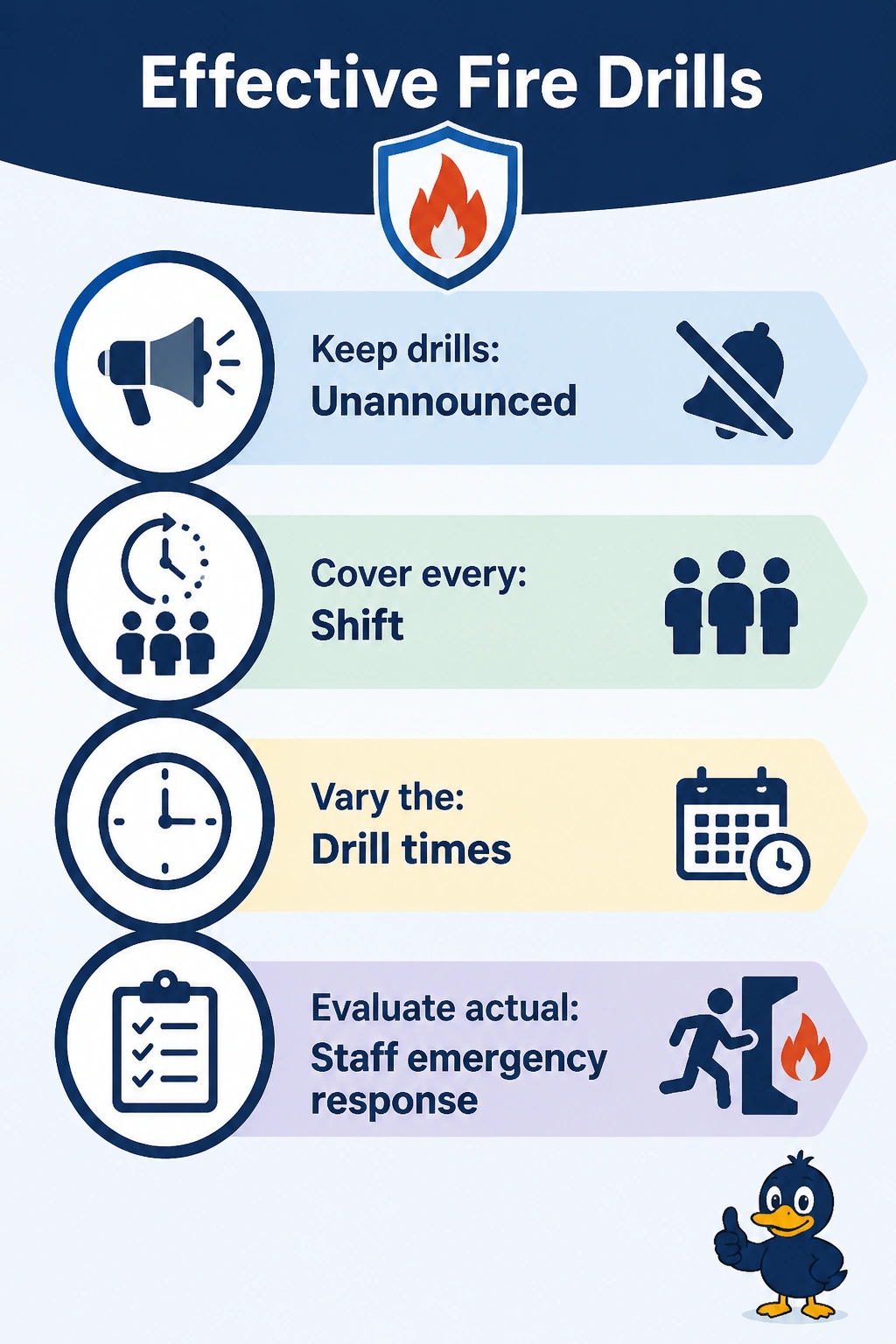
A fire drill everyone expects at 10:00 AM is like a pop quiz when you’ve been handed the answers the day before. You need unannounced drills across all shifts to verify that every team can respond under real conditions, not just when it’s convenient or familiar.
Full Explanation
Under 42 CFR 483.90 and the NFPA Life Safety Code, facilities must run unannounced drills across all shifts at varied times and evaluate actual staff emergency response. These drills test whether day, evening, and night staff can carry out rescue, alarm activation, containment, and evacuation procedures without advance coaching. Continuing the fixed daytime schedule to prevent resident anxiety and operational disruption defeats the purpose of preparedness testing and does not verify evening- or night-shift readiness. Unannounced drills limited to the day shift are insufficient because daytime leadership cannot stand in for overnight staff, whose staffing levels and workflows differ significantly. A written staff quiz on extinguisher locations cannot replace physical drills: knowing information does not demonstrate hands-on response during an emergency. One caveat is that during late-night drills, coded announcement systems may be used instead of audible alarms to avoid distressing sleeping residents while still testing staff response. As an operational check, review quarterly drill logs for varied start times across every shift and documented follow-up on any staff response gaps.
Prefer to study offline? Printable PDF study book + test engine ($7.50, unofficial). These questions stay free here.