
Two cognitively intact, unmarried long-stay residents develop a close romantic relationship and ask the nursing staff for privacy in one resident's private bedroom with the door closed. How must the interdisciplinary team respond?
Select an answer to reveal the explanation.
Short Explanation
Moving into a nursing facility does not mean leaving adult autonomy at the front door. The trap is letting family discomfort or misplaced liability fears override the privacy rights of two consenting, decisionally capable adults. When you honor privacy and knock before entering, you uphold dignity and federal resident rights.
Full Explanation
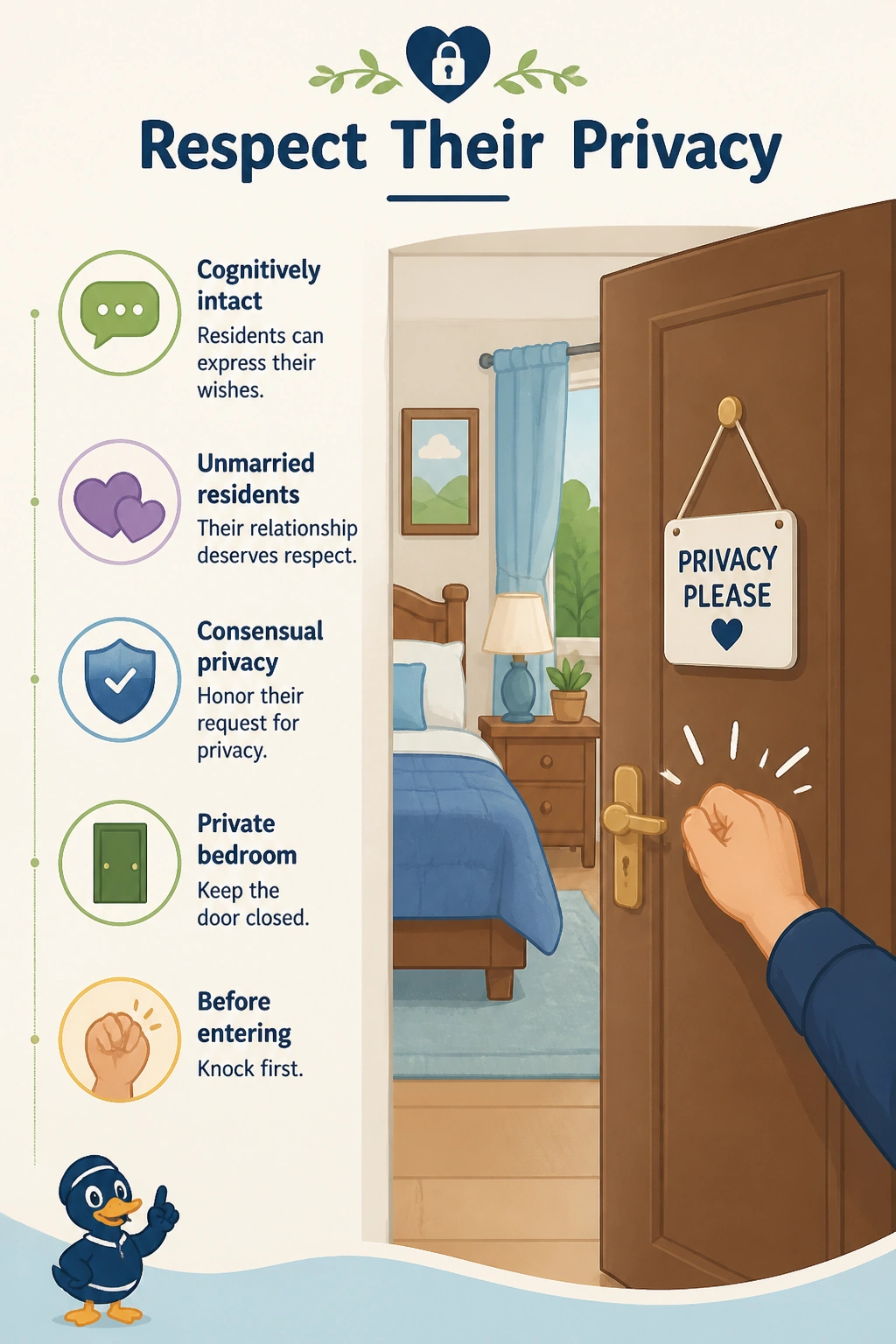
Under federal resident rights regulations at 42 CFR 483.10, cognitively intact residents retain the right to personal privacy, free association, and consensual intimate relationships. Choosing to respect their right to consensual privacy while knocking before entering the room balances autonomy with routine clinical safety. By contrast, choosing to require written permission from both residents' adult children before allowing private visits violates the authority of decisionally capable adults who manage their own personal lives. Deciding to separate the residents during evening hours to prevent potential liability for the facility imposes an unjustified restriction on freedom of association. Similarly, choosing to assign a nursing assistant to monitor the doorway continuously whenever the door is closed destroys personal privacy and treats consenting adults as though they require constant surveillance. As an important caveat, staff must always ensure both individuals have decisional capacity to consent and remain alert for any signs of coercion or cognitive decline that could affect safety. For an operational check, verify that facility policies address consensual resident intimacy, staff knock-and-wait etiquette, and capacity assessment procedures without imposing blanket bans.
Prefer to study offline? Printable PDF study book + test engine ($7.50, unofficial). These questions stay free here.