
A skilled nursing resident develops acute watery diarrhea and tests positive for Clostridioides difficile. Which infection prevention protocol must staff follow during care and room exit?
Select an answer to reveal the explanation.
Short Explanation
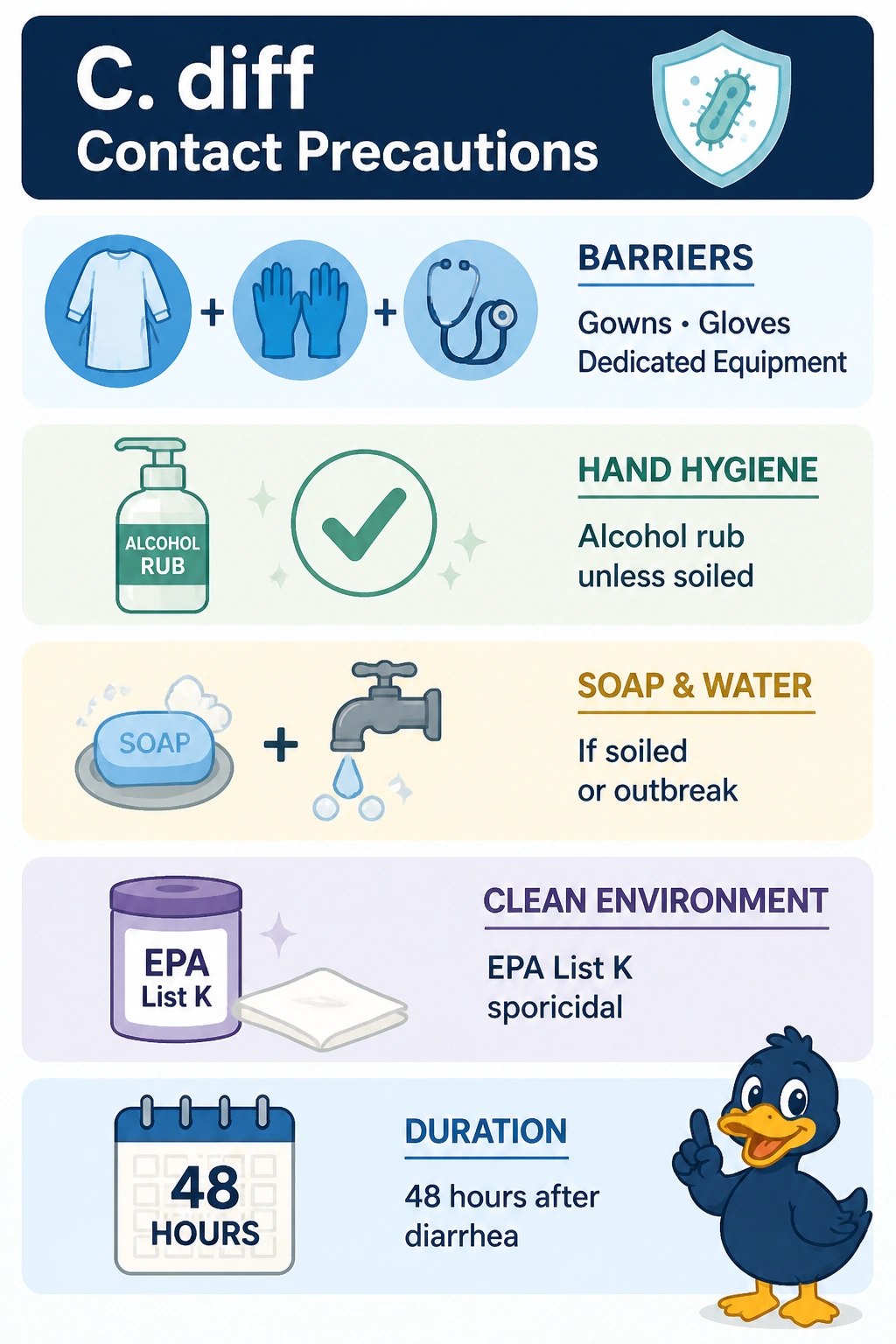
You still need contact precautions and List K spore-killing cleaning for C. diff, so think barriers plus environment every time. You can use alcohol hand rub for routine care, but switch to soap and water when hands are visibly soiled or during an outbreak.
Full Explanation
Clostridioides difficile spreads by fecal-oral contact via spores that persist in the environment, so staff must use contact precautions with gowns, gloves, dedicated equipment, and disinfection with an EPA List K sporicidal agent proven against C. difficile spores. For hand hygiene, CDC does not require soap and water for every non-outbreak case; unless hands are visibly soiled, alcohol-based hand sanitizer is preferred after glove removal, while soap and water with friction is added when hands are visibly soiled or during a C. diff outbreak. Relying solely on alcohol-based hand sanitizer after removing gloves fails because it omits required contact barriers, dedicated equipment, and sporicidal environmental cleaning. Placing the resident in airborne isolation with negative pressure ventilation misapplies airborne precautions to a contact pathogen and does not address fecal contamination or spore persistence. Ending isolation immediately after the first antibiotic dose is premature because spore shedding continues during diarrhea, so contact precautions must continue for at least 48 hours after diarrhea resolves per facility policy. Verify sink and sanitizer access, List K product with required wet-contact time, and extended precautions.
Prefer to study offline? Printable PDF study book + test engine ($7.50, unofficial). These questions stay free here.