
A long-stay resident with moderate Alzheimer's disease becomes distressed in the late afternoon, insisting she must leave immediately to pick up her young children from school. How should nursing staff respond to support her psychosocial well-being?
Select an answer to reveal the explanation.
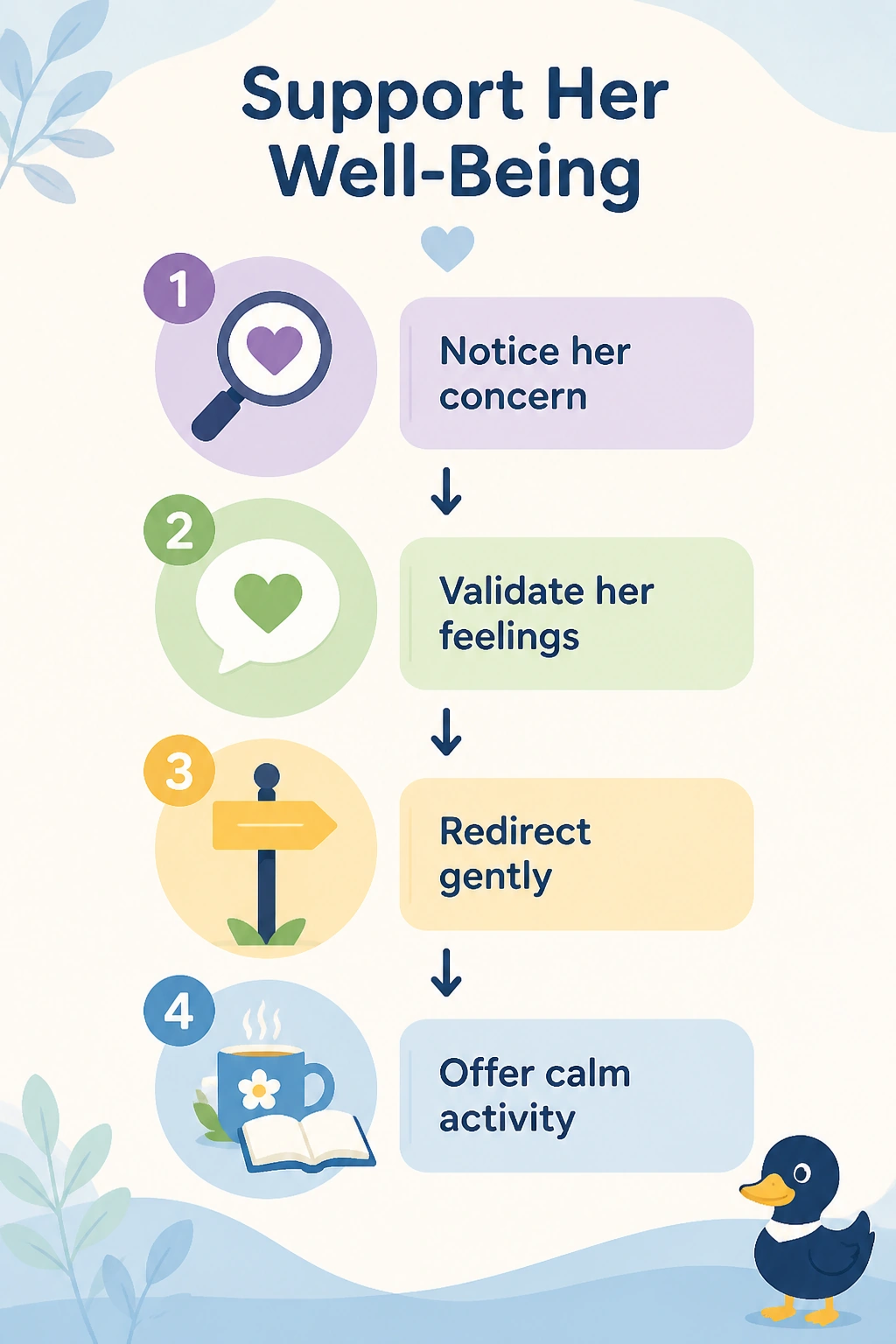
Short Explanation
When a resident with dementia is worried about her children, arguing with facts only pours fuel on her anxiety. The trap is trying to force reality orientation, isolating her, or reaching straight for a sedating medication. When you validate her care as a loving parent and guide her into a comforting routine, you calm her distress while honoring her dignity.
Full Explanation
For residents living with moderate dementia, memories from earlier life stages often feel completely present, making emotional reassurance far more effective than factual correction. Choosing to "Validate her feelings of concern and gently redirect her toward a calming activity" acknowledges her devotion to her family, lowers emotional distress, and shifts her focus to a comforting task or walk. Trying to "Remind her firmly that her children are grown adults and she lives in a nursing home" often triggers confusion, grief, or defensive agitation because it confronts a reality she cannot retain. Deciding to "Escort her back to her bedroom and close the door until she stops asking to leave" risks improper seclusion and worsens feelings of abandonment. Choosing to "Request an immediate as-needed antipsychotic order to calm her afternoon agitation" bypasses required non-pharmacological interventions and exposes the resident to unnecessary medication side effects. As a caveat, staff should also check for underlying physical triggers such as hunger, pain, fatigue, or toileting needs during late-afternoon restlessness. For an operational check, review dementia care plans and staff communication coaching logs to ensure individualized redirection preferences are documented and used across all shifts.
Prefer to study offline? Printable PDF study book + test engine ($7.50, unofficial). These questions stay free here.