
During morning rounds, a maintenance technician finds that a thermostatic mixing valve serving a resident shower room is fluctuating and delivering noticeably hotter water than normal. What immediate action must the facility take to protect residents from scalding?
Select an answer to reveal the explanation.
Short Explanation
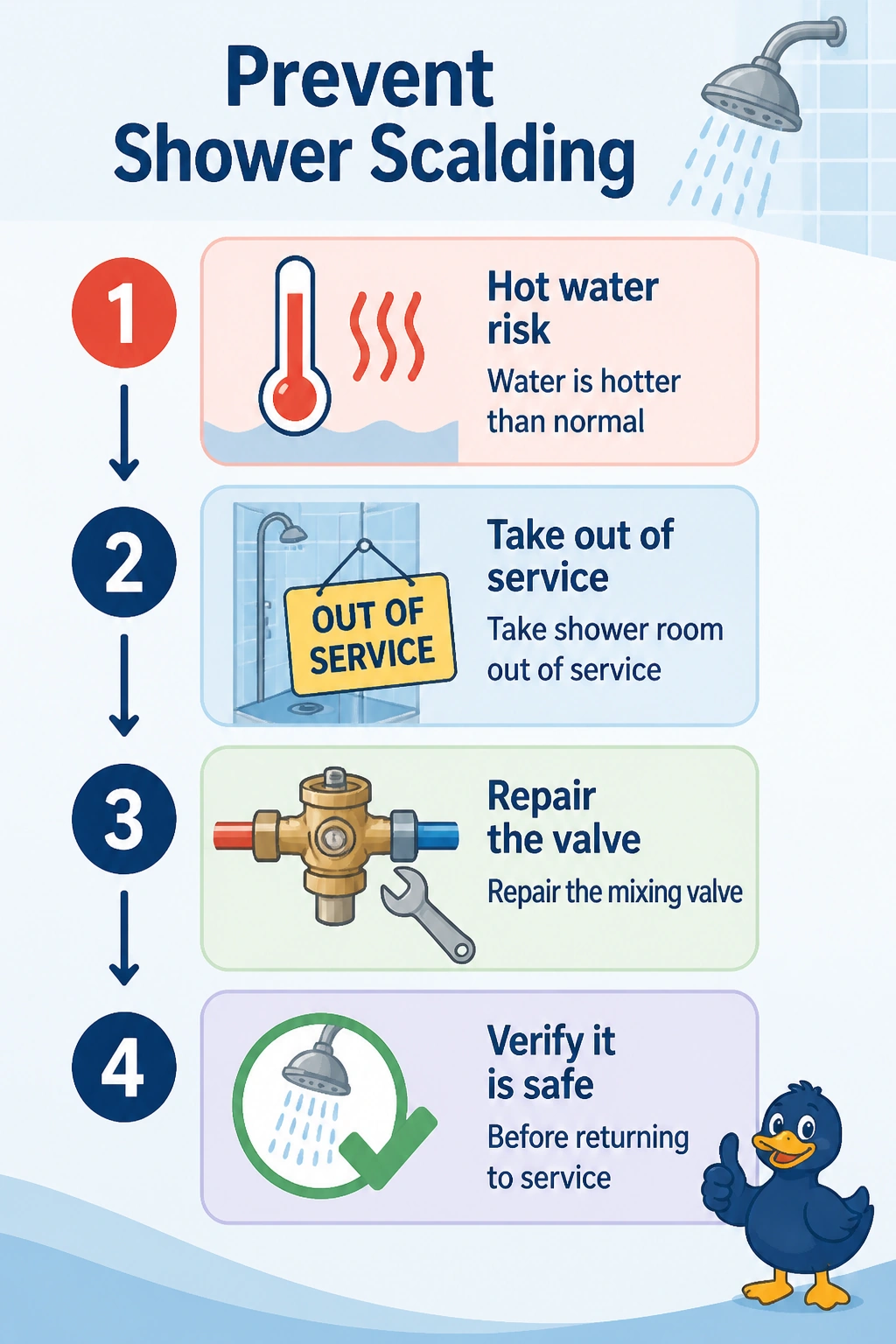
You protect residents by taking the shower room out of service until the faulty mixing valve is repaired and verified safe; a warning sign and hand check can’t prevent a sudden temperature spike. The key is to remove the hazard, not work around a failed safety control.
Full Explanation
Under 42 CFR 483.25(d) accident-hazard rules, a nursing facility must keep the environment as free of accident hazards as possible, including preventing thermal burns from hot water. Taking the shower room out of service until the mixing valve is repaired and verified safe prevents residents from being exposed to sudden temperature spikes. Posting a warning sign that instructs nursing assistants to test water temperature by hand is inadequate because a failing valve can surge mid-shower after an initial hand check. Reducing the facility’s main domestic hot water boiler setpoint does not repair the unstable valve and can create infection-control risks, including Legionella growth in the broader water system. Allowing supervised showers only for cognitively intact residents who can report excessive heat still exposes them to sudden scald injury before they can react. As a caveat, staff should redirect residents to an alternate verified bathing area and notify nursing leadership immediately. For an operational check, verify that bathing-room water-temperature logs include calibrated thermometer checks before each shift’s showers.
Prefer to study offline? Printable PDF study book + test engine ($7.50, unofficial). These questions stay free here.