
A long-stay resident with hypertension recently started a higher dose of an antihypertensive medication and reports feeling dizzy when standing up from bed each morning. Which care-planning intervention best addresses this fall risk?
Select an answer to reveal the explanation.
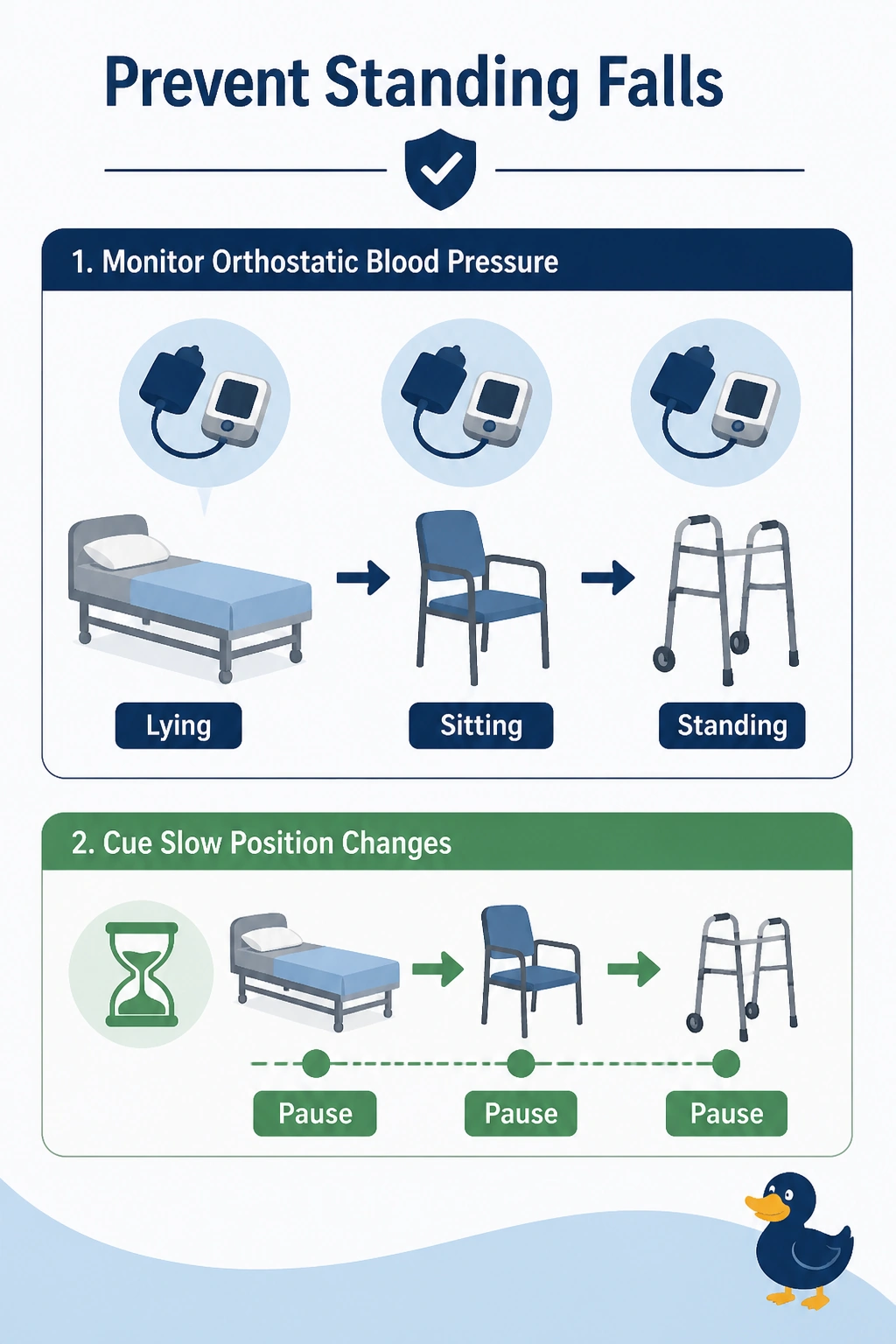
Short Explanation
Dizziness when you stand can mean your blood pressure is lagging behind gravity after a medication change. Orthostatic blood pressure checks and slow position changes help you reduce fall risk while protecting mobility. Restraints or bedrest can create new hazards rather than address the dizziness.
Full Explanation
A higher dose of an antihypertensive medication can cause orthostatic hypotension, a sudden blood pressure drop when rising from lying to sitting or standing that sharply increases fall risk. Monitoring orthostatic blood pressure and cueing slow position changes before standing provides the care team with objective information to share with the prescriber and allows the resident to sit at the bed’s edge briefly before standing. Applying a bilateral wheelchair lap belt whenever the resident sits upright introduces an improper physical restraint; it does not treat dizziness and can increase injury risk. Discontinuing the antihypertensive medication immediately without consulting the prescriber exceeds nursing scope of practice and risks rebound hypertension. Restricting the resident to bedrest until the next quarterly physician visit can cause avoidable deconditioning, pressure injury risk, and loss of independence. As a caveat, staff should also assess hydration status and review concurrent medications that may compound blood pressure drops. As a practical check, verify that the care plan and morning CNA assignment sheets include dangling at the bedside, orthostatic monitoring results, and timely physician notification.
Prefer to study offline? Printable PDF study book + test engine ($7.50, unofficial). These questions stay free here.