
An attending physician recommends starting a newly admitted resident with moderate dementia on a scheduled anxiolytic medication for persistent anxiety. Before the pharmacy dispenses the initial dose, what must the care team ensure?
Select an answer to reveal the explanation.
Short Explanation
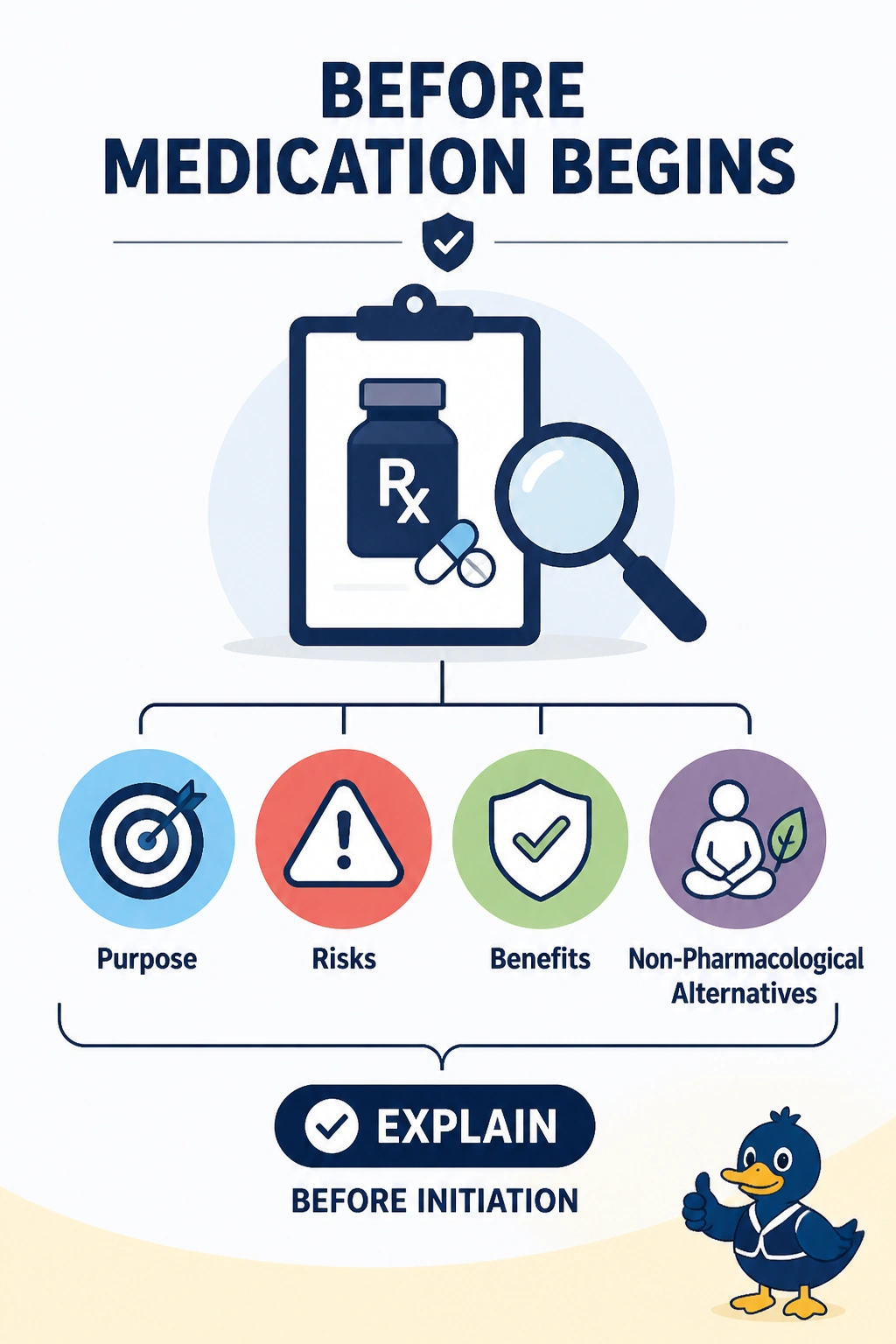
Think of starting a psychotropic medication like signing a lease: you never hand over the keys before walking through the terms. Under federal resident rights rules, you must ensure the resident or representative understands the medication's purpose, risks, benefits, and non-pharmacological alternatives before initiation. The common trap is relying on a general admission consent form, running a short trial first, or waiting until the next care conference to inform the family.
Full Explanation
Under federal resident rights and pharmacy services regulations in 42 CFR Part 483, residents have the right to be informed of their treatment and to participate in care decisions, so the care team must Explain the medication's purpose, risks, benefits, and non-pharmacological alternatives before initiation. Meaningful informed consent requires sharing side-effect profiles, expected outcomes, and safer non-drug options with the resident or legal representative prior to starting therapy. Choosing to Obtain the resident's or representative's signature on a general admission consent form covering routine medications fails because a blanket intake form does not disclose drug-specific psychotropic risks. Selecting to Begin a seven-day trial of the medication first so the team can share observed response data with the family violates the resident's right to refuse treatment before exposure occurs. Waiting to Document the physician's clinical rationale in the progress notes and notify the family at the next care conference delays disclosure until after administration has already begun. As a survey caveat, even when a resident lacks full decisional capacity, the team must still involve the resident to the extent possible alongside the representative. As an operational check, audit new psychotropic orders weekly to confirm documented risk-benefit and alternative discussions occurred prior to the first administered dose.
Prefer to study offline? Printable PDF study book + test engine ($7.50, unofficial). These questions stay free here.