
While inspecting a nursing unit medication cart, a consultant pharmacist finds three discontinued resident prescriptions and two expired antibiotic vials stored alongside active medications. What must the facility do to comply with federal pharmacy service standards?
Select an answer to reveal the explanation.
Short Explanation
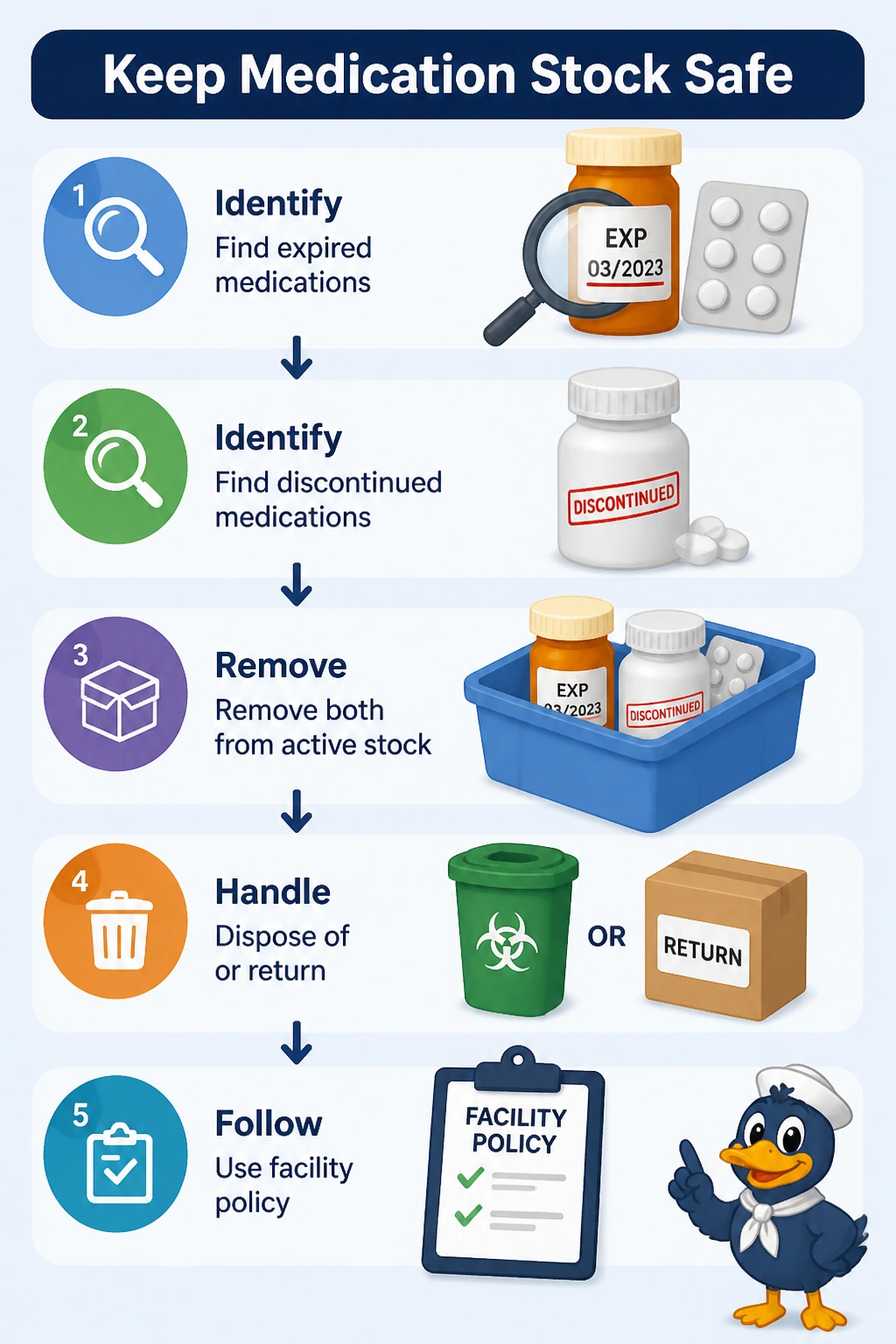
You’re right to clear expired and discontinued medications from active stock; leaving them in the cart risks a medication error. Promptly remove them and dispose of or return them according to facility policy, rather than waiting for a routine pharmacy visit.
Full Explanation
Under 42 CFR 483.45, facilities must store medications safely and ensure outdated, contaminated, or deteriorated drugs are not available for resident administration. Removing expired and discontinued medications from active stock and disposing of or returning them according to policy prevents medication errors and complies with federal drug-storage and disposal standards. Keeping expired vials in the cart for 90 days as backup stock risks administering drugs that may be subpotent or degraded and fails to respect expiration labeling. Flushing discontinued oral tablets down the utility sink immediately without documentation is not an appropriate disposal process: it can violate environmental waste rules and bypass required disposal records, particularly for controlled substances. Reassigning unused discontinued prescriptions to other residents with the same diagnosis is also improper because patient-specific dispensed medications cannot be transferred to another person. An exam caveat is that controlled-substance destruction requires witnessed documentation under applicable federal and state pharmacy rules. As a practical check, have nurses remove discontinued medications when orders are canceled and audit cart expiration dates monthly.
Prefer to study offline? Printable PDF study book + test engine ($7.50, unofficial). These questions stay free here.