
A long-stay resident with progressive Parkinson's disease is no longer expected to regain lost ambulation, but requires skilled physical therapy to maintain current transfer ability and prevent contractures. A therapist suggests discharging the resident from Part A skilled services because no further improvement is expected. How should leadership respond?
Select an answer to reveal the explanation.
Short Explanation
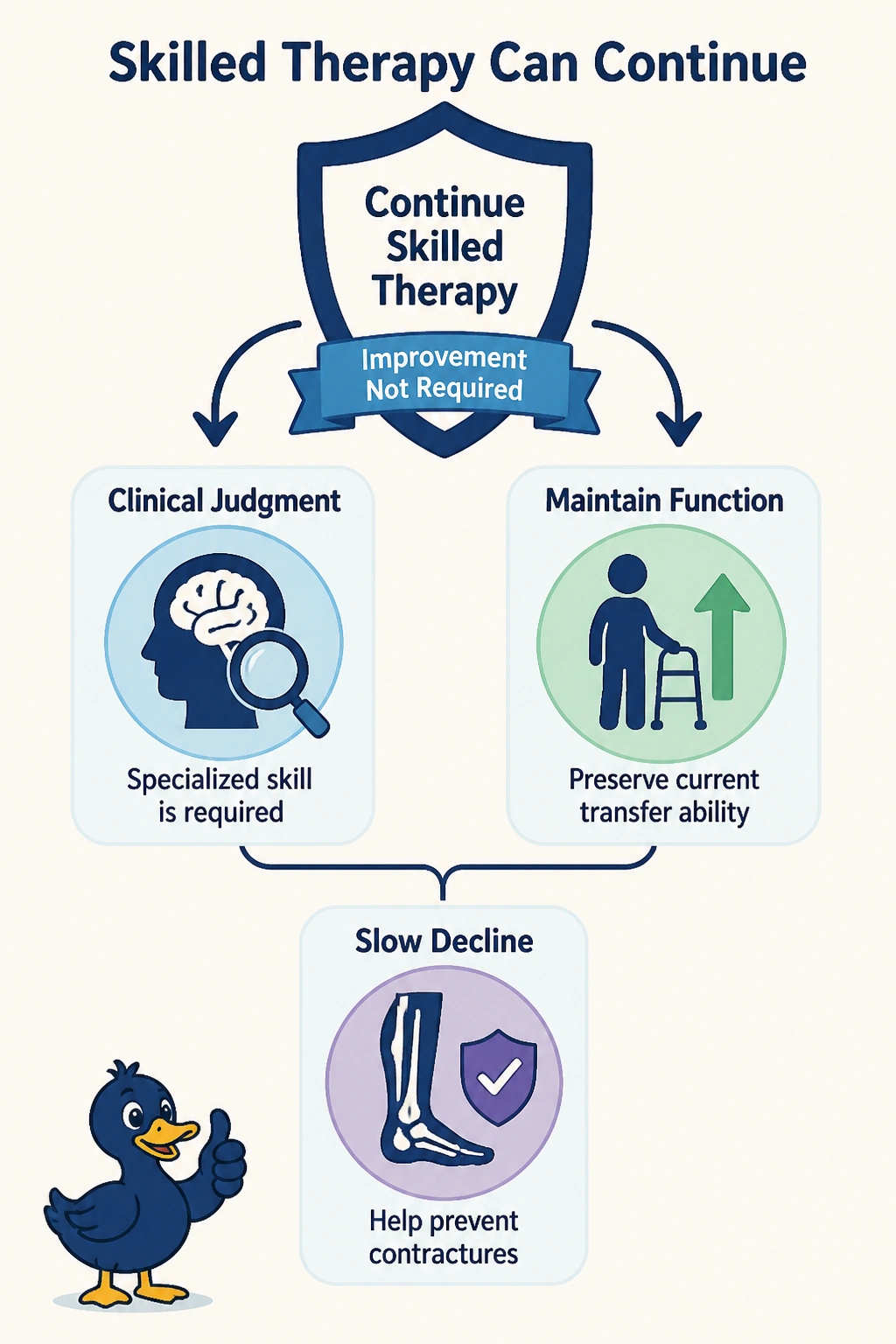
Skilled therapy isn't only about climbing the mountain—sometimes it's about keeping your footing so you don't slide backward. Under Medicare rules, you must evaluate whether a resident needs a therapist's specialized skills to maintain current function or slow decline, not just whether they will improve. The trap is treating 'no improvement expected' as an automatic stop sign for skilled coverage.
Full Explanation
Under federal Medicare coverage standards (clarified under the Jimmo v. Sebelius settlement and CMS Medicare Benefit Policy Manual), coverage depends on whether skilled care is needed, so the facility must Continue skilled therapy if specialized clinical judgment is required to maintain function or slow decline. When a resident's condition requires a licensed therapist's clinical expertise to safely preserve mobility or prevent contractures, skilled maintenance therapy remains covered. Choosing to Discontinue skilled physical therapy immediately and transition the resident exclusively to informal nursing assistance risks avoidable functional decline when unlicensed staff cannot safely perform complex interventions. Deciding to Require the resident's family to sign a private-pay agreement because Medicare covers only restorative gains misapplies federal benefit rules and improperly shifts covered costs. Opting to Pause therapy for thirty days and re-evaluate only after the resident experiences a measurable functional loss violates federal quality-of-care duties to prevent avoidable decline. As a caveat, unskilled routine exercise that can be safely performed by restorative aides does not qualify as skilled therapy. As an operational check, review therapy discharge notes weekly to confirm decisions are based on need for skilled complexity rather than an improvement-only standard.
Prefer to study offline? Printable PDF study book + test engine ($7.50, unofficial). These questions stay free here.