
A newly admitted resident with moderate dementia repeatedly tries to open an exterior stairwell door while looking for her former workplace. Which care-planning intervention best balances resident safety with federal freedom-from-restraint standards?
Select an answer to reveal the explanation.
Short Explanation
Safe wandering management works like guardrails on a scenic overlook—you protect the resident from danger without locking them in a box. The trap is resorting to bedroom locks or physical barriers, which count as unlawful involuntary seclusion or restraints under federal care rules.
Full Explanation
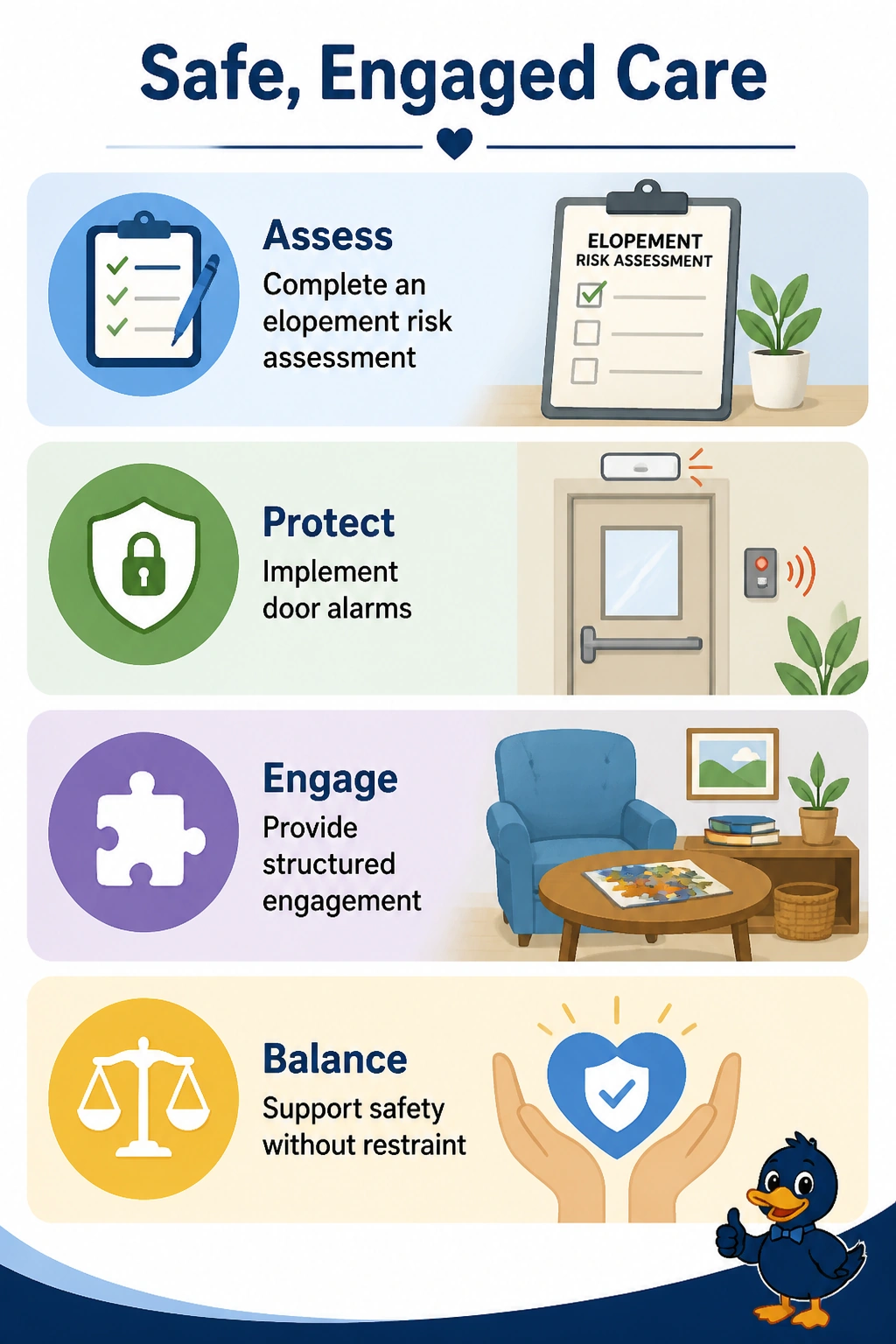
Federal quality-of-care and resident rights standards require facilities to prevent avoidable accidents such as elopement while preserving the least restrictive environment. Choosing to "Complete an elopement risk assessment and implement door alarms with structured engagement" addresses the resident's exit-seeking trigger through meaningful purpose, environmental cues, and prompt staff alerting. By contrast, "Lock the resident's bedroom door from the outside during shift changes to prevent wandering" constitutes prohibited involuntary seclusion and creates a severe life-safety egress hazard. Attempting to "Place a low-back recliner in front of the stairwell door so the resident cannot reach the handle" obstructs an emergency exit and relies on a makeshift physical barrier rather than a care plan. Similarly, "Assign a nursing assistant to instruct the resident to remain seated in the lounge all afternoon" restricts freedom of movement and ignores the unmet psychosocial need driving her behavior. Caveat: door alarms are supplemental alerts and never replace active staff supervision and timely response. Operational check: test exit-door alarms daily and verify the elopement binder photo and care plan are current.
Prefer to study offline? Printable PDF study book + test engine ($7.50, unofficial). These questions stay free here.