
A resident recovering from a stroke shows early stiffness and reduced passive motion in her affected left wrist and fingers, though she has no painful joint contracture yet. Which care-planning action best meets federal mobility and range-of-motion standards?
Select an answer to reveal the explanation.
Short Explanation
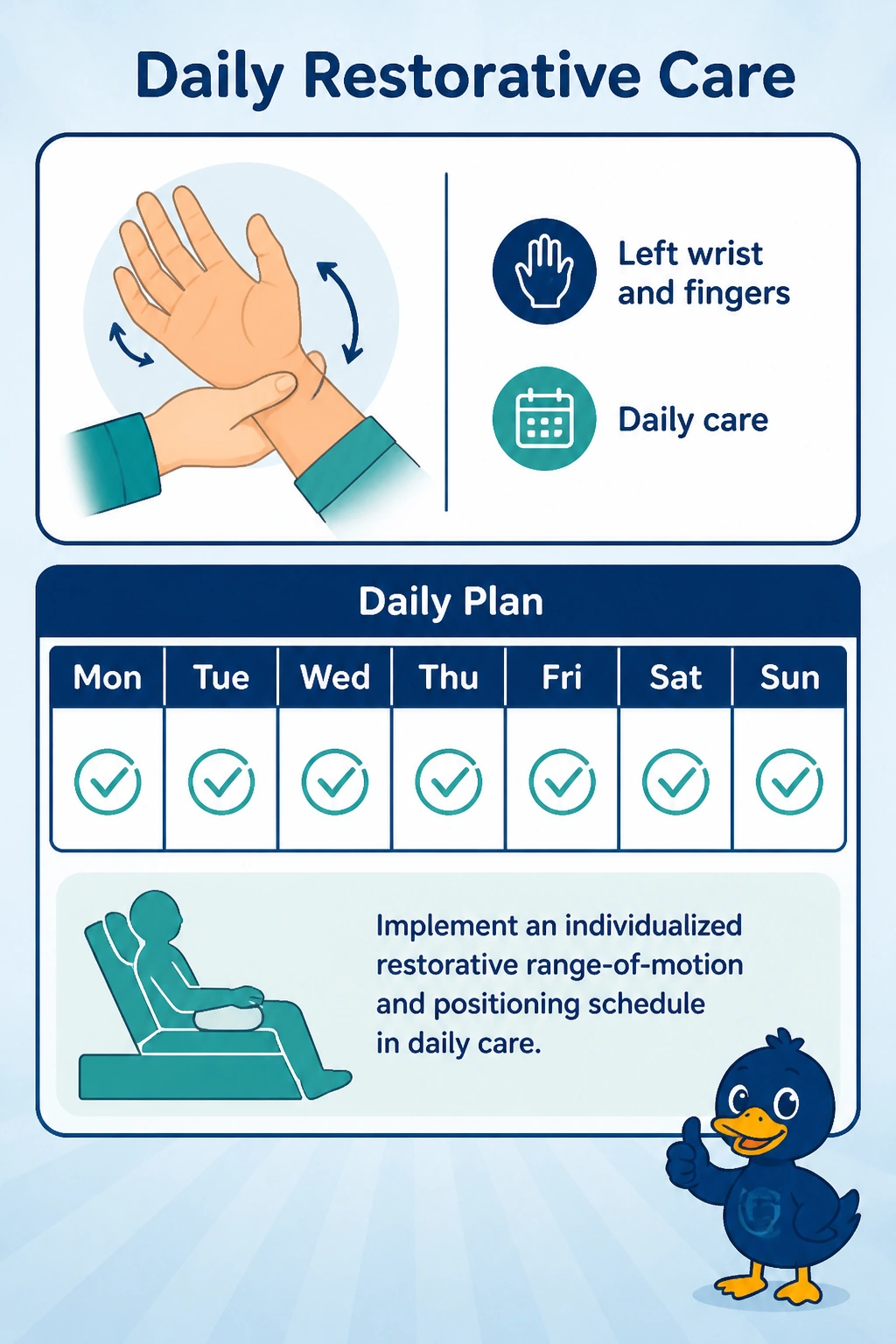
Once a joint contracture locks in, regaining motion is an uphill battle, so early stiffness is your cue to act. Do not wait for pain or immobilize the limb all day; you need a consistent, individualized restorative range-of-motion routine built into daily care.
Full Explanation
Under 42 CFR 483.25, a resident who enters without limited range of motion must not experience a reduction unless clinically unavoidable, and a resident with existing limitations must receive appropriate treatment and services to increase range of motion or prevent further decline. That is why the team should implement an individualized restorative range-of-motion and positioning schedule in daily care following therapy evaluation. Choosing to immobilize the affected arm in a sling throughout the day to prevent accidental bumps accelerates joint stiffening and worsens functional loss. Choosing to wait until the resident reports severe pain before requesting an occupational therapy screen delays preventive care until contractures may become irreversible. Choosing to delegate passive stretching only to visiting family members during weekend visits fails to provide the skilled, consistent daily intervention the facility is obligated to deliver. As a clinical caveat, staff must never force a joint past the point of pain or resistance, and splinting schedules must include regular skin checks. Operationally, audit restorative flow sheets weekly against therapy recommendations and inspect affected skin during bathing.
Prefer to study offline? Printable PDF study book + test engine ($7.50, unofficial). These questions stay free here.