
A resident with Parkinson's disease and mild hand tremors has no swallowing difficulty but spills soup with standard flatware, grows frustrated, and stops eating halfway through meals. Which dining intervention best supports his nutrition and independence?
Select an answer to reveal the explanation.
Short Explanation
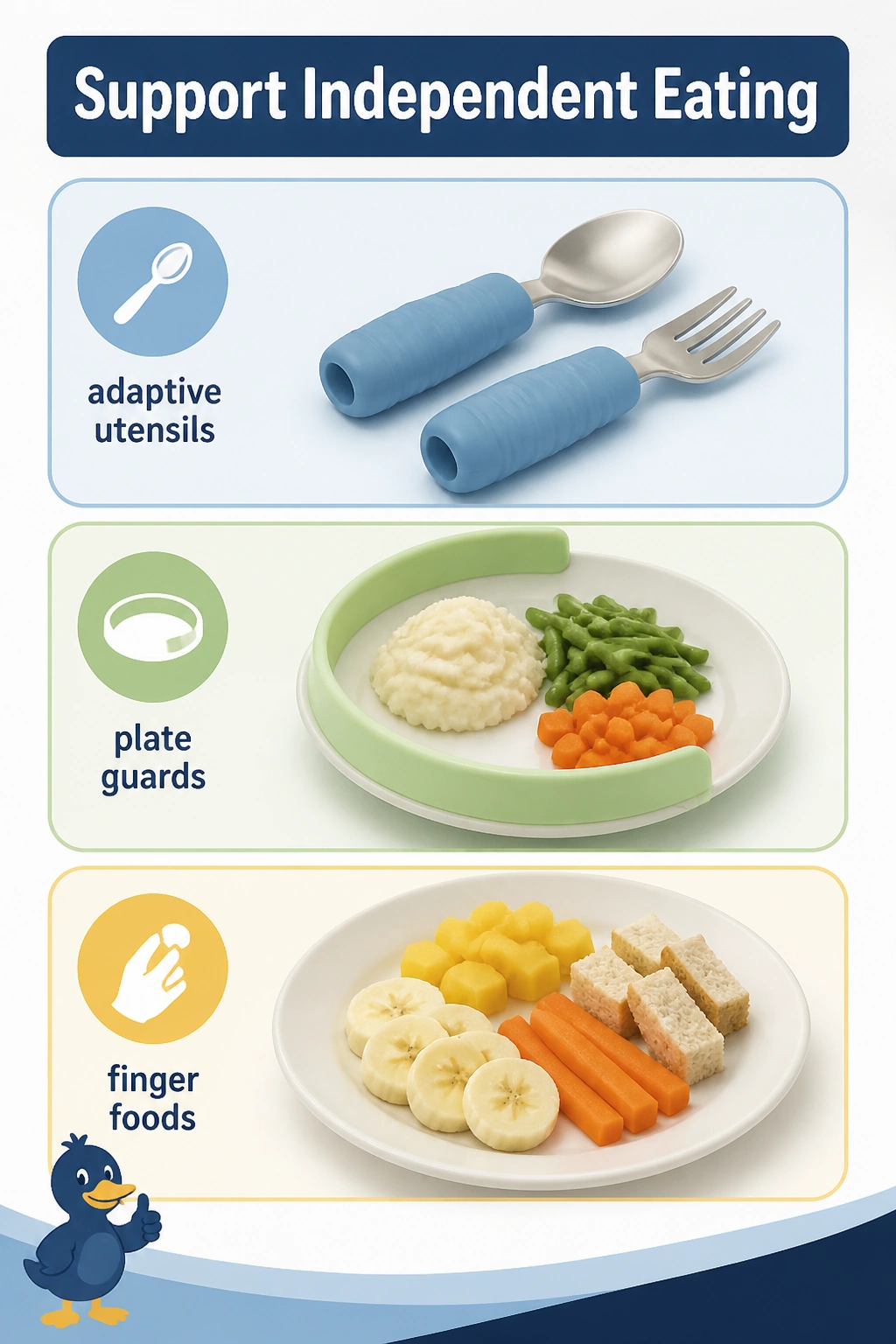
You can make meals easier without taking away independence: adaptive utensils, plate guards, and finger foods help you keep self-feeding when tremors make standard flatware difficult. Since swallowing is intact, better tools are more appropriate than changing the diet or taking over feeding.
Full Explanation
Under 42 CFR 483.24(b)(4) and 42 CFR 483.60(g), nursing facilities must support dining independence, provide special eating equipment and utensils when needed, and offer appropriate assistance to use them. With tremors but intact swallowing, provide adaptive utensils, plate guards, and finger foods to support self-feeding, following an occupational therapy evaluation. Immediately changing the entire diet to pureed textures and thickened liquids is not justified by tremors alone when dysphagia is absent, and may unnecessarily restrict food enjoyment and dignity. Having a nursing assistant spoon-feed every bite from the start may save time, but fosters dependency and erodes autonomy when the resident can eat with suitable equipment. Removing the resident from the main dining room to avoid others seeing spills risks social isolation without consent and does not address the mechanical barrier to eating. As a clinical caveat, monitor intake percentages and weights; fatigue late in a meal may still warrant partial cueing or assistance. As a practical check, confirm adaptive equipment is listed on the meal ticket and placed within reach with every tray.
Prefer to study offline? Printable PDF study book + test engine ($7.50, unofficial). These questions stay free here.