
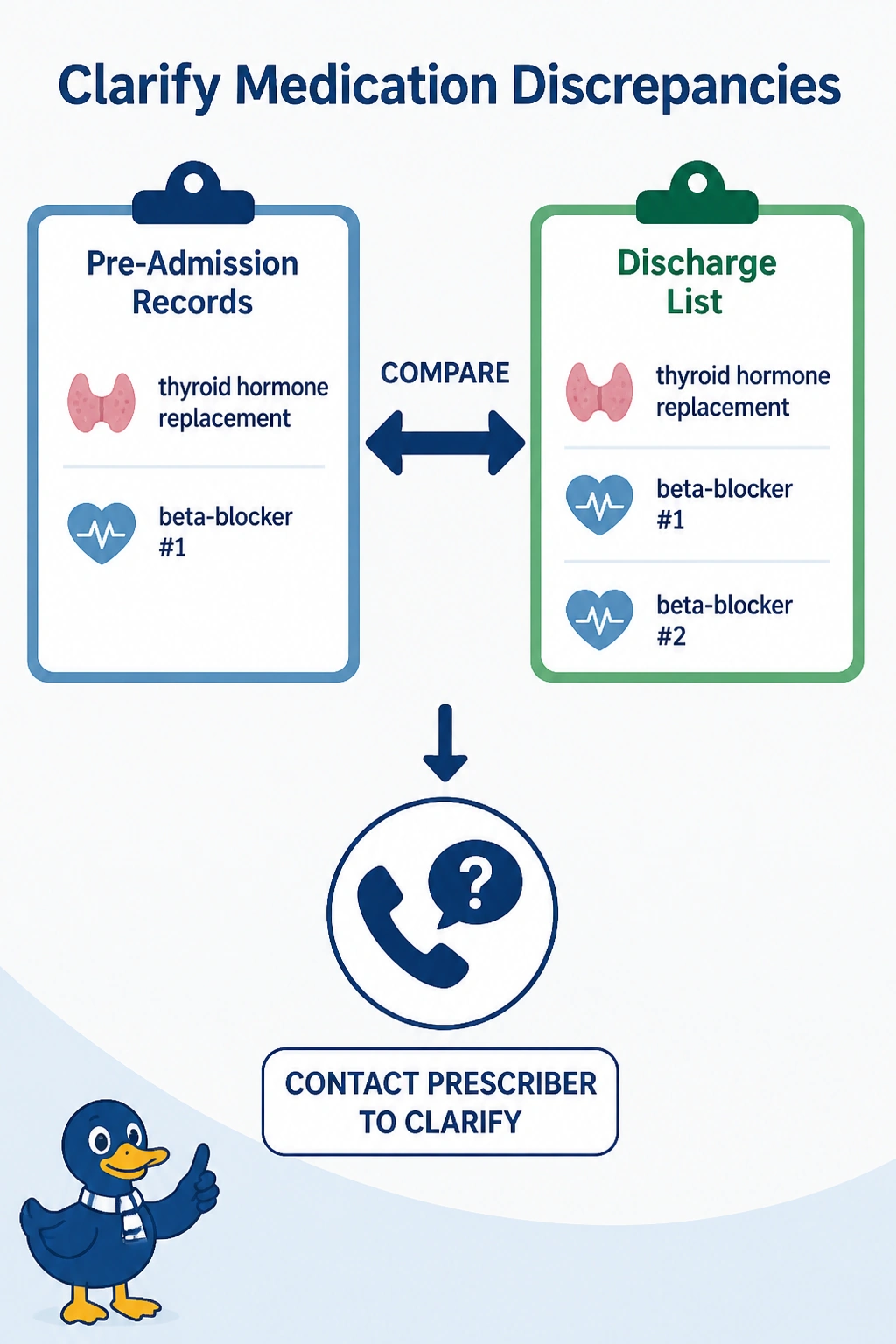
A resident returns from an acute hospital with a discharge medication list that omits her long-standing thyroid hormone replacement and includes two different beta-blockers. What should the admitting nurse do before administering these medications?
Select an answer to reveal the explanation.
Short Explanation
Hospital transfers are like changing planes without checking your luggage—orders easily get dropped or duplicated along the way. Do not guess which beta-blocker is right or wait for a routine review; you must reconcile the lists with the prescriber before giving conflicting doses.
Full Explanation
Transitions between acute hospitals and nursing facilities carry high risk for medication discrepancies, so the admitting nurse must compare pre-admission records with the discharge list and contact the prescriber to clarify before administering conflicting or incomplete regimens. Under 42 CFR Part 483 pharmacy and care-planning rules, facilities must ensure accurate medication orders from admission onward. Choosing to administer only the new hospital beta-blocker orders while waiting for the next monthly pharmacy review exposes the resident to duplicate therapy or adverse hemodynamic effects for weeks. Choosing to restart the pre-hospital thyroid medication automatically using the family's home prescription bottle bypasses valid prescriber orders and facility pharmacy labeling controls. Choosing to hold all cardiovascular and endocrine medications for 72 hours until the comprehensive MDS is finished risks acute decompensation and misses the immediate baseline care-planning window. As a regulatory caveat, verbal clarification orders must be promptly authenticated by the prescriber. Operationally, verify that the admitting nurse documents the reconciliation call, updates the MAR, and flags the discrepancy for the consultant pharmacist.
Prefer to study offline? Printable PDF study book + test engine ($7.50, unofficial). These questions stay free here.