
A long-stay resident with mild cognitive impairment and a diminished thirst sensation has dry mucous membranes, dark concentrated urine, and consistently drinks less than half of the fluids served on meal trays. Which care-planning approach best addresses this hydration risk?
Select an answer to reveal the explanation.
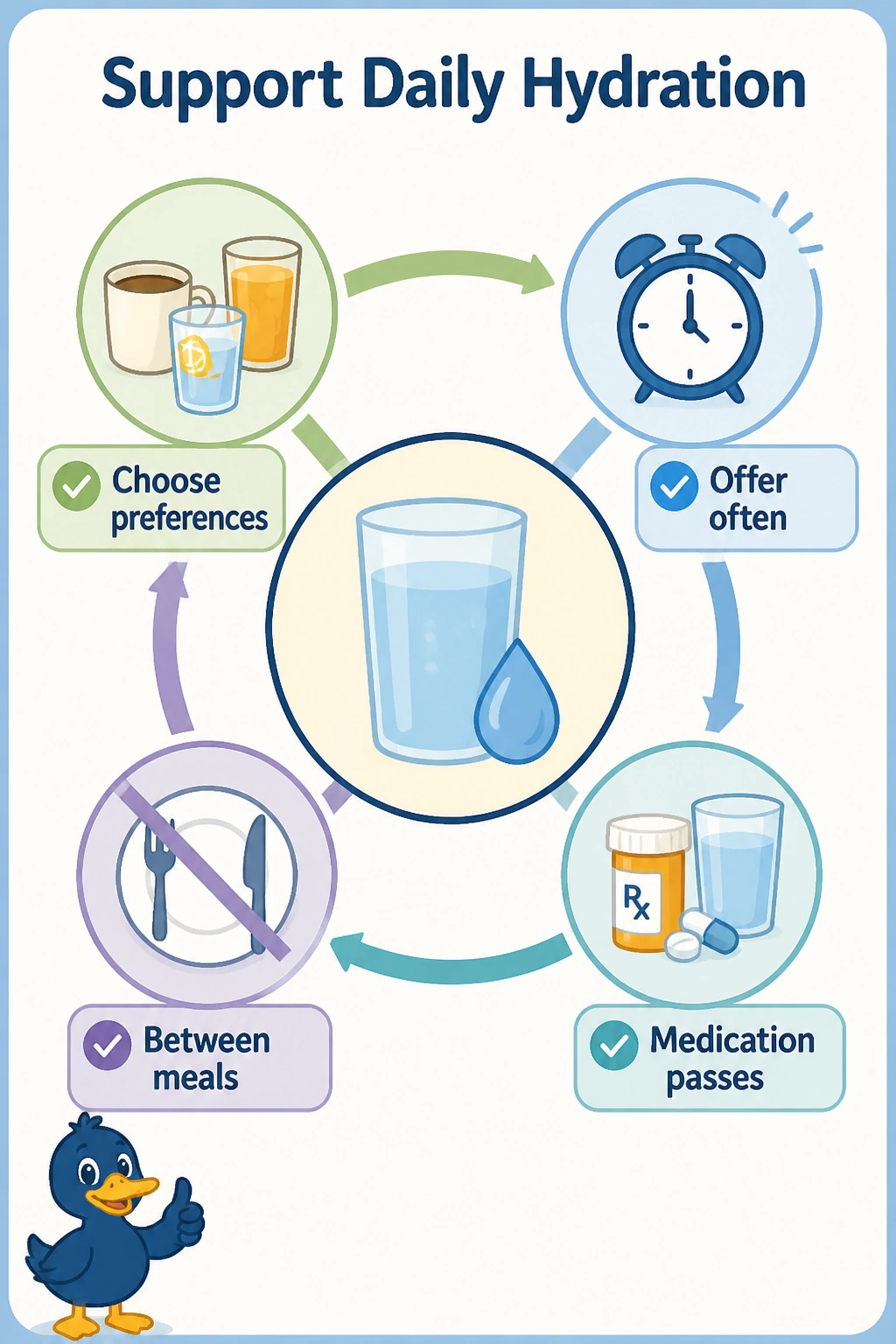
Short Explanation
Residents with blunted thirst cues rarely catch up on fluids at mealtime alone. Your best move is weaving small, preferred drinks into everyday touchpoints like med passes and activities. The trap is jumping to invasive catheters or IVs when oral intake just needs consistent encouragement, so keep fluids visible and appealing.
Full Explanation
Under federal nutrition and hydration care standards, facilities must maintain sufficient fluid intake to prevent dehydration, making it essential to Offer preferred beverages at frequent intervals between meals and during medication passes. Choosing to Limit fluid offerings to scheduled mealtimes so intake totals are easier for dietary staff to track reduces total daily fluid opportunities for a resident who cannot consume large volumes at once. Electing to Insert an indwelling urinary catheter to measure hourly urine output accurately introduces serious infection risk without treating the underlying inadequate oral intake. Deciding to Discontinue all oral fluids and request an immediate order for continuous intravenous hydration is clinically inappropriate for a resident who can still swallow safely and has not failed oral rehydration strategies. One clinical caveat is that staff must verify any physician-ordered fluid restrictions—such as for advanced heart failure or renal disease—and adjust beverage consistency if dysphagia is present. For an operational check, audit bedside water-pitcher freshness, intake-output logs, and between-meal hydration cart rounds during clinical stand-up meetings.
Prefer to study offline? Printable PDF study book + test engine ($7.50, unofficial). These questions stay free here.