
After completing formal physical therapy for a knee replacement, a long-stay resident gradually loses the ability to transfer and ambulate because nursing staff find it faster to use a wheelchair for all meals and activities. How does this practice conflict with federal quality-of-care rules?
Select an answer to reveal the explanation.
Short Explanation
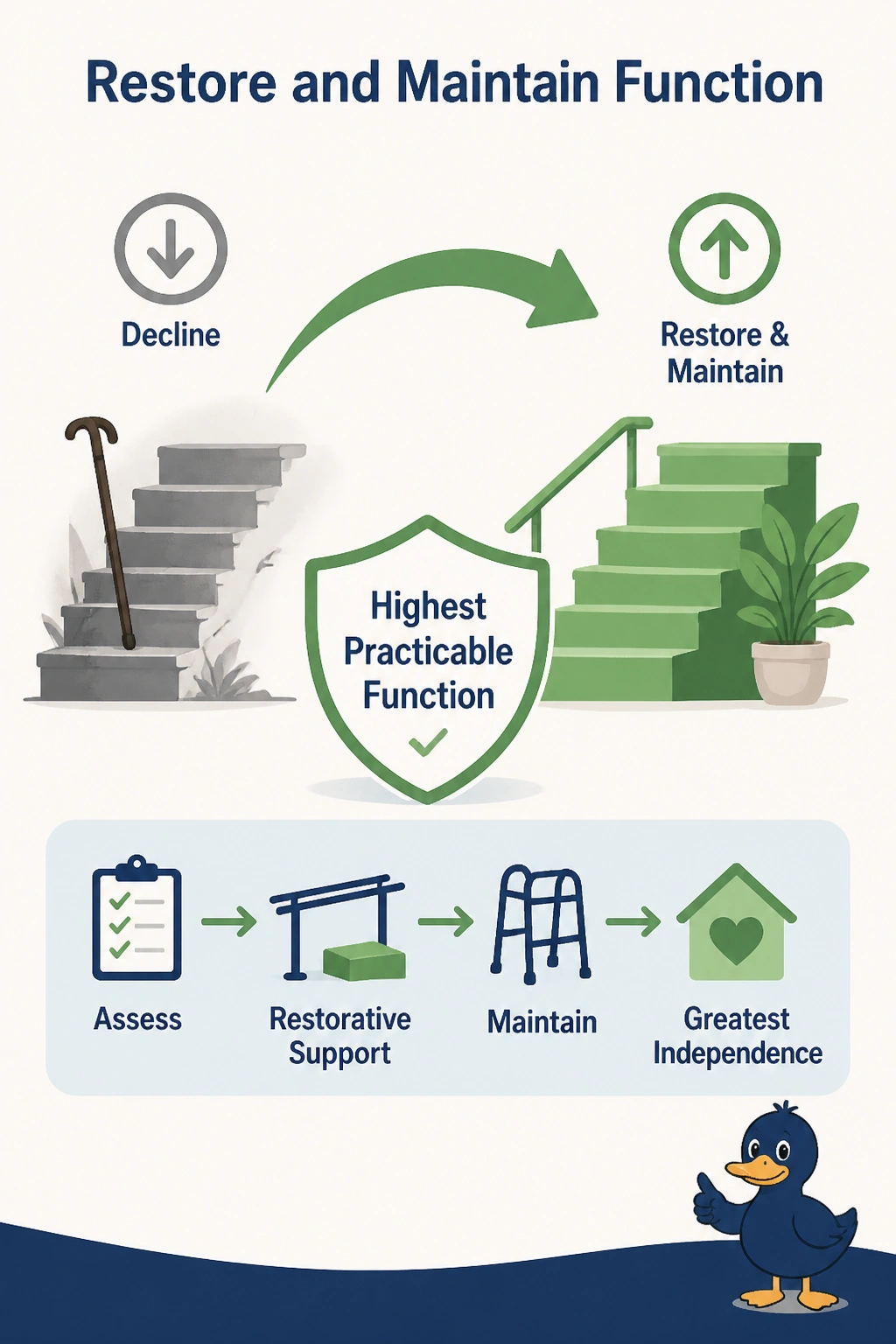
When formal therapy ends, your care team's job is to protect those hard-won gains rather than let convenience take over. The trap is thinking a wheelchair is harmless when schedules get tight, when federal rules treat avoidable functional decline as a quality-of-care failure.
Full Explanation
Under 42 CFR 483.24, a facility must ensure that a resident's abilities in activities of daily living do not diminish unless circumstances of the individual's clinical condition demonstrate that diminution was unavoidable, so this practice is wrong because it fails to provide restorative support to maintain the resident's highest practicable function. Replacing routine walking and transfer assistance with wheelchair transport for staff convenience directly causes preventable deconditioning. Claiming that it violates rules only if the resident's physician wrote a daily walking order is incorrect because maintaining functional ability is an affirmative facility duty embedded in the comprehensive care plan. Arguing that it is permitted whenever staffing shortages prevent one-on-one ambulation help fails because staffing convenience never excuses avoidable ADL decline. Suggesting that it requires an immediate involuntary discharge for rehabilitation non-compliance misapplies discharge rules to a facility-driven care omission. Caveat: genuine clinical progression, such as severe medical instability or documented resident refusal after education, can make decline unavoidable when properly documented. As an operational check, review quarterly MDS ADL scores against restorative nursing logs to catch early mobility drops.
Prefer to study offline? Printable PDF study book + test engine ($7.50, unofficial). These questions stay free here.