
A long-stay Medicaid resident fractures an upper denture during lunch and cannot chew solid food comfortably, and the resident's family says they cannot afford a private dentist. What must the nursing facility do to meet federal resident care requirements?
Select an answer to reveal the explanation.
Short Explanation
When you have a broken denture, eating can become uncomfortable and difficult. Federal rules require the facility to help you obtain dental care, rather than leaving the burden on your family. The trap is treating this as only a meal-texture issue or a family financial problem.
Full Explanation
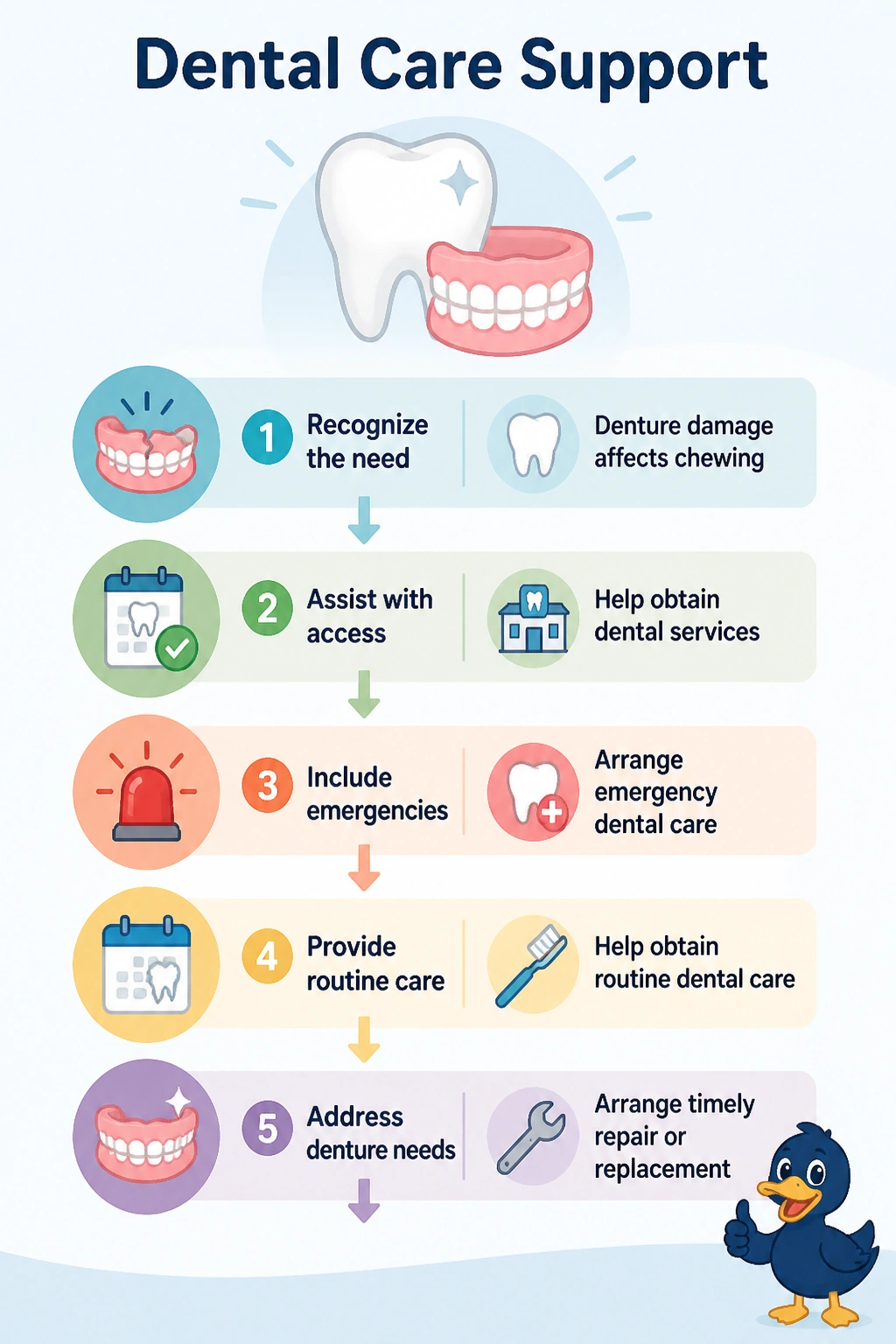
Under 42 CFR 483.55, a skilled nursing facility must assist residents in obtaining routine and 24-hour emergency dental care, including timely denture repair or replacement. Even when outside dentists bill separately or Medicaid coverage varies, the facility remains responsible for helping arrange appointments and transportation and following through on lost or damaged dentures. Referring the family to a local community dental clinic and asking them to arrange transportation independently shifts a federally mandated facility duty onto relatives who may lack resources. Pureeing all meals indefinitely until the family saves enough for private denture repair masks an unmet clinical need and undermines dignity and nutrition. Waiting until the next scheduled quarterly care conference to ask the attending physician whether a dental referral is needed creates an avoidable delay while the resident experiences discomfort and weight-loss risk. One exam caveat is that facilities must also track lost or damaged dentures promptly rather than waiting for routine rounds. As a practical check, verify that social services has an active referral agreement with a dental provider and logs repair turnaround times.
Prefer to study offline? Printable PDF study book + test engine ($7.50, unofficial). These questions stay free here.