
A council member asks which single Microsoft SKU they should buy to 'get Zero Trust finished.' What should the IT lead explain?
Select an answer to reveal the explanation.
Short Explanation
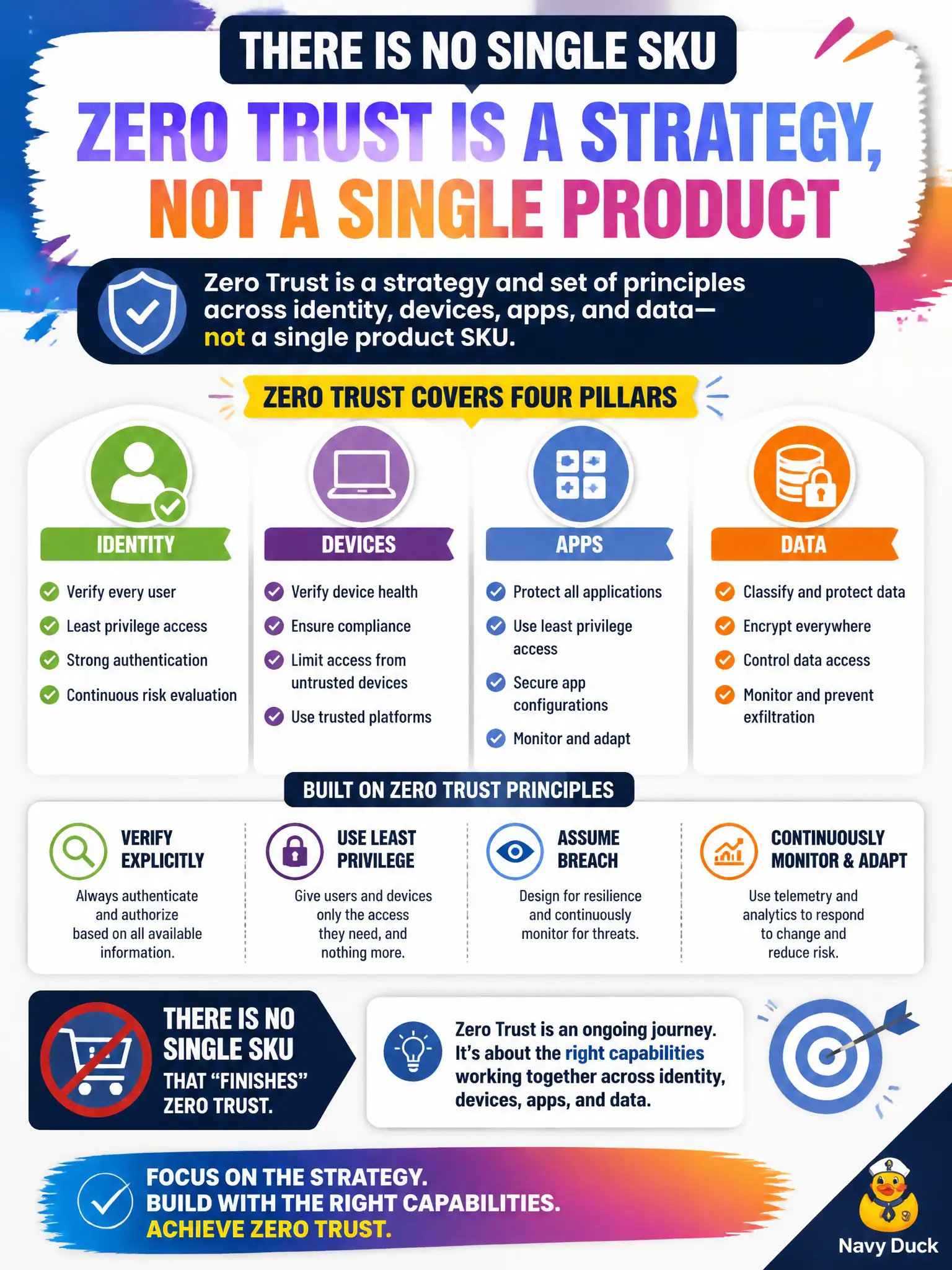
Zero Trust is not a shopping-cart item you check out once. It is a way of designing identity, devices, apps, and data controls together. No lone SKU finishes the whole model.
Full Explanation
Zero Trust is a strategy and set of principles across identity, devices, apps, and data—not a single product SKU a council member can buy to 'finish' the model. The municipal IT lead should explain that implementing Zero Trust is an ongoing program of controls and architecture decisions, often using many Microsoft 365 and security capabilities together, rather than one checkout item that completes the journey for the city.
Zero Trust is not sold only as a one-click Teams add-in. Enabling Bookings does not complete Zero Trust; Bookings is appointment scheduling. Zero Trust is not an Azure region name. Those distractors confuse a security architecture model with unrelated product features or geography labels.
Exam caveat: Microsoft publishes Zero Trust guidance and products that support the model, but naming a license does not equal finishing continuous verification and least privilege across the estate. Operational check: present a city Zero Trust roadmap with pillars and owners (identity MFA/Conditional Access, device compliance, app access, data labels/DLP) instead of a single SKU purchase order as the completion criterion. For municipal MS-900 scenarios, keep the product-to-purpose mapping explicit so distractors about unrelated UX, networking, or licensing features do not displace the correct compliance or security control.