
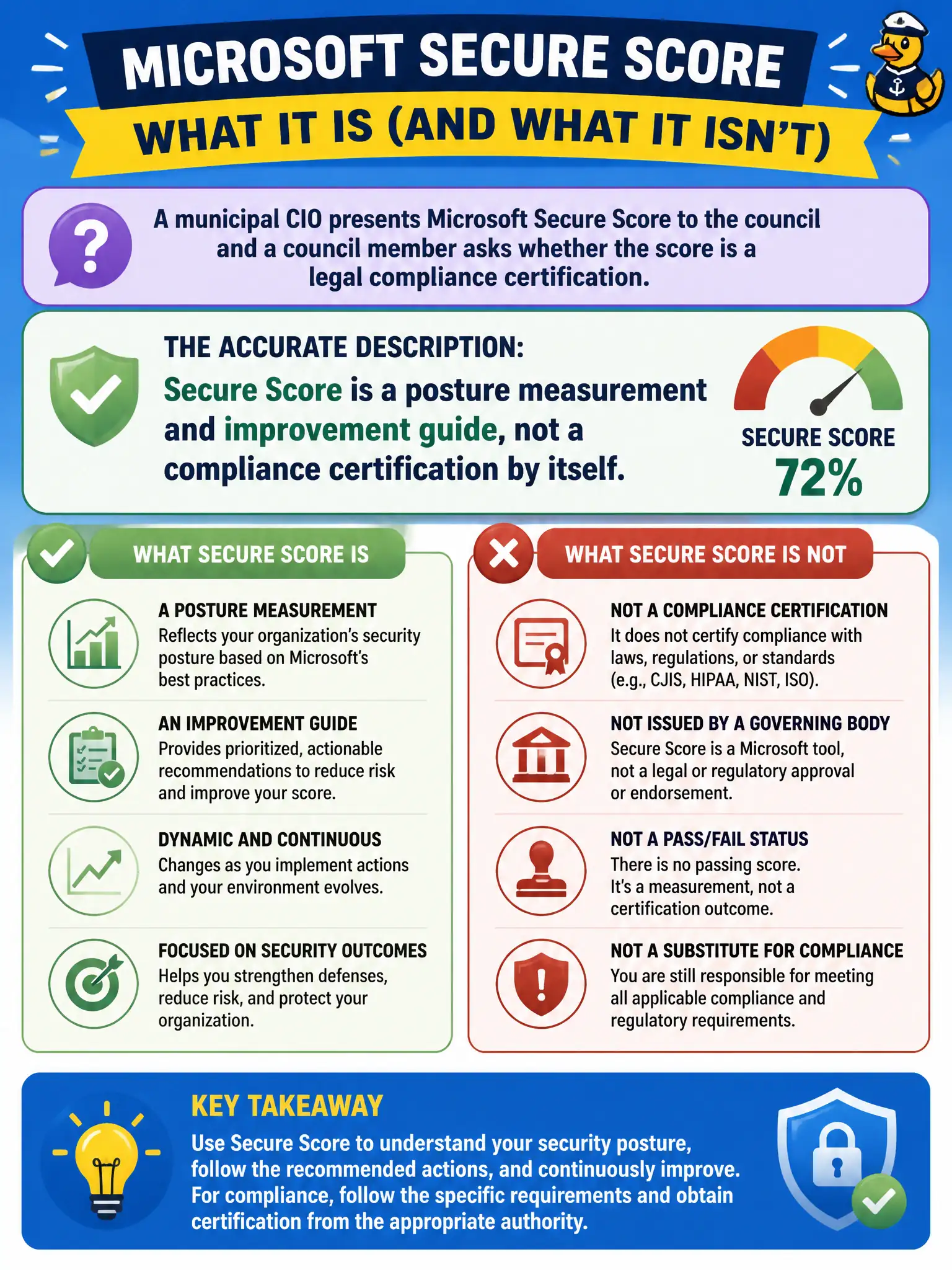
A municipal CIO presents Microsoft Secure Score to the council and a council member asks whether the score is a legal compliance certification. What is the accurate description?
Select an answer to reveal the explanation.
Short Explanation
Secure Score is a report card with homework suggestions—not a diploma on the wall. It measures and guides security posture improvements. It does not magically become your ISO stamp or replace auditors.
Full Explanation
Microsoft Secure Score is a security posture measurement and improvement guide for the Microsoft 365 tenant. When a municipal CIO presents it to council, the accurate framing is that the score ranks recommended controls and tracks progress—it is not itself a legal compliance certification, ISO stamp, or auditor attestation. Council members should treat rising Secure Score as evidence the city is closing recommended gaps, not as a substitute for formal compliance programs or third-party audits.
Secure Score is not an ISO certification Microsoft issues to every city tenant; certifications and attestations follow separate audit and regulatory paths. It does not replace all auditor evidence and legal attestations, so governance teams still collect policies, control tests, and contractual proof. Calling Secure Score only a license SKU name with no security meaning is wrong—it is a meaningful posture dashboard tied to recommended security improvements, even though it is not a certification.
Exam caveat: a higher score generally indicates better recommended posture, but remaining unscored risks, misconfigurations, and human phishing susceptibility can still exist. Operational check: open Secure Score in the Microsoft 365 Defender or Microsoft 365 admin experience, review improvement actions relevant to the city tenant, document which recommendations are accepted or risk-accepted for council reporting, and keep separate compliance evidence binders for auditors.