
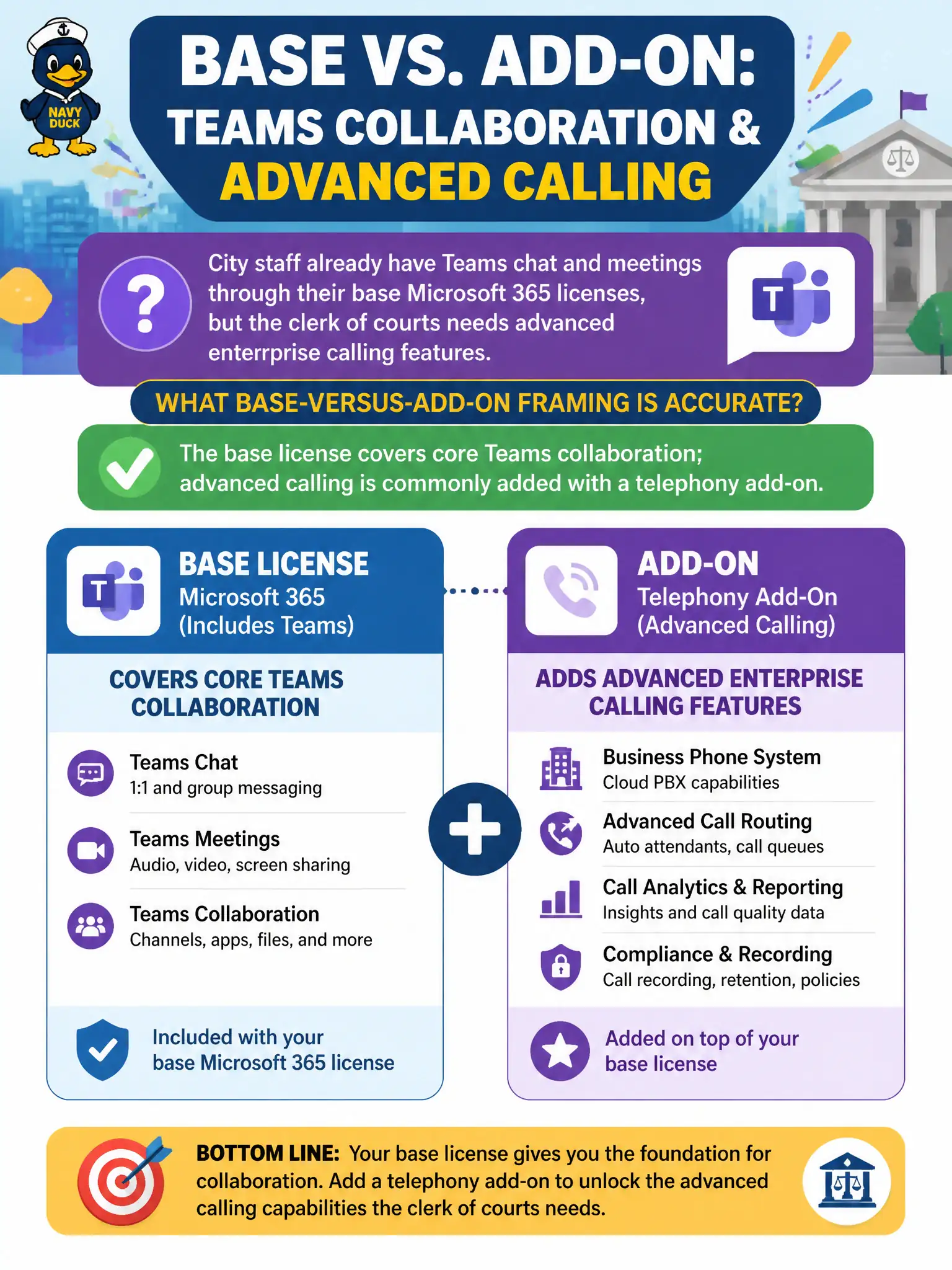
City staff already have Teams chat and meetings through their base Microsoft 365 licenses, but the clerk of courts needs advanced enterprise calling features. What base-versus-add-on framing is accurate?
Select an answer to reveal the explanation.
Short Explanation
Teams for chat and meetings is often already in the base toolbox. Fancy phone-system calling is the optional power tool you bolt on when courts need real phone numbers and advanced dialing.
Full Explanation
The base license covers core Teams collaboration, while advanced calling is commonly added with a telephony add-on. Municipal voice modernization questions at MS-900 depth usually hinge on that base-plus-Phone-System (or related telephony) add-on pattern rather than assuming every free personal account includes enterprise PSTN calling.
Advanced calling is not included in every free personal Microsoft account without any organization license. Base Microsoft 365 licenses do include Teams collaboration in typical suites; calling add-ons extend rather than replace Teams entirely. Telephony add-ons do not delete Exchange Online mailboxes as a required side effect.
Exam caveat: calling plans, Operator Connect, and Direct Routing are deeper telephony topics—fundamentals emphasize add-on entitlement for advanced calling. Operational check: verify licensed users show Phone System before enabling voice routing, and keep unlicensed users without dial-pad PSTN features. In municipal Microsoft 365 fundamentals scenarios, map the business need to the named capability, reject distractors from a different pillar, and verify the control or commercial setting in the admin or billing experience before reporting risk closed to leadership.