
A finance director asks why OpEx-style cloud subscriptions can be easier to scale for election-season staff than buying servers. Which comparison best answers?
Select an answer to reveal the explanation.
Short Explanation
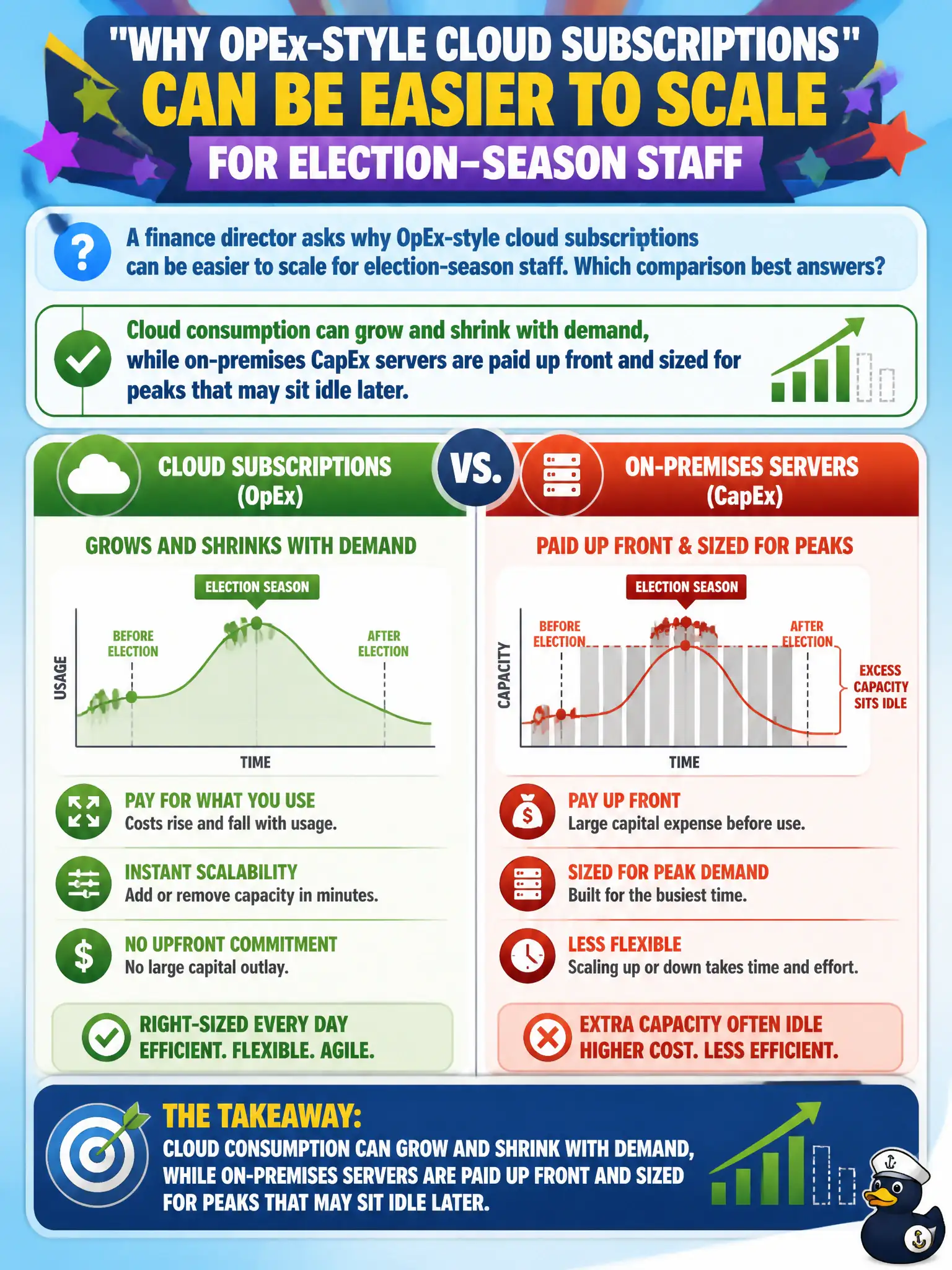
Buying a truckload of servers for six busy weeks is like keeping a parade float in the garage all year. Cloud subscriptions flex with the season—grow for election crunch, ease off after—without that big fixed CapEx pile.
Full Explanation
Cloud consumption offered through OpEx-style subscriptions can grow and shrink with demand, which helps election-season staffing surge without purchasing peak-sized servers that later sit idle. On-premises CapEx servers are paid up front and are often sized for rare peaks. That elasticity-versus-up-front-capacity comparison best answers a finance director comparing cloud subscriptions to buying iron for temporary election workers.
Saying cloud subscriptions permanently lock staffing levels and forbid seasonal accounts fails because cloud identity and licensing are commonly adjusted for joiners and leavers. Claiming that buying servers is always OpEx while cloud subscriptions are always CapEx reverses typical municipal framing and ignores cloud elasticity. Restricting election-season scaling to Azure Virtual Desktop host-pool design labs alone fails conceptually: Microsoft 365 cloud services themselves support adding seasonal collaboration capacity without that narrow lab framing.
Exam caveat: cloud is not automatically cheaper for every surge; finance should still model licenses, administration, and offboarding effort for the election window. Operational check: pre-stage seasonal account and license runbooks, set mandatory offboarding dates after certification of results, and compare temporary cloud cost to historical idle CapEx capacity after the election.