
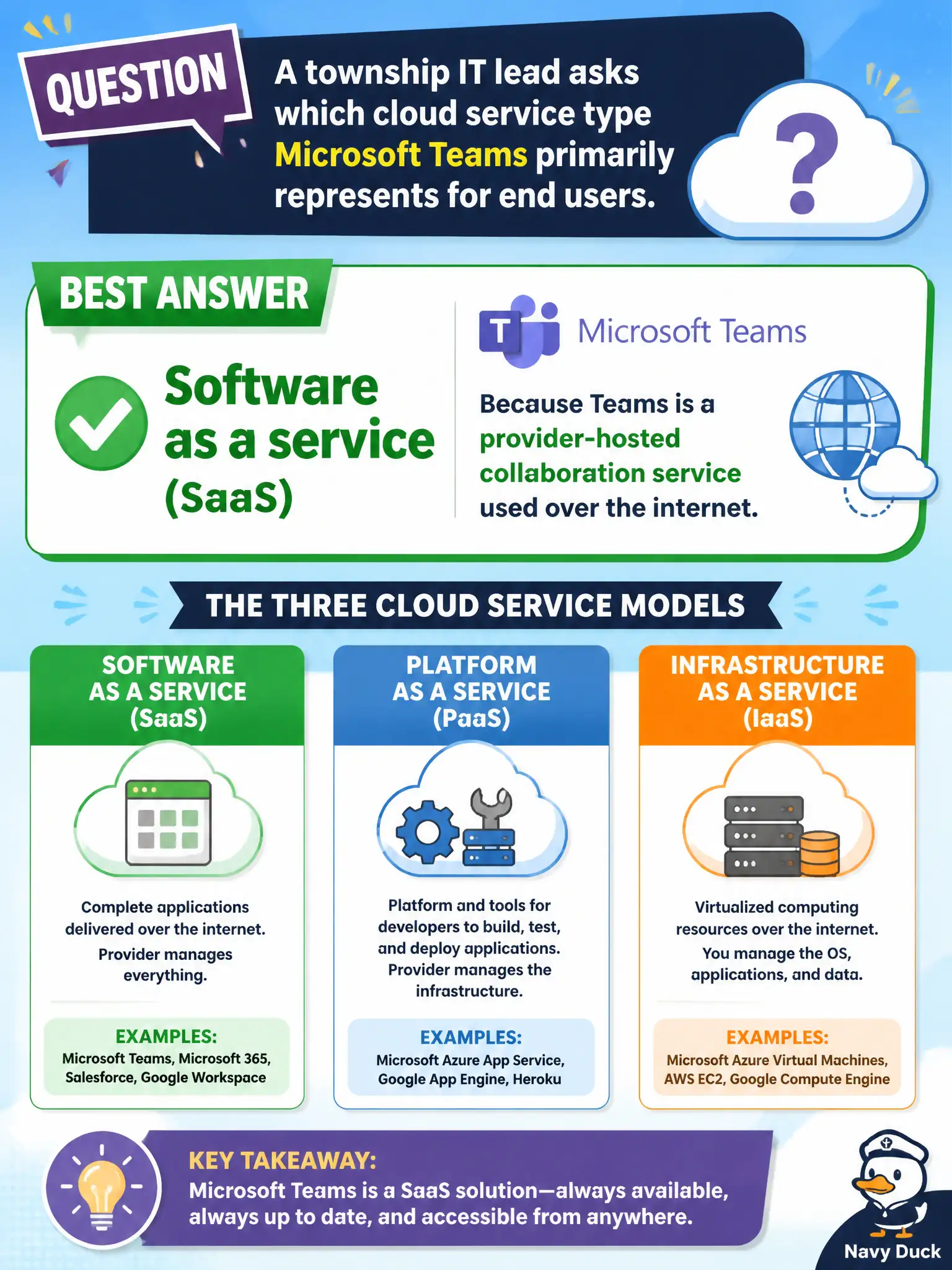
A township IT lead asks which cloud service type Microsoft Teams primarily represents for end users. What is the best answer?
Select an answer to reveal the explanation.
Short Explanation
For most staff, Teams is "open the app and collaborate"—not "build and patch the meeting servers." That ready-to-use, provider-hosted model is SaaS collaboration, same idea as cloud email.
Full Explanation
For end users in a township, Microsoft Teams is consumed as a provider-hosted collaboration and communications service over the internet: chat, channels, meetings, and files without municipal staff operating the Teams backend fabric. That ready-to-use consumption pattern aligns with software as a service. Township IT should therefore classify typical Teams experiences as SaaS at Microsoft 365 fundamentals depth rather than as infrastructure the city must assemble.
Infrastructure as a service fails because staff do not patch a per-user “Teams guest operating system”; Microsoft operates the service platform while the township manages identity, devices, and governance. Platform as a service fails because Teams is not primarily the township’s general-purpose custom-application hosting layer that replaces all PaaS needs for citizen portals or line-of-business apps. Claiming Teams can exist only as private cloud fails conceptually: Teams is commonly delivered as multi-tenant Microsoft SaaS, even when the township adds Conditional Access, retention, and compliance controls.
Exam caveat: specialized Teams Phone gateways or hybrid components may touch customer-managed infrastructure, but the default exam framing for end-user Teams remains SaaS. Operational check: verify users sign in with Microsoft Entra ID, confirm Teams is licensed, test chat and meetings from a standard staff account, and document that core collaboration does not depend on city-built meeting servers.