
A transit authority's steady, always-on forecasting endpoint is currently billed on-demand, and the team wants to know when a longer-term purchasing commitment would actually reduce cost. What should guide that decision?
Select an answer to reveal the explanation.
Short Explanation
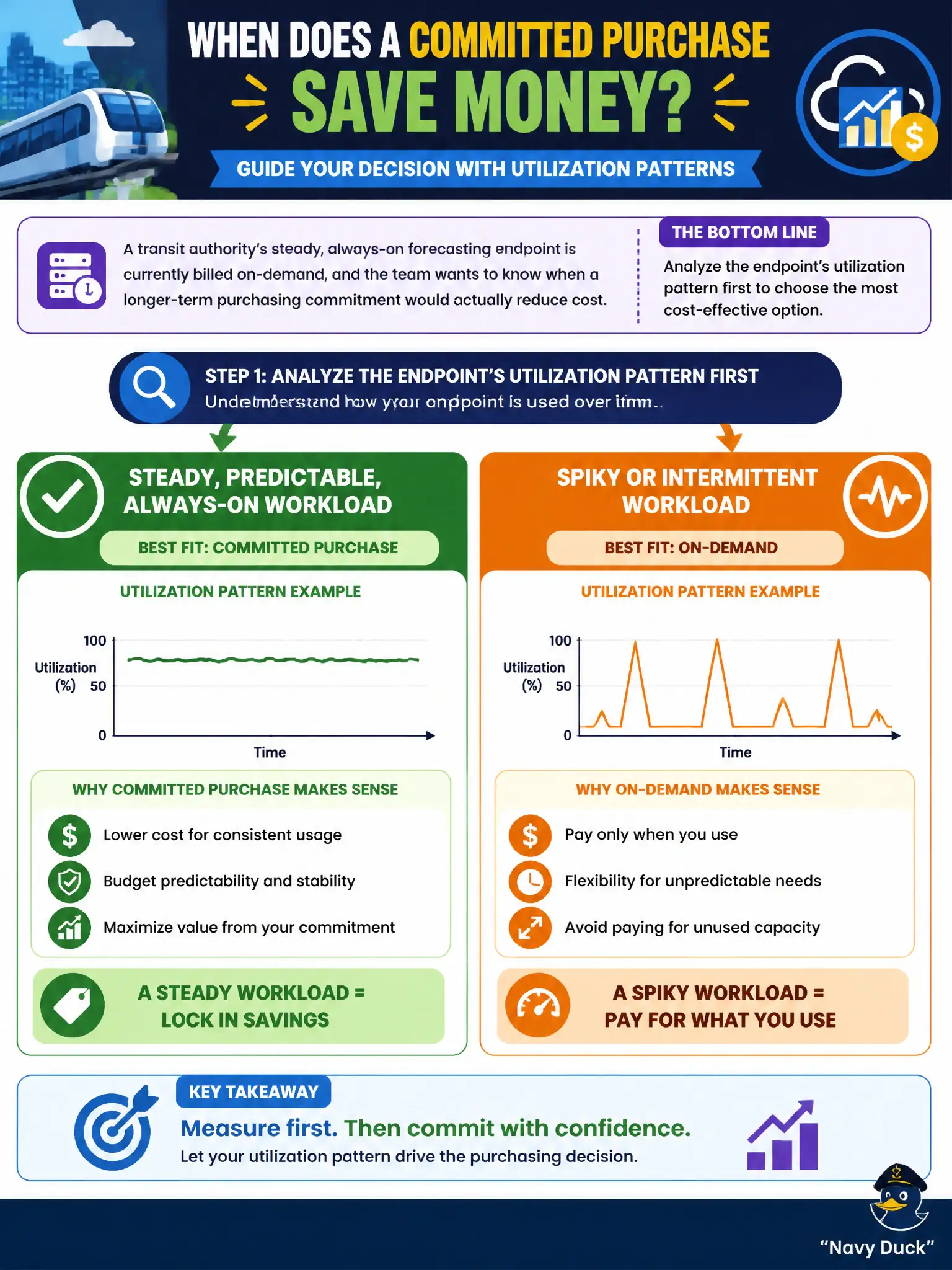
Committing to a longer purchase makes sense for a workload that runs steadily around the clock, the same way a monthly transit pass beats buying single tickets if you ride every day. But that same pass is a waste if you ride twice a month. The forecasting endpoint here runs steadily and predictably, exactly the usage pattern committed purchasing options are built to reward.
Full Explanation
Committed purchasing options trade a pricing discount for a usage commitment, so they pay off specifically when a workload's utilization is steady and predictable enough that the endpoint would be running, and being billed, close to continuously anyway, which describes this always-on forecasting endpoint well. Assuming a commitment is the automatic first move ignores that a workload with idle periods would still be paying for capacity it isn't using during those gaps, potentially costing more than on-demand billing for the same actual usage. Treating on-demand as simply the typical default for SageMaker endpoints misses the actual tradeoff; committed options exist to reward predictable, sustained usage like this one, and the decision should be usage-driven, not default-driven. Spot-based capacity trades a cost discount for the risk of interruption, a poor fit for a production forecasting endpoint that needs to be reliably available, and it isn't automatically the cheapest option for this workload shape. Scope caveat: a workload's steadiness should be confirmed with real utilization data over a representative period, not assumed, since seasonal transit patterns could introduce more variability than expected. A concrete operational check: pull utilization metrics over several weeks to confirm the endpoint's load stays consistently steady before committing to a longer-term purchase.