
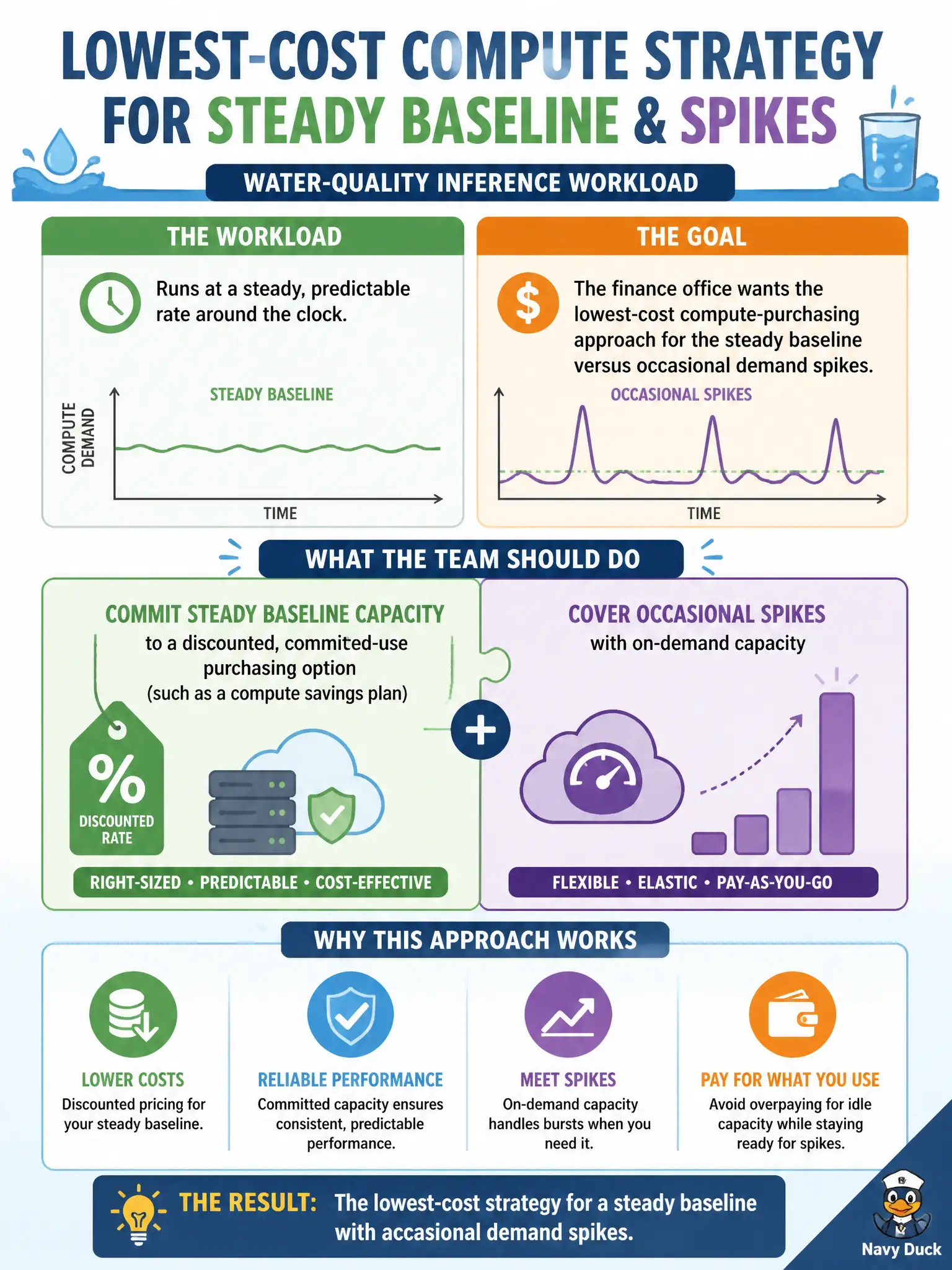
A water-quality inference workload runs at a steady, predictable rate around the clock, and the finance office wants the lowest-cost compute-purchasing approach for that steady baseline versus occasional demand spikes. What should the team do?
Select an answer to reveal the explanation.
Short Explanation
Steady, predictable workloads and unpredictable spikes call for different pricing tools. Committing the steady baseline to a discounted savings plan locks in the lower rate for work you already know is coming, while occasional spikes stay on flexible on-demand pricing. Match the commitment to the predictability, not the other way around.
Full Explanation
A committed-use purchasing option like a compute savings plan offers a lower rate in exchange for a usage commitment, which pays off specifically when demand is steady and predictable enough to forecast — exactly the water-quality workload's round-the-clock baseline — while leaving occasional spikes to on-demand pricing avoids over-committing to capacity that isn't needed every day. Paying on-demand for the entire workload, including the predictable baseline, forgoes the discount a commitment would earn on usage the finance office already knows is steady and ongoing, which is the exact scenario committed pricing is meant to capture savings on. Committing the full peak capacity, spikes included, locks in payment for capacity that's only needed occasionally, which defeats the purpose of separating predictable baseline from variable demand in the first place. Spot capacity offers steep discounts in exchange for the possibility of interruption, which fits fault-tolerant, flexible workloads, not a steady production water-quality workload where interruption risk is a poor tradeoff for the baseline that must keep running. Scope note: committed-use terms typically lock in for a period, so validate the baseline forecast before committing. Operational check: review actual on-demand spend for spike periods periodically to confirm the split between committed and on-demand capacity still matches real usage.