
A security engineer is implementing threat modeling for a new Azure AI Foundry application using the STRIDE methodology. The engineering team is concerned that an attacker could submit specially crafted inputs that cause the AI model to produce outputs bypassing the organization's safety guidelines. Which STRIDE category does this threat fall under?
Select an answer to reveal the explanation.
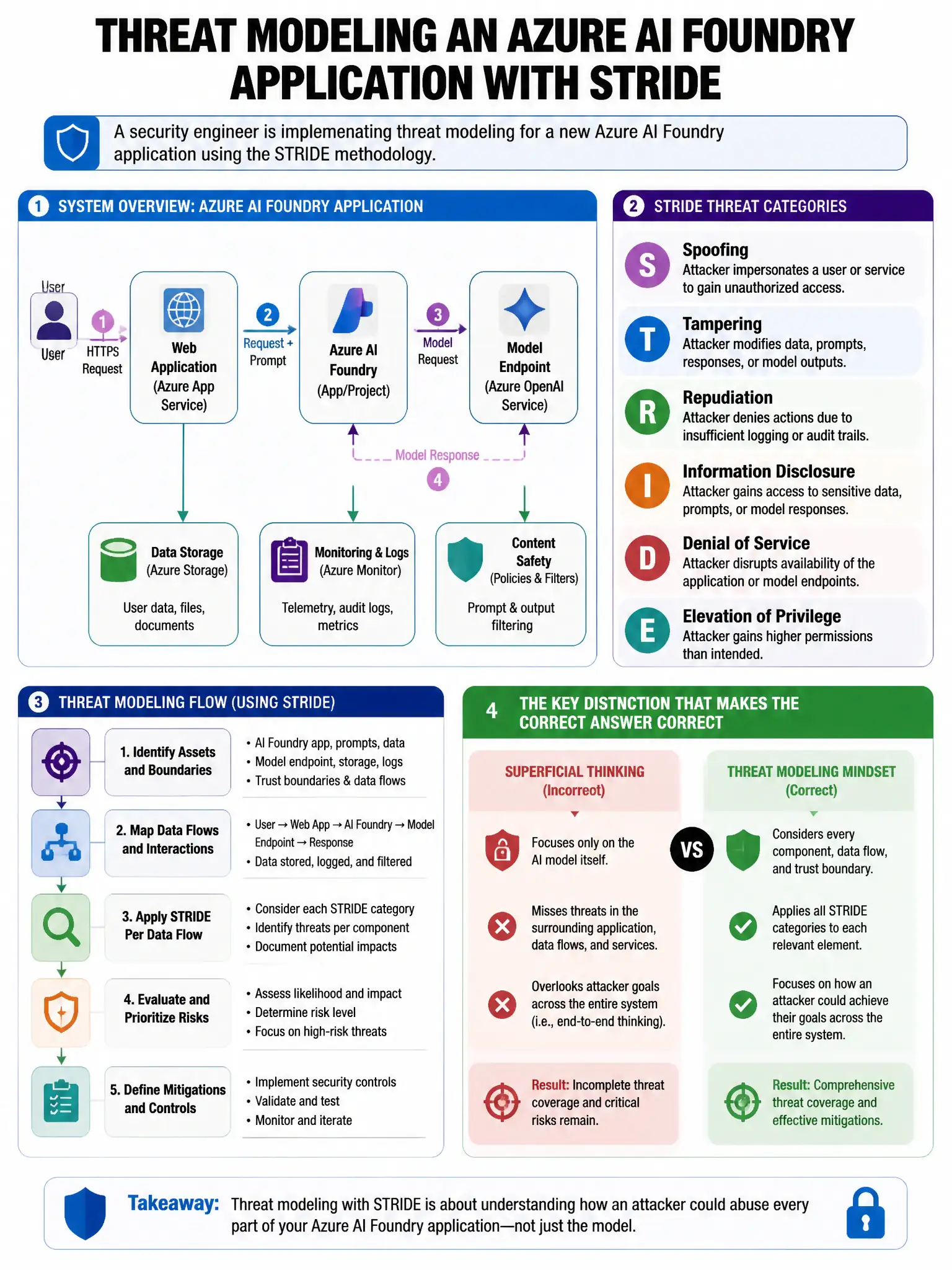
Short Explanation
Here's the deal — you're dealing with Elevation of Privilege because the crafted input gets the model to do something the safety controls are meant to block. The attacker ends up with a capability the system doesn't intend to allow, which is exactly what this STRIDE category covers.
Full Explanation
The correct threat is Elevation of Privilege. Prompt injection attacks that bypass an AI model's safety guidelines represent an Elevation of Privilege threat in the STRIDE model. The attacker gains capabilities, such as producing unsafe or policy-violating outputs, that the system is designed to prevent, effectively elevating their privileges beyond what the system's access controls and content policies intend to permit. The Tampering option is incorrect because Tampering in STRIDE refers to unauthorized modification of data or system state; while prompt injection manipulates inputs, the primary threat is the escalated capability achieved by bypassing safety controls, making Elevation of Privilege the more precise categorization. The Spoofing option is incorrect because Spoofing involves impersonating another identity; prompt injection attacks do not require identity impersonation. The Repudiation option is incorrect because Repudiation concerns whether actions can be denied or attributed; prompt injection's primary threat is the capability bypass, not the ability to deny the action.