
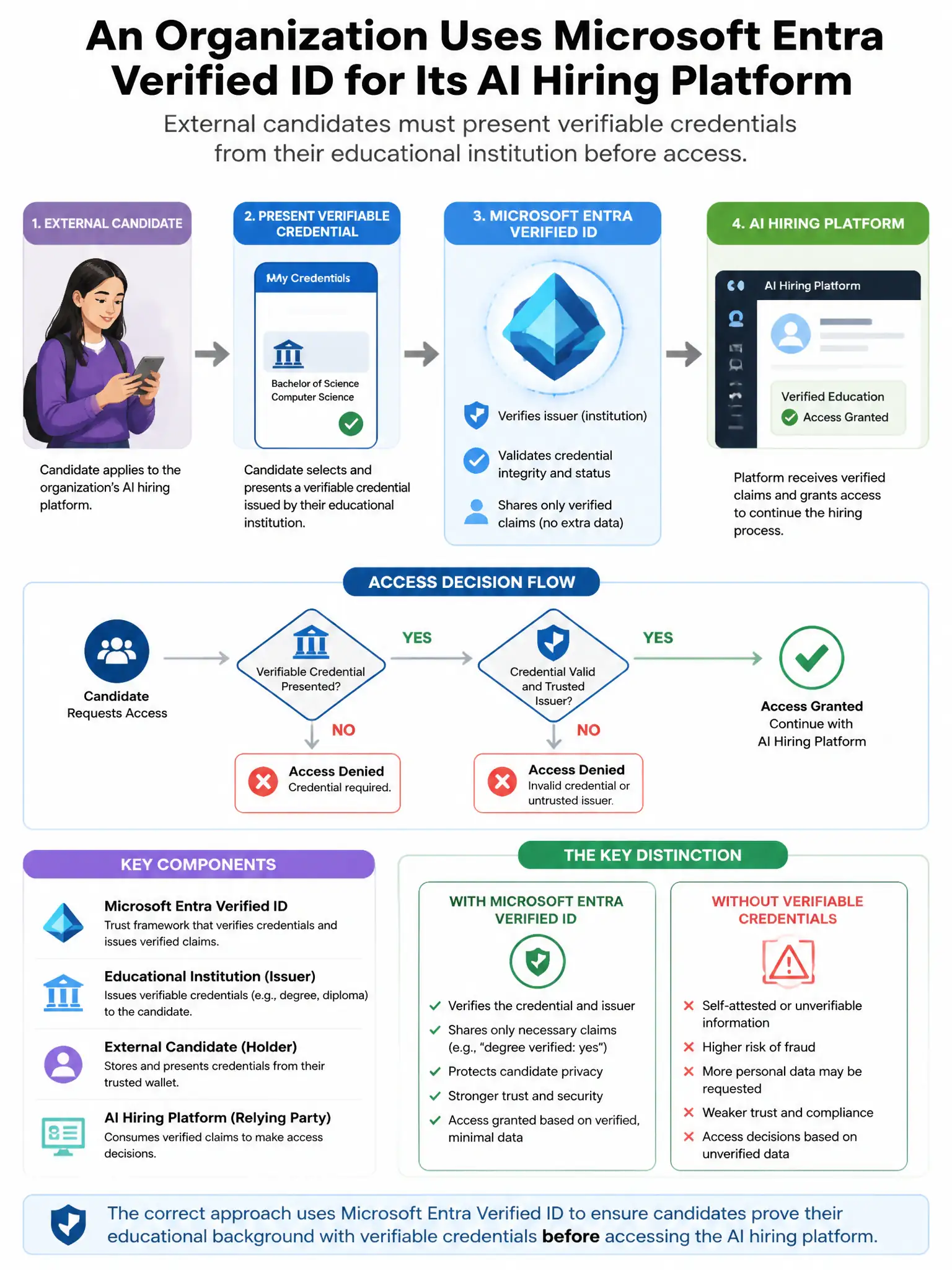
An organization uses Microsoft Entra Verified ID for its AI hiring platform. External candidates must present verifiable credentials from their educational institution before accessing the platform. A security engineer needs to ensure that the issuer (university) of the credential is trusted. How is trust established in Microsoft Entra Verified ID?
Select an answer to reveal the explanation.
Short Explanation
You're right because Microsoft Entra Verified ID establishes issuer trust through decentralized identifiers. You add the university's decentralized identifier to your trusted issuers list in the Verified ID service, so the platform cryptographically trusts credentials from that issuer.
Full Explanation
The correct approach is to add the educational institution's decentralized identifier to the organization's trusted issuers list in the Microsoft Entra Verified ID service. In the verifiable credentials model used by Entra Verified ID, trust is established cryptographically through decentralized identifiers, so the verifier organization must explicitly configure which issuer identifiers it accepts. The partner registration option is incorrect because registering the educational institution as a partner in the Entra External Identities tenant controls B2B access, not verifiable credential issuer trust in the Verified ID model. The SAML federation option is incorrect because SAML federation is used for identity federation with identity providers, not for establishing trust in the verifiable credentials model used by Entra Verified ID. The automatic trust option is incorrect because the Microsoft Entra Verified ID network does not automatically trust all academic institutions; trust must be explicitly configured by each organization.